Legal Method and Skills Notes
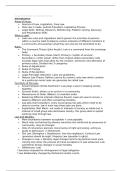
Introduction
Areas of focus:
Sources of Law- Legislation, Case Law
How Law is made- Judicial Precedent, Legislative Process
Legal Skills- Writing, Research, Referencing, Problem solving, Advocacy
and Presentation Skills
What is Law?
Laws are rules and regulations which govern the activities of persons
within a country. Said to balance various interests of different members in
a community and ascertain what they are and are not permitted to do.
Rules:
The Command Theory (John Austin): Law is a command from the sovereign
body.
Primary + Secondary Rules (Hart): Primary= matter of survival.
Secondary= confer power rather than impose duties (secondary rules
includes legal rules that allow for the creation, extinction and alteration of
primary rules). Divided into 3 categories:
1. Rules of Adjudication
2. Rules of Change
3. Rules of Recognition
Legal Principles (Dworkin): Laws are guidelines.
Natural Law Theory: Defines Law by its content: only laws which conform
to a particular moral code can genuinely be called Law.
Functions of the Law:
Social Cohesion (Emile Durkheim): Law plays a part in keeping society
together.
Survival (Hart): allows us to survive in a community.
Maintenance of Order (Weber): to maintain order.
Balancing different interests (Roscoe Pound)- Laws aim was to secure +
balance different and often competing interests.
Law Jobs (Karl Llewellyn): every social group has jobs which need to be
done to survive, law is main way these jobs are done.
Exploitation (Karl Marx): not made in interests of society as whole but in
interest of small group who dominates society- this group able to exploit
working class through law.
Law and Morality:
Mark boundaries between acceptable + unacceptable.
Moral rules not backed by obvious sanctions but reinforced by pressures of
community- may be stronger.
Vote of conscience (persons moral sense of right and wrong- acting as
guide to behaviour) in Parliament.
Tort Law (Donoghue v Stephenson- love thy neighbour), Contract Law
(promises should be kept), Property Law (squatter's rights).
Changes in Law + Morality: legal changes tend to lag behind moral ones,
coming only when the process of moral acceptance is well advanced. Law
sometimes brings changes in social morality.
Differences- Law:
* Sanctions imposed for infringement of legal obligation.
* Law deliberately changed by Parliament and/or courts.
, * Legal principles need to incorporate a degree of certainty.
Differences- Morality:
* no official sanctions for immoral behaviour, although society often creates
own form of censorship.
* Morality cannot be deliberately changed, rather it evolves slowly.
* Morality is invariably more flexible and variable.
Should law and morals be separate? Impossible + undesirable to make
every immoral act illegal. Law without morality difficult to command
respect.
Natural Law- Law should strongly reflect morality.
Law and Justice:
Aristotle: A just law was one which allow individuals to fulfil themselves in
society.
Natural Law Theories: There Higher order of law + if laws of society follow
this order they will be just.
Utilitarianism: society should work towards greatest happiness for greatest
number even if some individuals lose out or creates social inequality.
Economic Analysis of the law: similar to utilitarianism but view that a thing
has value for a person when the person values it, its value can therefore
be measured by how much the person is willing to pay for it or would be
required for them to give it up.
Rawls: a theory of justice that revolves around adaption of 2 fundamental
principles (liberty and equality)- would guarantee a just and moral
acceptable society.
Nozick & the Minimal State: state should have minimal possible right to
interfere in affairs of individuals against force, theft and fraud + enforcing
contracts.
Karl Marx: impossible for Capitalist society to be just as such society
organised with aim of upholding interests of ruling class rather than
securing justice for all.
Kelsen and Positivism: law can be separated from what is just or morally
right. Law is just law and should be obeyed even if its completely immoral.
Justice in Practice:
Judges must apply law that Parliament makes even if they believe its
unjust.
Unjust situations bring about political obstacles but no legal ones.
We have fixed rules when deciding with the law- can make it difficult to do
justice.
Fixed rules can promote justice in majority cases at expense of justice in
individual.
Justice has development: Equity and sentencing guidelines.
Criminal and Civil Law:
Criminal law determines what behaviour is unacceptable and warrants
punishment.
Civil law regulates behaviour and allows individuals to make enforceable
agreements or to gain compensation for wrongs done by others.
Criminal law is public- state prosecutes defendant- CPS.
Civil law is private- no public involved.
Purpose of criminal law is punishment.
Purpose of civil law is to seek a remedy (compensation or injunction).
, Law is a form of social control.
Can be overlap- a civil and criminal case.
Successful Research:
Credible, Quality Sources
Strategic Searching
Meaningful Interaction with Sources
Credit Given to Authors
Legal Awareness:
Legal industry constantly shifting. From firm mergers, to court cases, to
fluctuation as laws are broken ands made, not a day goes by without a
legal issue hitting the press. Therefore vital for legal professionals to stay
on top of these developments-
* Law.com International
* Lawyer Monthly
* Legal Cheek
* The Law Society Gazette
* The Lawyer Portal
* The Lawyer
* Lexology
Introduction
Areas of focus:
Sources of Law- Legislation, Case Law
How Law is made- Judicial Precedent, Legislative Process
Legal Skills- Writing, Research, Referencing, Problem solving, Advocacy
and Presentation Skills
What is Law?
Laws are rules and regulations which govern the activities of persons
within a country. Said to balance various interests of different members in
a community and ascertain what they are and are not permitted to do.
Rules:
The Command Theory (John Austin): Law is a command from the sovereign
body.
Primary + Secondary Rules (Hart): Primary= matter of survival.
Secondary= confer power rather than impose duties (secondary rules
includes legal rules that allow for the creation, extinction and alteration of
primary rules). Divided into 3 categories:
1. Rules of Adjudication
2. Rules of Change
3. Rules of Recognition
Legal Principles (Dworkin): Laws are guidelines.
Natural Law Theory: Defines Law by its content: only laws which conform
to a particular moral code can genuinely be called Law.
Functions of the Law:
Social Cohesion (Emile Durkheim): Law plays a part in keeping society
together.
Survival (Hart): allows us to survive in a community.
Maintenance of Order (Weber): to maintain order.
Balancing different interests (Roscoe Pound)- Laws aim was to secure +
balance different and often competing interests.
Law Jobs (Karl Llewellyn): every social group has jobs which need to be
done to survive, law is main way these jobs are done.
Exploitation (Karl Marx): not made in interests of society as whole but in
interest of small group who dominates society- this group able to exploit
working class through law.
Law and Morality:
Mark boundaries between acceptable + unacceptable.
Moral rules not backed by obvious sanctions but reinforced by pressures of
community- may be stronger.
Vote of conscience (persons moral sense of right and wrong- acting as
guide to behaviour) in Parliament.
Tort Law (Donoghue v Stephenson- love thy neighbour), Contract Law
(promises should be kept), Property Law (squatter's rights).
Changes in Law + Morality: legal changes tend to lag behind moral ones,
coming only when the process of moral acceptance is well advanced. Law
sometimes brings changes in social morality.
Differences- Law:
* Sanctions imposed for infringement of legal obligation.
* Law deliberately changed by Parliament and/or courts.
, * Legal principles need to incorporate a degree of certainty.
Differences- Morality:
* no official sanctions for immoral behaviour, although society often creates
own form of censorship.
* Morality cannot be deliberately changed, rather it evolves slowly.
* Morality is invariably more flexible and variable.
Should law and morals be separate? Impossible + undesirable to make
every immoral act illegal. Law without morality difficult to command
respect.
Natural Law- Law should strongly reflect morality.
Law and Justice:
Aristotle: A just law was one which allow individuals to fulfil themselves in
society.
Natural Law Theories: There Higher order of law + if laws of society follow
this order they will be just.
Utilitarianism: society should work towards greatest happiness for greatest
number even if some individuals lose out or creates social inequality.
Economic Analysis of the law: similar to utilitarianism but view that a thing
has value for a person when the person values it, its value can therefore
be measured by how much the person is willing to pay for it or would be
required for them to give it up.
Rawls: a theory of justice that revolves around adaption of 2 fundamental
principles (liberty and equality)- would guarantee a just and moral
acceptable society.
Nozick & the Minimal State: state should have minimal possible right to
interfere in affairs of individuals against force, theft and fraud + enforcing
contracts.
Karl Marx: impossible for Capitalist society to be just as such society
organised with aim of upholding interests of ruling class rather than
securing justice for all.
Kelsen and Positivism: law can be separated from what is just or morally
right. Law is just law and should be obeyed even if its completely immoral.
Justice in Practice:
Judges must apply law that Parliament makes even if they believe its
unjust.
Unjust situations bring about political obstacles but no legal ones.
We have fixed rules when deciding with the law- can make it difficult to do
justice.
Fixed rules can promote justice in majority cases at expense of justice in
individual.
Justice has development: Equity and sentencing guidelines.
Criminal and Civil Law:
Criminal law determines what behaviour is unacceptable and warrants
punishment.
Civil law regulates behaviour and allows individuals to make enforceable
agreements or to gain compensation for wrongs done by others.
Criminal law is public- state prosecutes defendant- CPS.
Civil law is private- no public involved.
Purpose of criminal law is punishment.
Purpose of civil law is to seek a remedy (compensation or injunction).
, Law is a form of social control.
Can be overlap- a civil and criminal case.
Successful Research:
Credible, Quality Sources
Strategic Searching
Meaningful Interaction with Sources
Credit Given to Authors
Legal Awareness:
Legal industry constantly shifting. From firm mergers, to court cases, to
fluctuation as laws are broken ands made, not a day goes by without a
legal issue hitting the press. Therefore vital for legal professionals to stay
on top of these developments-
* Law.com International
* Lawyer Monthly
* Legal Cheek
* The Law Society Gazette
* The Lawyer Portal
* The Lawyer
* Lexology