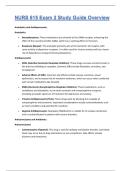
NURS 615 Exam 2 Study Guide Overview
Anxiolytics and Antidepressants
Anxiolytics
• Benzodiazepines: These medications act primarily at the GABA receptor, enhancing the
effect of the neurotransmitter GABA, which has a calming effect on the brain.
• Buspirone (Buspar): This anxiolytic primarily acts at the Serotonin 1A receptor, with
some activity at dopamine receptors. It is often used for chronic anxiety and has a lower
risk of dependence compared to benzodiazepines.
Antidepressants
• SSRIs (Selective Serotonin Reuptake Inhibitors): These drugs increase serotonin levels in
the brain by inhibiting its reuptake. Common SSRIs include fluoxetine, sertraline, and
escitalopram.
• Adverse Effects of SSRIs: Common side effects include nausea, insomnia, sexual
dysfunction, and increased risk of serotonin syndrome, which can occur when combined
with certain medications like linezolid.
• SNRIs (Serotonin-Norepinephrine Reuptake Inhibitors): These medications, such as
venlafaxine and duloxetine, act on both serotonin and norepinephrine receptors,
providing a broader spectrum of treatment for depression and anxiety.
• Tricyclic Antidepressants (TCAs): These drugs work by blocking the reuptake of
norepinephrine and serotonin. Important considerations include contraindications such
as heart conditions and potential for overdose.
• Atypical Antidepressants: Bupropion (Wellbutrin) is notable for its unique mechanism
and is contraindicated in patients with seizure disorders.
Anticonvulsants and Antibiotics
Anticonvulsants
• Carbamazepine (Tegretol): This drug is used for epilepsy and bipolar disorder. Low blood
levels may occur due to drug interactions or non-compliance. Side effects include
dizziness and drowsiness.
Anxiolytics and Antidepressants
Anxiolytics
• Benzodiazepines: These medications act primarily at the GABA receptor, enhancing the
effect of the neurotransmitter GABA, which has a calming effect on the brain.
• Buspirone (Buspar): This anxiolytic primarily acts at the Serotonin 1A receptor, with
some activity at dopamine receptors. It is often used for chronic anxiety and has a lower
risk of dependence compared to benzodiazepines.
Antidepressants
• SSRIs (Selective Serotonin Reuptake Inhibitors): These drugs increase serotonin levels in
the brain by inhibiting its reuptake. Common SSRIs include fluoxetine, sertraline, and
escitalopram.
• Adverse Effects of SSRIs: Common side effects include nausea, insomnia, sexual
dysfunction, and increased risk of serotonin syndrome, which can occur when combined
with certain medications like linezolid.
• SNRIs (Serotonin-Norepinephrine Reuptake Inhibitors): These medications, such as
venlafaxine and duloxetine, act on both serotonin and norepinephrine receptors,
providing a broader spectrum of treatment for depression and anxiety.
• Tricyclic Antidepressants (TCAs): These drugs work by blocking the reuptake of
norepinephrine and serotonin. Important considerations include contraindications such
as heart conditions and potential for overdose.
• Atypical Antidepressants: Bupropion (Wellbutrin) is notable for its unique mechanism
and is contraindicated in patients with seizure disorders.
Anticonvulsants and Antibiotics
Anticonvulsants
• Carbamazepine (Tegretol): This drug is used for epilepsy and bipolar disorder. Low blood
levels may occur due to drug interactions or non-compliance. Side effects include
dizziness and drowsiness.