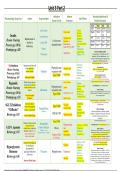
Unit 9 Part 2
Indication Adverse Nursing Implications &
Pharmacologic Drug Class Action Drug Examples Side Effects
(Areas of Use) Reactions Patient Education
Insulin Onset Peak Dur.
Lispro 15-30m 30-90m 3-5 h
Insulin Lispro Tremors
Tachycardia Regular 30 min 1.5- 4-12h
Dizziness
3.5h
Insulin Insulin Regular
Hypoglycemic
Headache
NPH 1-2 hr. 4-12h 14-24h
Replacement of Diaphoresis
Review Nursing insulin in Insulin NPH
Used to treat Reaction vs Confusion Glargine 1-1.5 hr. none 24 h
hyperglycemia Ketoacidosis – Drowsiness/Fatigue
Process pg. 630 & deficiency. Table 50.3 (Pg. 629) Pallor
70/30 mix mix mix
Glargine
Prototype pg. 628 Clammy Skin
Lipodystrophy Patient Teaching (Pg 630):
Anaphylaxis
70/30 Insulin GI Upset – N/V s/s hypoglycemia vs hyperglycemia. BG
monitoring. SQ med administration – site
rotation; needle management. Hypoglycemia
management. Medical alert bracelet.
Monitor for hypoglycemia. A1C Monitoring.
Sulfonylurea Stimulates the beta cells Drowsiness
Contraindications:
of the pancreas to Hyperglycemia Hypoglycemia Confusion
Review Nursing GI Upset Renal or Liver Dysfunction; Beta Blockers
release insulin. Glipizide in patients with Headaches
Sulfa Allergy; ETOH
Process pg. 636 & Type II DM Tachycardia Vision Changes Patient Teaching (Page 636):
Prototype pg. 631 Increases Insulin Anxiety Take with breakfast. Avoid ETOH.
Monitor BG. s/s of hypoglycemia and management.
Reduces hepatic glucose Lactic Acidosis Monitor renal and liver function. A1C Monitoring
Biguanide production and increases
Dizziness
Hyperglycemia GI Upset – NVD Contraindications: Liver and Renal Failure
Review Nursing insulin sensitivity in the
muscles. Metformin in patients with
Anemia
Bloating Patient Teaching:
Metallic Taste GI upset is temporary. Hold medication for 48 hrs. before
Process pg. 636 & Type II DM Hypoglycemia - rare
Weight Loss and after the use of IV contrast dye. Avoid green tea – it
Decreases Insulin may cause hypoglycemia.
Prototype pg. 635 Resistance Hepatotoxicity
Vitamin B12 Def.
Closely for BG changes and kidney function esp. if taking
diuretics. Monitor fluid status – ensure hydration.
Increases glucose Candidiasis
SGLT2 Inhibitors removal through the Type II DM Vascular
Cystitis
A1C Monitoring
Empagliflozin Insufficiency
“Gliflozins” kidneys - glucosuria.
(Jardiance)
Vaginitis Patient Teaching:
Report genital itching or discharge, painful
CKD & CHF Hypoglycemia
Review pg. 633 Lowers Blood Sugar Nephrotoxicity Polyuria
urination, or sudden/severe back pain. Notify the
provider of edema or pain in the lower
extremities.
Monitor Renal Function & A1C.
Type II DM
Enhances insulin secretion, Semaglutide
increases beta-cell Hypoglycemia – GI Upset – N/V/D/C Contraindications: Severe Renal Failure; Pregnancy
GLP-1 Agonists responsiveness, suppresses (Oral or Sub-Q) Obesity rare Indigestion Patient Teaching:
glucagon secretion, slows (Rybelsus – oral) Administer via sub-Q pen weekly – rotate sites. Sub-Q
Jaundice Headaches
Review pg. 633 gastric emptying, and (Ozempic/Wegovy – SubQ)
Weight Loss
administration techniques. Needle disposal. Increased
Improves Hgb Pancreatitis hypoglycemic risk with other diabetic meds,
reduces food intake. antidepressants, and antibiotics. Pregnancy prevention.
A1C levels. Notify MD of jaundice or severe ABD pain, N/V.
Closely monitor for hyperglycemia after administration.
Increases blood glucose GI Upset – NVD Given SQ/IM/IV; Encourage hydration
by stimulating Seizures ABD Cramps Begins to increase BG levels in 10 mins.
Hyperglycemic glycogenolysis Headaches Patient Teaching:
Confusion Teach the family when/how to administer – Call 911 if
Hormone (glycogen breakdown) Glucagon Hypoglycemia Nightmares Dizziness BG levels do not increase. If awake and can safely
in the liver. Drowsiness
swallow, or BG not severely low (<50), may treat with
Review pg. 636 Anxiety Tachycardia
oral intake following the 15-15 rule (glucose tabs, glucose
gel, candy, juice, etc). Monitor BG after administration –
Increase Blood Sugar Hyperglycemia 10-15 minutes. Carry at all times – esp. if taking insulin.
Wear a medical alert bracelet.
Indication Adverse Nursing Implications &
Pharmacologic Drug Class Action Drug Examples Side Effects
(Areas of Use) Reactions Patient Education
Insulin Onset Peak Dur.
Lispro 15-30m 30-90m 3-5 h
Insulin Lispro Tremors
Tachycardia Regular 30 min 1.5- 4-12h
Dizziness
3.5h
Insulin Insulin Regular
Hypoglycemic
Headache
NPH 1-2 hr. 4-12h 14-24h
Replacement of Diaphoresis
Review Nursing insulin in Insulin NPH
Used to treat Reaction vs Confusion Glargine 1-1.5 hr. none 24 h
hyperglycemia Ketoacidosis – Drowsiness/Fatigue
Process pg. 630 & deficiency. Table 50.3 (Pg. 629) Pallor
70/30 mix mix mix
Glargine
Prototype pg. 628 Clammy Skin
Lipodystrophy Patient Teaching (Pg 630):
Anaphylaxis
70/30 Insulin GI Upset – N/V s/s hypoglycemia vs hyperglycemia. BG
monitoring. SQ med administration – site
rotation; needle management. Hypoglycemia
management. Medical alert bracelet.
Monitor for hypoglycemia. A1C Monitoring.
Sulfonylurea Stimulates the beta cells Drowsiness
Contraindications:
of the pancreas to Hyperglycemia Hypoglycemia Confusion
Review Nursing GI Upset Renal or Liver Dysfunction; Beta Blockers
release insulin. Glipizide in patients with Headaches
Sulfa Allergy; ETOH
Process pg. 636 & Type II DM Tachycardia Vision Changes Patient Teaching (Page 636):
Prototype pg. 631 Increases Insulin Anxiety Take with breakfast. Avoid ETOH.
Monitor BG. s/s of hypoglycemia and management.
Reduces hepatic glucose Lactic Acidosis Monitor renal and liver function. A1C Monitoring
Biguanide production and increases
Dizziness
Hyperglycemia GI Upset – NVD Contraindications: Liver and Renal Failure
Review Nursing insulin sensitivity in the
muscles. Metformin in patients with
Anemia
Bloating Patient Teaching:
Metallic Taste GI upset is temporary. Hold medication for 48 hrs. before
Process pg. 636 & Type II DM Hypoglycemia - rare
Weight Loss and after the use of IV contrast dye. Avoid green tea – it
Decreases Insulin may cause hypoglycemia.
Prototype pg. 635 Resistance Hepatotoxicity
Vitamin B12 Def.
Closely for BG changes and kidney function esp. if taking
diuretics. Monitor fluid status – ensure hydration.
Increases glucose Candidiasis
SGLT2 Inhibitors removal through the Type II DM Vascular
Cystitis
A1C Monitoring
Empagliflozin Insufficiency
“Gliflozins” kidneys - glucosuria.
(Jardiance)
Vaginitis Patient Teaching:
Report genital itching or discharge, painful
CKD & CHF Hypoglycemia
Review pg. 633 Lowers Blood Sugar Nephrotoxicity Polyuria
urination, or sudden/severe back pain. Notify the
provider of edema or pain in the lower
extremities.
Monitor Renal Function & A1C.
Type II DM
Enhances insulin secretion, Semaglutide
increases beta-cell Hypoglycemia – GI Upset – N/V/D/C Contraindications: Severe Renal Failure; Pregnancy
GLP-1 Agonists responsiveness, suppresses (Oral or Sub-Q) Obesity rare Indigestion Patient Teaching:
glucagon secretion, slows (Rybelsus – oral) Administer via sub-Q pen weekly – rotate sites. Sub-Q
Jaundice Headaches
Review pg. 633 gastric emptying, and (Ozempic/Wegovy – SubQ)
Weight Loss
administration techniques. Needle disposal. Increased
Improves Hgb Pancreatitis hypoglycemic risk with other diabetic meds,
reduces food intake. antidepressants, and antibiotics. Pregnancy prevention.
A1C levels. Notify MD of jaundice or severe ABD pain, N/V.
Closely monitor for hyperglycemia after administration.
Increases blood glucose GI Upset – NVD Given SQ/IM/IV; Encourage hydration
by stimulating Seizures ABD Cramps Begins to increase BG levels in 10 mins.
Hyperglycemic glycogenolysis Headaches Patient Teaching:
Confusion Teach the family when/how to administer – Call 911 if
Hormone (glycogen breakdown) Glucagon Hypoglycemia Nightmares Dizziness BG levels do not increase. If awake and can safely
in the liver. Drowsiness
swallow, or BG not severely low (<50), may treat with
Review pg. 636 Anxiety Tachycardia
oral intake following the 15-15 rule (glucose tabs, glucose
gel, candy, juice, etc). Monitor BG after administration –
Increase Blood Sugar Hyperglycemia 10-15 minutes. Carry at all times – esp. if taking insulin.
Wear a medical alert bracelet.