Chapter 4
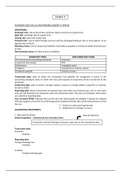
EXCHANGE RATE (IAS 21) AND HEDGING AGAINST IT (IFRS 9)
DEFINITIONS:
Exchange rate: rate at which two countries trade currencies at a given time.
Spot rate: exchange rate at a given time.
Closing rate: spot rate at year end.
Forward rate: rate at which foreign currency will be exchanged between two or more parties, at an
agreed time in future.
Monetary items: cash or assets and liabilities receivable or payable in a fixed pre-determined amount
of cash.
Non-monetary items: all other assets or liabilities.
MONETARY ITEMS NON-MONETARY ITEMS
All current assets (excluding inventory) Inventory
Long-term borrowings PPE
Debentures Intangible assets
Creditors Investment in ordinary shares
Dividends payable Ordinary shares
Transaction date: date on which the transaction first qualifies for recognition in terms of the
accounting standards. Date on which the risks and rewards of ownership will be transferred to the
purchaser.
Settlement date: date on which a foreign creditor is paid or a foreign debtor’s payment is received.
(in part or fully)
Reporting date: where transactions are spread over more than one financial year, one or more-year
ends will fall between the transaction date and settlement date. The year-end between these dates
are called the reporting date.
Free on board (FOB): indicates who carries the risks when goods are shipped. If goods are shipped
FOB, the supplier carries the risk until the goods are loaded on board, after which the purchaser carries
the risk.
➢ Party to a contractual agreement.
➢ Settlement in a foreign currency.
ACCOUNTING TREATMENTS:
1. Sales and Purchases: Date of shipment
Initial recognition – monetary & non-monetary item:
Transaction amount (foreign currency) x spot rate on the transaction date
Transaction date:
Inventory
Creditors
Reporting date:
Foreign Exchange loss
Creditors
Creditors
Foreign Exchange gain
,Settlement date:
Creditors
Transaction amount (foreign currency) x new spot rate
Bank
Foreign Exchange loss
Creditors Balancing figure
OR
Creditors
Foreign Exchange Profit
Subsequent measurement – monetary items:
Amount payable or receivable: spot rate on the settlement date.
• Difference in rates, will be taken to P/L in SCI.
• This profit is realised.
1. Settled on or before year-end:
Transaction date:
Inventories Transaction amount (foreign currency) x spot rate on the transaction date
Creditors
Settlement date:
Creditors
Foreign Exchange loss Transaction amount (foreign currency) x new spot rate
Bank
2. Settled after year-end: CREDITOR
Transaction date:
Inventories Transaction amount (foreign currency) x spot rate on the transaction date
Creditors
Reporting date:
Foreign Exchange loss Transaction amount (foreign currency) x (Rate on transaction date – end of year rate)
Creditors
Settlement date: (Year-end rate – Begin rate) x transaction amount
Creditors
Foreign Exchange loss
Transaction date amount + reporting date amount
Bank
Transaction amount (foreign currency) x new spot rate
, DEBTOR 3. Settled after year-end:
Transaction date: Use spot rate on
Debtors the day it
Sales boards
Reporting date:
Debtors
Foreign Exchange gain
Settlement date: Amount x spot rate on settlement date
Bank
Foreign Exchange gain Amount x (begin rate – end of year rate)
Debtors
Transaction date – reporting date
Subsequent measurement – non-monetary items:
• Non-monetary items are not re-measured for currency fluctuations.
• UNLESS it is denominated in a foreign currency and is revalued.
• Replacement value is determined in the foreign currency, converted at the spot rate on
valuation date and compared to the R value recorded on transaction date.
2. Investments and loans:
When borrowing from foreign nations, amount and interest must be converted to R.
Transaction date:
1 Bank Transaction amount (foreign currency) x spot rate on the transaction date
Long-term loan
Reporting date:
2 Interest amount x Average rate for year
Finance charges
Long-term loan
3 Long-term loan
Bank Instalment amount x New spot rate
Foreign exchange loss (D*)
Long-term loan
(Outstanding amount x spot rate) – (OB + Interest – Instalment)
OR
Long-term loan
Foreign exchange gain OB = Prior outstanding amount x spot rate
4 Steps:
1. Outstanding loan $ amount + interest – instalment = A
2. Convert to R A x Spot rate @ Year-end = B
3. Current balance in R 1+2–3=C
4. Difference B – C = D*
, LENDERS PERSPECTIVE:
Transaction date:
Long-term loan Transaction amount (foreign currency) x spot rate on the transaction date
Bank
Reporting date:
Long-term loan Interest amount x Average rate for year
Finance income
Bank
Long-term loan Instalment amount x New spot rate
Foreign exchange loss
Long-term loan
(Outstanding amount x spot rate) – (OB + Interest – Instalment)
OR
Long-term loan OB = Prior outstanding amount x spot rate
Foreign exchange gain
HEDGING:
Definitions:
Forward exchange contract (FEC): Agree with bank to buy currency at a pre-determined price in
future.
Forward rate: Exchange rate determined for an agreed future date.
Hedging: is the policies and practices that an entity applies to manage its risks.
Hedge accounting: is a voluntary accounting model which is applied to hedging relationships provided
certain hedge criteria are met.
Hedging instrument: item to offset potential loss.
Hedging criteria:
• Have hedging instrument and hedging item
• Formal documentation of hedging relationship
• Relationship meets effectiveness requirements:
✓ Economic relationship between the two items
✓ Credit risk does not dominate value changes
✓ Hedge ratio is appropriate
Types of hedges:
1. Fair value hedge: From changes in fair value
2. Cash flow hedge: From variability in cash flows
EXCHANGE RATE (IAS 21) AND HEDGING AGAINST IT (IFRS 9)
DEFINITIONS:
Exchange rate: rate at which two countries trade currencies at a given time.
Spot rate: exchange rate at a given time.
Closing rate: spot rate at year end.
Forward rate: rate at which foreign currency will be exchanged between two or more parties, at an
agreed time in future.
Monetary items: cash or assets and liabilities receivable or payable in a fixed pre-determined amount
of cash.
Non-monetary items: all other assets or liabilities.
MONETARY ITEMS NON-MONETARY ITEMS
All current assets (excluding inventory) Inventory
Long-term borrowings PPE
Debentures Intangible assets
Creditors Investment in ordinary shares
Dividends payable Ordinary shares
Transaction date: date on which the transaction first qualifies for recognition in terms of the
accounting standards. Date on which the risks and rewards of ownership will be transferred to the
purchaser.
Settlement date: date on which a foreign creditor is paid or a foreign debtor’s payment is received.
(in part or fully)
Reporting date: where transactions are spread over more than one financial year, one or more-year
ends will fall between the transaction date and settlement date. The year-end between these dates
are called the reporting date.
Free on board (FOB): indicates who carries the risks when goods are shipped. If goods are shipped
FOB, the supplier carries the risk until the goods are loaded on board, after which the purchaser carries
the risk.
➢ Party to a contractual agreement.
➢ Settlement in a foreign currency.
ACCOUNTING TREATMENTS:
1. Sales and Purchases: Date of shipment
Initial recognition – monetary & non-monetary item:
Transaction amount (foreign currency) x spot rate on the transaction date
Transaction date:
Inventory
Creditors
Reporting date:
Foreign Exchange loss
Creditors
Creditors
Foreign Exchange gain
,Settlement date:
Creditors
Transaction amount (foreign currency) x new spot rate
Bank
Foreign Exchange loss
Creditors Balancing figure
OR
Creditors
Foreign Exchange Profit
Subsequent measurement – monetary items:
Amount payable or receivable: spot rate on the settlement date.
• Difference in rates, will be taken to P/L in SCI.
• This profit is realised.
1. Settled on or before year-end:
Transaction date:
Inventories Transaction amount (foreign currency) x spot rate on the transaction date
Creditors
Settlement date:
Creditors
Foreign Exchange loss Transaction amount (foreign currency) x new spot rate
Bank
2. Settled after year-end: CREDITOR
Transaction date:
Inventories Transaction amount (foreign currency) x spot rate on the transaction date
Creditors
Reporting date:
Foreign Exchange loss Transaction amount (foreign currency) x (Rate on transaction date – end of year rate)
Creditors
Settlement date: (Year-end rate – Begin rate) x transaction amount
Creditors
Foreign Exchange loss
Transaction date amount + reporting date amount
Bank
Transaction amount (foreign currency) x new spot rate
, DEBTOR 3. Settled after year-end:
Transaction date: Use spot rate on
Debtors the day it
Sales boards
Reporting date:
Debtors
Foreign Exchange gain
Settlement date: Amount x spot rate on settlement date
Bank
Foreign Exchange gain Amount x (begin rate – end of year rate)
Debtors
Transaction date – reporting date
Subsequent measurement – non-monetary items:
• Non-monetary items are not re-measured for currency fluctuations.
• UNLESS it is denominated in a foreign currency and is revalued.
• Replacement value is determined in the foreign currency, converted at the spot rate on
valuation date and compared to the R value recorded on transaction date.
2. Investments and loans:
When borrowing from foreign nations, amount and interest must be converted to R.
Transaction date:
1 Bank Transaction amount (foreign currency) x spot rate on the transaction date
Long-term loan
Reporting date:
2 Interest amount x Average rate for year
Finance charges
Long-term loan
3 Long-term loan
Bank Instalment amount x New spot rate
Foreign exchange loss (D*)
Long-term loan
(Outstanding amount x spot rate) – (OB + Interest – Instalment)
OR
Long-term loan
Foreign exchange gain OB = Prior outstanding amount x spot rate
4 Steps:
1. Outstanding loan $ amount + interest – instalment = A
2. Convert to R A x Spot rate @ Year-end = B
3. Current balance in R 1+2–3=C
4. Difference B – C = D*
, LENDERS PERSPECTIVE:
Transaction date:
Long-term loan Transaction amount (foreign currency) x spot rate on the transaction date
Bank
Reporting date:
Long-term loan Interest amount x Average rate for year
Finance income
Bank
Long-term loan Instalment amount x New spot rate
Foreign exchange loss
Long-term loan
(Outstanding amount x spot rate) – (OB + Interest – Instalment)
OR
Long-term loan OB = Prior outstanding amount x spot rate
Foreign exchange gain
HEDGING:
Definitions:
Forward exchange contract (FEC): Agree with bank to buy currency at a pre-determined price in
future.
Forward rate: Exchange rate determined for an agreed future date.
Hedging: is the policies and practices that an entity applies to manage its risks.
Hedge accounting: is a voluntary accounting model which is applied to hedging relationships provided
certain hedge criteria are met.
Hedging instrument: item to offset potential loss.
Hedging criteria:
• Have hedging instrument and hedging item
• Formal documentation of hedging relationship
• Relationship meets effectiveness requirements:
✓ Economic relationship between the two items
✓ Credit risk does not dominate value changes
✓ Hedge ratio is appropriate
Types of hedges:
1. Fair value hedge: From changes in fair value
2. Cash flow hedge: From variability in cash flows