

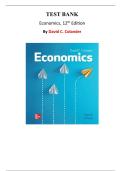
TEST BANK
Economics, 12th Edition
By David C. Colander
N
U
R
SE
D
O
C
S
,TABLE OF CONTENT
Part I: THINKING LIKE AN ECONOMIST
1. Economics and Economic Reasoning
2. The Production Possibility Model, Trade, and Globalization
3. Economic Institutions Appendix: The History of Economic Systems
4. Supply and Demand
5. Using Supply and Demand
PART II: MICROECONOMICS: THE POWER OF TRADITIONAL
ECONOMIC MODELS
6. Describing Supply and Demand: Elasticities
7. Taxation and Government Intervention
N
8. Market Failure versus Government Failure
INTERNATIONAL ECONOMIC POLICY ISSUES
9. Comparative Advantage, Exchange Rates, and Globalization
10. International Trade Policy
U
PRODUCTION AND COST ANALYSIS
11. Production and Cost Analysis I
12. Production and Cost Analysis II
R
MARKET STRUCTURE
13. Perfect Competition
14. Monopoly and Monopolistic Competition
SE
15. Oligopoly and Antitrust Policy
15W. Politics and Economics: The Case of Agricultural Markets
16. Real-World Competition and Technology
FACTOR MARKETS
17. Work and the Labor Market
18. Who Gets What? The Distribution of Income
D
CHOICE AND DECISION MAKING
19. The Logic of Individual Choice: The Foundation of Supply and Demand
20. Game Theory, Strategic Decision Making, and Behavioral Economics
MODERN ECONOMIC THINKING
O
21. Thinking Like a Modern Economist
22. Behavioral Economics and Modern Economic Policy
23. Microeconomic Policy, Economic Reasoning, and Beyond
C
PART III: MACROECONOMICS
MACROECONOMIC BASICS
24. Economic Growth, Business Cycles, and Unemployment
25. Measuring and Describing the Aggregate Economy
S
POLICY MODELS
26. The Keynesian Short-Run Policy Model: Demand-Side Policies
26W. The Multiplier Model
27. The Classical Long-Run Policy Model: Growth and Supply-Side Policies
FINANCE, MONEY, AND THE ECONOMY
28. The Financial Sector and the Economy
29. Conventional Monetary Policy
30. Financial Crises, Regulation, and the Crypto Challenge
TAXES, BUDGETS, AND FISCAL POLICY
31. Deficits and Debt: The Austerity Debate
32. The Fiscal Policy Dilemma
,MACROECONOMIC PROBLEMS
33. Jobs and Unemployment
34. Inflation, Deflation, and Macro Policy
INTERNATIONAL MACROECONOMIC POLICY ISSUES
35. International Financial Policy
36. Macro Policy in a Global Setting
37. Structural Stagnation, Globalization and the Post-COVID Blues
38. Macro Policy in Developing Countries
N
U
R
SE
D
O
C
S
, Student name:__________
TRUE/FALSE - Write 'T' if the statement is true and 'F' if the statement is false.
The answers to an economy's three central economic problems are determined by the interaction
of three forces: economic forces, political forces, and social forces.
true
false
N
Scarcity exists because economies cannot produce enough to meet the perceived desires of all
individuals.
U
true
false
R
Only marginal costs, not sunk costs, affect economic decisions if individuals are rational.
SE
true
false
The economic decision rule is to undertake an action only when the marginal benefits of that
action are greater than its total costs.
D
true
O
false
The opportunity cost of undertaking an activity includes any sunk cost.
C
true
false
S
The "invisible hand" is the price mechanism that guides people’s actions in the market.
true
false
Version 1 1
Economics, 12th Edition
By David C. Colander
N
U
R
SE
D
O
C
S
,TABLE OF CONTENT
Part I: THINKING LIKE AN ECONOMIST
1. Economics and Economic Reasoning
2. The Production Possibility Model, Trade, and Globalization
3. Economic Institutions Appendix: The History of Economic Systems
4. Supply and Demand
5. Using Supply and Demand
PART II: MICROECONOMICS: THE POWER OF TRADITIONAL
ECONOMIC MODELS
6. Describing Supply and Demand: Elasticities
7. Taxation and Government Intervention
N
8. Market Failure versus Government Failure
INTERNATIONAL ECONOMIC POLICY ISSUES
9. Comparative Advantage, Exchange Rates, and Globalization
10. International Trade Policy
U
PRODUCTION AND COST ANALYSIS
11. Production and Cost Analysis I
12. Production and Cost Analysis II
R
MARKET STRUCTURE
13. Perfect Competition
14. Monopoly and Monopolistic Competition
SE
15. Oligopoly and Antitrust Policy
15W. Politics and Economics: The Case of Agricultural Markets
16. Real-World Competition and Technology
FACTOR MARKETS
17. Work and the Labor Market
18. Who Gets What? The Distribution of Income
D
CHOICE AND DECISION MAKING
19. The Logic of Individual Choice: The Foundation of Supply and Demand
20. Game Theory, Strategic Decision Making, and Behavioral Economics
MODERN ECONOMIC THINKING
O
21. Thinking Like a Modern Economist
22. Behavioral Economics and Modern Economic Policy
23. Microeconomic Policy, Economic Reasoning, and Beyond
C
PART III: MACROECONOMICS
MACROECONOMIC BASICS
24. Economic Growth, Business Cycles, and Unemployment
25. Measuring and Describing the Aggregate Economy
S
POLICY MODELS
26. The Keynesian Short-Run Policy Model: Demand-Side Policies
26W. The Multiplier Model
27. The Classical Long-Run Policy Model: Growth and Supply-Side Policies
FINANCE, MONEY, AND THE ECONOMY
28. The Financial Sector and the Economy
29. Conventional Monetary Policy
30. Financial Crises, Regulation, and the Crypto Challenge
TAXES, BUDGETS, AND FISCAL POLICY
31. Deficits and Debt: The Austerity Debate
32. The Fiscal Policy Dilemma
,MACROECONOMIC PROBLEMS
33. Jobs and Unemployment
34. Inflation, Deflation, and Macro Policy
INTERNATIONAL MACROECONOMIC POLICY ISSUES
35. International Financial Policy
36. Macro Policy in a Global Setting
37. Structural Stagnation, Globalization and the Post-COVID Blues
38. Macro Policy in Developing Countries
N
U
R
SE
D
O
C
S
, Student name:__________
TRUE/FALSE - Write 'T' if the statement is true and 'F' if the statement is false.
The answers to an economy's three central economic problems are determined by the interaction
of three forces: economic forces, political forces, and social forces.
true
false
N
Scarcity exists because economies cannot produce enough to meet the perceived desires of all
individuals.
U
true
false
R
Only marginal costs, not sunk costs, affect economic decisions if individuals are rational.
SE
true
false
The economic decision rule is to undertake an action only when the marginal benefits of that
action are greater than its total costs.
D
true
O
false
The opportunity cost of undertaking an activity includes any sunk cost.
C
true
false
S
The "invisible hand" is the price mechanism that guides people’s actions in the market.
true
false
Version 1 1


