TESTBANK
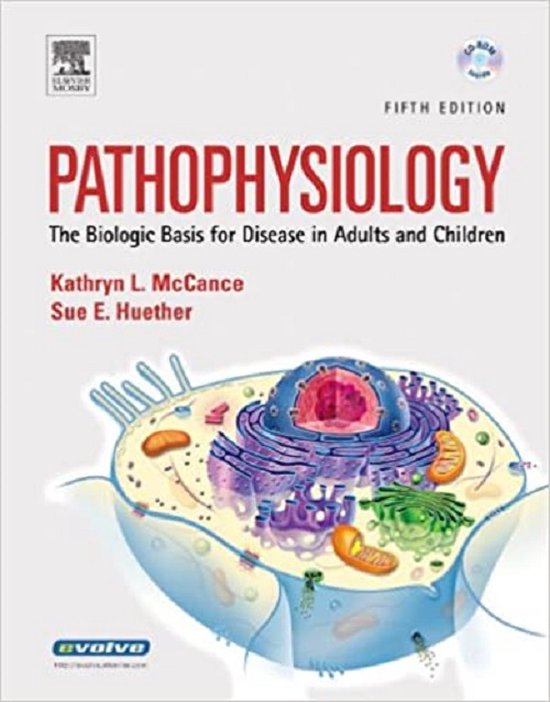
PATHOPHYSIOLOGY
THEBIOLOGICBASISFORDISEASEINADULTSANDCHILDREN
.6T .6T .6T .6T .6T .6T .6T .6T
8thEdition
.6t
KathrynL.McCance,SueE.Huether
.6t .6t .6t .6t
, 2
y, .6ty, .6ty,
Contents
Chapter 01: Cellular Biology ...........................................................................................................................4
.6t .6t .6t
Chapter 02: Altered Cellular and Tissue Biology: Environmental Agents .........................................................18
.6t .6t .6t .6t .6t .6t .6t .6t
Chapter 03: The Cellular Environment: Fluids and Electrolytes, Acids and Bases .............................................31
.6t .6t .6t .6t .6t .6t .6t .6t .6t .6t
Chapter 04:Genes and GeneticDiseases .......................................................................................................44
.6t .6t .6t .6t .6t
Chapter 05: Genes, Environment-Lifestyle,and Common Diseases ...............................................................55
.6t .6t .6t .6t .6t .6t
Chapter 06: Epigenetics and Disease ............................................................................................................63
.6t .6t .6t .6t
Chapter 07: Innate Immunity: Inflammation and Wound Healing ...................................................................68
.6t .6t .6t .6t .6t .6t .6t
Chapter08: Adaptive Immunity ...................................................................................................................83
.6t .6t .6t
Chapter 09: Alterations in Immunity and Inflammation .................................................................................95
.6t .6t .6t .6t .6t .6t
Chapter 10: Infection .................................................................................................................................108
.6t .6t
Chapter 11: Stress and Disease ...................................................................................................................117
.6t .6t .6t .6t
Chapter 12: CancerBiology.........................................................................................................................124
.6t .6t .6t
Chapter 13: Cancer Epidemiology ...............................................................................................................137
.6t .6t .6t
Chapter 14: Cancerin Children....................................................................................................................143
.6t .6t .6t .6t
Chapter 15: Structure and Function ofthe Neurologic System ....................................................................148
.6t .6t . 6t .6t .6t .6t .6t
Chapter 16: Pain,Temperature Regulation, Sleep, andSensory Function ....................................................159
.6t .6t .6t .6t .6t .6t t
.6 .6t
Chapter 17: Alterationsin Cognitive Systems,Cerebral Hemodynamics, and Motor Function .....................174
.6t .6t .6t .6t .6t .6t .6t . 6t .6t
Chapter 18:Disordersofthe Centraland Peripheral Nervous Systems andthe Neuromuscular Junction
.6t .6t .6t .6t t
.6 .6t .6t .6t .6t t
.6 .6t . 6t
. ............................................................................................................................................................ 188
Chapter 19: Neurobiology of Schizophrenia,Mood Disorders, and Anxiety Disorders ...................................199
.6t .6t .6t .6t .6t .6t .6t .6t .6t
Chapter 20: Alterations ofNeurologic Function in Children .........................................................................206
. 6t .6t y, .6t .6t .6t .6t
Chapter 21:MechanismsofHormonalRegulation .......................................................................................213
.6t .6t t
.6 t
.6
Chapter 22:Alterations ofHormonal Regulation .........................................................................................222
.6t t
.6 y, .6t .6t
Chapter 23: Obesity andDisordersof Nutrition ...........................................................................................234
.6t .6t .6t .6t .6t .6t
Chapter 24: Structure and Function ofthe Reproductive Systems ...............................................................239
.6t .6t . 6t .6t .6t .6t . 6t
Chapter 25: Alterations ofthe Female Reproductive System .......................................................................249
.6t .6t .6t .6t .6t .6t .6t
Chapter 26: Alterationsofthe Male Reproductive System ..........................................................................259
.6t .6t .6t .6t .6t .6t .6t
Chapter 27: Sexually Transmitted Infections ..............................................................................................265
.6t .6t .6t .6t
Chapter 28: Structure and Function ofthe Hematologic System .................................................................273
.6t .6t . 6t .6t .6t .6t .6t
Chapter 29: Alterations ofErythrocytes, Platelets, andHemostatic Function ...............................................283
.6t .6t .6t t
.6 .6t . 6t .6t . 6t
, 3
y, .6ty, .6ty,
Chapter 30: AlterationsofLeukocyte and Lymphoid Function......................................................................293
.6t .6t .6t .6t .6t .6t .6t
Chapter 31: Alterations ofHematologic Function in Children .......................................................................300
.6t .6t .6t t
.6 .6t .6t .6t
Chapter 32: Structure and Function ofthe Cardiovascular and Lymphatic Systems ......................................311
.6t .6t .6t .6t .6t .6t .6t .6t . 6t
Chapter 33: Alterations ofCardiovascular Function ....................................................................................324
.6t .6t .6t .6
t .6t
Chapter 34: Alterations ofCardiovascular Function inChildren ....................................................................338
.6t .6t .6t t
.6 .6t .6t .6t
Chapter 35:Structure and Function ofthePulmonary System .....................................................................346
.6t .6t .6t .6t .6t .6t
Chapter 36: Alterations ofPulmonary Function .........................................................................................356
.6t .6t y, .6t
Chapter 37: Alterations ofPulmonary Function inChildren ..........................................................................373
.6t .6t y, .6t .6t .6t
Chapter 38: Structure and Function ofthe Renal andUrologic Systems........................................................381
.6t .6t .6t .6t .6t .6t .6t .6t .6t
Chapter 39: Alterations ofRenal and Urinary Tract Function .......................................................................391
.6t .6t y, .6t .6t .6t .6t .6t
Chapter 40:AlterationsofRenal and UrinaryTract Function in Children ........................................................401
.6t .6t .6t t
.6 .6t .6t .6t .6t .6t .6t
Chapter 41: Structure andFunction oftheDigestive System ........................................................................409
.6t .6t .6t .6t .6t .6t
Chapter 42: AlterationsofDigestive Function .............................................................................................421
.6t .6t .6t t
.6 . 6t
Chapter 43: AlterationsofDigestive Function in Children ............................................................................432
.6t .6t .6t t
.6 .6t .6t .6t
Chapter 44: Structure and Function ofthe Musculoskeletal System ...........................................................441
.6t .6t . 6t .6t .6t .6t . 6t
Chapter 45: Alterations ofMusculoskeletal Function ..................................................................................453
.6t .6t .6t t
.6 .6t
Chapter 46: Alterations ofMusculoskeletal Function in Children .................................................................466
.6t .6t .6t t
.6 .6t .6t .6t
Chapter 47: Structure, Function, andDisordersof the Integument ...............................................................475
.6t .6t .6t .6t .6t .6t .6t .6t
Chapter 48: Alterations ofthe Integument in Children .................................................................................486
.6t .6t .6t .6t .6t .6t .6t
Chapter 49: Shock,Multiple OrganDysfunctionSyndrome, and Burnsin Adults ............................................494
.6t .6t .6t .6t .6t .6t .6t .6t .6t .6t
Chapter 50: Shock,Multiple OrganDysfunctionSyndrome, and Burnsin Children .........................................502
.6t .6t .6t .6t .6t .6t .6t .6t .6t .6t
, TestBank -Pathophysiology:TheBiologicBasisforDiseaseinAdultsand Children(8th)
t
.6 .6t t
.6 .6t .6t t
.6 t
.6 t
.6 .6t .6t t
.6 .6t t
.6 .6yt , .6ty, .6ty, . 6 t y . 6 t , . 6 t 4
Chapter01:CellularBiology t
.6
MULTIPLE CHOICE .6t
1. Whichstatement best describes thecellularfunction of metabolicabsorption?
.6t .6t .6t .6t .6t .6t .6t .6t .6t
a. Cellscanproduceproteins. .6t .6t .6t
b. Cellscansecrete digestiveenzymes. .6t .6t .6t .6t
c. Cellscantakeinandusenutrients. .6t .6t .6t .6t .6t
d. Cellscan synthesizefats. .6t .6t .6t
ANS: . 6 t C
Inmetabolic absorption,all cellstakeinand usenutrientsand othersubstances from their
.6t .6t .6t .6t .6t .6t .6t .6t .6t .6t .6t .6t .6t .6t
surroundings. The remainingoptions arenot inclusive in their descriptions of cellular
.6t .6t .6t .6t .6t .6t .6t .6t .6t .6t
metabolicabsorption.
.6t
PTS: . 6 t . 6 t 1 DIF: CognitiveLevel:Remembering .6t .6t
2. Whereismostofacell’sgeneticinformation,includingRNAand DNA,contained?.6t .6t .6t .6t .6t .6t .6t .6t .6t .6t .6t
a. Mitochondria
b. Ribosome
c. Nucleolus
d. Lysosome
ANS: . 6 t C
Thenucleuscontainsthe nucleolus, asmalldense structurecomposedlargelyofRNA,most ofthe cellular
.6t .6t .6t .6t .6t .6t .6t .6t .6t .6t .6t .6t .6t y, .6t
DNA, andthe DNA-binding proteins, suchas thehistones, which regulate its activity.
.6t .6t .6t .6t .6t .6t .6t .6t .6t .6t .6t .6t .6t
The mitochondria are responsible for cellular respiration and energyproduction.
. 6t . 6 t . 6t . 6 t . 6 t . 6t . 6 t . 6 t
. Ribosomes’chieffunction isto provide sitesforcellularprotein synthesis. Lysosomesfunctionas
6 t .6t .6t .6t .6t .6t .6t .6t .6t .6t .6t .6t .6t y,
the intracellular digestive system.
.6t .6t .6t .6t
PTS: . 6 t . 6 t 1 DIF: CognitiveLevel: Remembering .6t .6t
3. Whichcomponentofthecellproduceshydrogenperoxide(H2O2)byusingoxygento
.6t .6t .6t .6t .6t .6t .6t .6t .6t .6t .6t
.6t removehydrogen atoms from specific substrates in an oxidative reaction? .6t .6t .6t .6t .6t .6t .6t .6t
a. Lysosomes
b. Peroxisomes
c. Ribosomes
d. Endosome
ANS: . 6 t B
PATHOPHYSIOLOGY
THEBIOLOGICBASISFORDISEASEINADULTSANDCHILDREN
.6T .6T .6T .6T .6T .6T .6T .6T
8thEdition
.6t
KathrynL.McCance,SueE.Huether
.6t .6t .6t .6t
, 2
y, .6ty, .6ty,
Contents
Chapter 01: Cellular Biology ...........................................................................................................................4
.6t .6t .6t
Chapter 02: Altered Cellular and Tissue Biology: Environmental Agents .........................................................18
.6t .6t .6t .6t .6t .6t .6t .6t
Chapter 03: The Cellular Environment: Fluids and Electrolytes, Acids and Bases .............................................31
.6t .6t .6t .6t .6t .6t .6t .6t .6t .6t
Chapter 04:Genes and GeneticDiseases .......................................................................................................44
.6t .6t .6t .6t .6t
Chapter 05: Genes, Environment-Lifestyle,and Common Diseases ...............................................................55
.6t .6t .6t .6t .6t .6t
Chapter 06: Epigenetics and Disease ............................................................................................................63
.6t .6t .6t .6t
Chapter 07: Innate Immunity: Inflammation and Wound Healing ...................................................................68
.6t .6t .6t .6t .6t .6t .6t
Chapter08: Adaptive Immunity ...................................................................................................................83
.6t .6t .6t
Chapter 09: Alterations in Immunity and Inflammation .................................................................................95
.6t .6t .6t .6t .6t .6t
Chapter 10: Infection .................................................................................................................................108
.6t .6t
Chapter 11: Stress and Disease ...................................................................................................................117
.6t .6t .6t .6t
Chapter 12: CancerBiology.........................................................................................................................124
.6t .6t .6t
Chapter 13: Cancer Epidemiology ...............................................................................................................137
.6t .6t .6t
Chapter 14: Cancerin Children....................................................................................................................143
.6t .6t .6t .6t
Chapter 15: Structure and Function ofthe Neurologic System ....................................................................148
.6t .6t . 6t .6t .6t .6t .6t
Chapter 16: Pain,Temperature Regulation, Sleep, andSensory Function ....................................................159
.6t .6t .6t .6t .6t .6t t
.6 .6t
Chapter 17: Alterationsin Cognitive Systems,Cerebral Hemodynamics, and Motor Function .....................174
.6t .6t .6t .6t .6t .6t .6t . 6t .6t
Chapter 18:Disordersofthe Centraland Peripheral Nervous Systems andthe Neuromuscular Junction
.6t .6t .6t .6t t
.6 .6t .6t .6t .6t t
.6 .6t . 6t
. ............................................................................................................................................................ 188
Chapter 19: Neurobiology of Schizophrenia,Mood Disorders, and Anxiety Disorders ...................................199
.6t .6t .6t .6t .6t .6t .6t .6t .6t
Chapter 20: Alterations ofNeurologic Function in Children .........................................................................206
. 6t .6t y, .6t .6t .6t .6t
Chapter 21:MechanismsofHormonalRegulation .......................................................................................213
.6t .6t t
.6 t
.6
Chapter 22:Alterations ofHormonal Regulation .........................................................................................222
.6t t
.6 y, .6t .6t
Chapter 23: Obesity andDisordersof Nutrition ...........................................................................................234
.6t .6t .6t .6t .6t .6t
Chapter 24: Structure and Function ofthe Reproductive Systems ...............................................................239
.6t .6t . 6t .6t .6t .6t . 6t
Chapter 25: Alterations ofthe Female Reproductive System .......................................................................249
.6t .6t .6t .6t .6t .6t .6t
Chapter 26: Alterationsofthe Male Reproductive System ..........................................................................259
.6t .6t .6t .6t .6t .6t .6t
Chapter 27: Sexually Transmitted Infections ..............................................................................................265
.6t .6t .6t .6t
Chapter 28: Structure and Function ofthe Hematologic System .................................................................273
.6t .6t . 6t .6t .6t .6t .6t
Chapter 29: Alterations ofErythrocytes, Platelets, andHemostatic Function ...............................................283
.6t .6t .6t t
.6 .6t . 6t .6t . 6t
, 3
y, .6ty, .6ty,
Chapter 30: AlterationsofLeukocyte and Lymphoid Function......................................................................293
.6t .6t .6t .6t .6t .6t .6t
Chapter 31: Alterations ofHematologic Function in Children .......................................................................300
.6t .6t .6t t
.6 .6t .6t .6t
Chapter 32: Structure and Function ofthe Cardiovascular and Lymphatic Systems ......................................311
.6t .6t .6t .6t .6t .6t .6t .6t . 6t
Chapter 33: Alterations ofCardiovascular Function ....................................................................................324
.6t .6t .6t .6
t .6t
Chapter 34: Alterations ofCardiovascular Function inChildren ....................................................................338
.6t .6t .6t t
.6 .6t .6t .6t
Chapter 35:Structure and Function ofthePulmonary System .....................................................................346
.6t .6t .6t .6t .6t .6t
Chapter 36: Alterations ofPulmonary Function .........................................................................................356
.6t .6t y, .6t
Chapter 37: Alterations ofPulmonary Function inChildren ..........................................................................373
.6t .6t y, .6t .6t .6t
Chapter 38: Structure and Function ofthe Renal andUrologic Systems........................................................381
.6t .6t .6t .6t .6t .6t .6t .6t .6t
Chapter 39: Alterations ofRenal and Urinary Tract Function .......................................................................391
.6t .6t y, .6t .6t .6t .6t .6t
Chapter 40:AlterationsofRenal and UrinaryTract Function in Children ........................................................401
.6t .6t .6t t
.6 .6t .6t .6t .6t .6t .6t
Chapter 41: Structure andFunction oftheDigestive System ........................................................................409
.6t .6t .6t .6t .6t .6t
Chapter 42: AlterationsofDigestive Function .............................................................................................421
.6t .6t .6t t
.6 . 6t
Chapter 43: AlterationsofDigestive Function in Children ............................................................................432
.6t .6t .6t t
.6 .6t .6t .6t
Chapter 44: Structure and Function ofthe Musculoskeletal System ...........................................................441
.6t .6t . 6t .6t .6t .6t . 6t
Chapter 45: Alterations ofMusculoskeletal Function ..................................................................................453
.6t .6t .6t t
.6 .6t
Chapter 46: Alterations ofMusculoskeletal Function in Children .................................................................466
.6t .6t .6t t
.6 .6t .6t .6t
Chapter 47: Structure, Function, andDisordersof the Integument ...............................................................475
.6t .6t .6t .6t .6t .6t .6t .6t
Chapter 48: Alterations ofthe Integument in Children .................................................................................486
.6t .6t .6t .6t .6t .6t .6t
Chapter 49: Shock,Multiple OrganDysfunctionSyndrome, and Burnsin Adults ............................................494
.6t .6t .6t .6t .6t .6t .6t .6t .6t .6t
Chapter 50: Shock,Multiple OrganDysfunctionSyndrome, and Burnsin Children .........................................502
.6t .6t .6t .6t .6t .6t .6t .6t .6t .6t
, TestBank -Pathophysiology:TheBiologicBasisforDiseaseinAdultsand Children(8th)
t
.6 .6t t
.6 .6t .6t t
.6 t
.6 t
.6 .6t .6t t
.6 .6t t
.6 .6yt , .6ty, .6ty, . 6 t y . 6 t , . 6 t 4
Chapter01:CellularBiology t
.6
MULTIPLE CHOICE .6t
1. Whichstatement best describes thecellularfunction of metabolicabsorption?
.6t .6t .6t .6t .6t .6t .6t .6t .6t
a. Cellscanproduceproteins. .6t .6t .6t
b. Cellscansecrete digestiveenzymes. .6t .6t .6t .6t
c. Cellscantakeinandusenutrients. .6t .6t .6t .6t .6t
d. Cellscan synthesizefats. .6t .6t .6t
ANS: . 6 t C
Inmetabolic absorption,all cellstakeinand usenutrientsand othersubstances from their
.6t .6t .6t .6t .6t .6t .6t .6t .6t .6t .6t .6t .6t .6t
surroundings. The remainingoptions arenot inclusive in their descriptions of cellular
.6t .6t .6t .6t .6t .6t .6t .6t .6t .6t
metabolicabsorption.
.6t
PTS: . 6 t . 6 t 1 DIF: CognitiveLevel:Remembering .6t .6t
2. Whereismostofacell’sgeneticinformation,includingRNAand DNA,contained?.6t .6t .6t .6t .6t .6t .6t .6t .6t .6t .6t
a. Mitochondria
b. Ribosome
c. Nucleolus
d. Lysosome
ANS: . 6 t C
Thenucleuscontainsthe nucleolus, asmalldense structurecomposedlargelyofRNA,most ofthe cellular
.6t .6t .6t .6t .6t .6t .6t .6t .6t .6t .6t .6t .6t y, .6t
DNA, andthe DNA-binding proteins, suchas thehistones, which regulate its activity.
.6t .6t .6t .6t .6t .6t .6t .6t .6t .6t .6t .6t .6t
The mitochondria are responsible for cellular respiration and energyproduction.
. 6t . 6 t . 6t . 6 t . 6 t . 6t . 6 t . 6 t
. Ribosomes’chieffunction isto provide sitesforcellularprotein synthesis. Lysosomesfunctionas
6 t .6t .6t .6t .6t .6t .6t .6t .6t .6t .6t .6t .6t y,
the intracellular digestive system.
.6t .6t .6t .6t
PTS: . 6 t . 6 t 1 DIF: CognitiveLevel: Remembering .6t .6t
3. Whichcomponentofthecellproduceshydrogenperoxide(H2O2)byusingoxygento
.6t .6t .6t .6t .6t .6t .6t .6t .6t .6t .6t
.6t removehydrogen atoms from specific substrates in an oxidative reaction? .6t .6t .6t .6t .6t .6t .6t .6t
a. Lysosomes
b. Peroxisomes
c. Ribosomes
d. Endosome
ANS: . 6 t B