Geography: Rural and Urban Sett lements
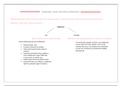
Settlement geography = study of the site, situation, size, complexity, pattern, and function of human settlements in the past, present and future.
Settlement = a place where a group of people live
Settlement
Site Situation
(The actual place where a settlement grew) (The study of the relationship between a settlement and its region)
Factors influencing the site of settlement To describe the situation, features surrounding the
Physical (water, soil) site are referred to (soil, climate, rivers) or the
Economic (minerals for mining) activities that occur. E.g. Kimberly was established
Trade and transport factors (natural on poor site, but discovery of diamonds enabled
harbour) development.
Cultural/social (better living conditions,
more employment, easier traffic flow
or easy access to schools etc.)
Political (government provided houses)
Historical factors (e.g. hilltop as a defensive
sight for protection against invaders)
, Unit 2: Rural and Urban Sett lements
Rural settlement = a small settlement with a small population involved in the primary activities; the settlement is unifunctional
Urban settlement = a large settlement with a large population involved in secondary, tertiary, and quaternary activities; the settlement is multifunctional
Agricultural + industrial revolution allowed improvement in farming methods (food surplus allowed people to stop farming and create cities)
Size and Economic activity and Services Land Use Size and complexity Pattern
population function
Larger in size and Multifunctional: High schools, Settlements are -Isolated farmstead (smallest, least Nucleated pattern =
population size secondary activities universities, denser and building complex, primary activities) settlement dwellings form a
Urban (manufacturing), tertiary malls, transport) closely grouped and -Hamlet (loose grouping of some dense grouping of buildings
(trade, transport, is available a mixture of land use farmsteads) (Dense structure of
education, service, and - Village (denser grouping of farmsteads buildings and infrastructure)
quaternary (law, media with primary activities
etc.)
Small in physical Unifunctional: primary High schools, Land is widely -Town (densely populated, complex Dispersed pattern =
size and small activities (mining, fishing, universities, spaced and used for infrastructure and varied activities) settlement dwellings are
Rural population and forestry) malls, transport) one or two activities -City (large urban area where people isolated and spaced far from
is not always work and live) each other (individual
available -Conurbation (large urban area formed by houses in hamlets/village
the growth of many towns and cities) are closely spaced)
-Metropolis (main city in a region,
surrounded by dependent towns)
-Megalopolis (gigantic urban complex
formed when a number of conurbations
join)
Settlement geography = study of the site, situation, size, complexity, pattern, and function of human settlements in the past, present and future.
Settlement = a place where a group of people live
Settlement
Site Situation
(The actual place where a settlement grew) (The study of the relationship between a settlement and its region)
Factors influencing the site of settlement To describe the situation, features surrounding the
Physical (water, soil) site are referred to (soil, climate, rivers) or the
Economic (minerals for mining) activities that occur. E.g. Kimberly was established
Trade and transport factors (natural on poor site, but discovery of diamonds enabled
harbour) development.
Cultural/social (better living conditions,
more employment, easier traffic flow
or easy access to schools etc.)
Political (government provided houses)
Historical factors (e.g. hilltop as a defensive
sight for protection against invaders)
, Unit 2: Rural and Urban Sett lements
Rural settlement = a small settlement with a small population involved in the primary activities; the settlement is unifunctional
Urban settlement = a large settlement with a large population involved in secondary, tertiary, and quaternary activities; the settlement is multifunctional
Agricultural + industrial revolution allowed improvement in farming methods (food surplus allowed people to stop farming and create cities)
Size and Economic activity and Services Land Use Size and complexity Pattern
population function
Larger in size and Multifunctional: High schools, Settlements are -Isolated farmstead (smallest, least Nucleated pattern =
population size secondary activities universities, denser and building complex, primary activities) settlement dwellings form a
Urban (manufacturing), tertiary malls, transport) closely grouped and -Hamlet (loose grouping of some dense grouping of buildings
(trade, transport, is available a mixture of land use farmsteads) (Dense structure of
education, service, and - Village (denser grouping of farmsteads buildings and infrastructure)
quaternary (law, media with primary activities
etc.)
Small in physical Unifunctional: primary High schools, Land is widely -Town (densely populated, complex Dispersed pattern =
size and small activities (mining, fishing, universities, spaced and used for infrastructure and varied activities) settlement dwellings are
Rural population and forestry) malls, transport) one or two activities -City (large urban area where people isolated and spaced far from
is not always work and live) each other (individual
available -Conurbation (large urban area formed by houses in hamlets/village
the growth of many towns and cities) are closely spaced)
-Metropolis (main city in a region,
surrounded by dependent towns)
-Megalopolis (gigantic urban complex
formed when a number of conurbations
join)