Migration Notes
Geography A-Level
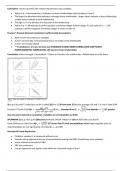
,Key Terms:
, Enquiry question 1: What are the impacts of globalisation on international
migration?
Globalisation has led to an increase in migration both within countries and among them.
Globalisation has resulted in two processes affecting the demand for labour:
- At a national scale, people move from traditional rural economies to work in cities,
which have become hubs of industrial activity
- At an international scale, there is easier movement of people; the EU allows free
movement, whilst elsewhere most countries readily offer work visas to those with skills
and a sponsor
Rural-urban migration in China:
1) Rural-urban migration in China
The global shift in manufacturing from Europe and the USA to many Asian countries,
began in the 1970s and 80s. China’s rapid industrialisation has been accompanied by
rapid urbanisation, fuelled by rural-urban migration.
In 1980 over 80% of Chinese people lived in rural areas, by 2012 51% were urban.
Estimates suggest that, by 2025 a further 350 million people will have moved to China’s
cities.
However, there are barriers to migration within in China, known as the hukou system.
The system aims to keep people in rural areas by making everyone register at an official
residence. Thus making it hard for workers to change their official residence. This system
has become too restrictive, and acts as a barrier to urban integration for many Chinese.
2) The EU - Schengen Agreement
The Schengen Agreement took effects in 1995 and abolished many of the internal border
controls within the EU. This enabled passport-free control across most EU member
states.
Since 1995, millions of EU citizens have moved freely across the Schengen area. This has
helped to fill job vacancies in other EU countries. Over 14 million EU citizens now live in
another member state.
However, the agreement gets criticised by some, who claim that it gives easy access to
cheap labour, as well as allowing free movement to criminals and terrorists.
Trends in international migration:
International migration is the movement across national borders. Around 4% of the global
population live outside their country of birth. The proportion of international migrants
within each country varies, depending on each country’s attitudes and policies towards
immigration and engagement with the global economy. Two examples are Japan and
Australia.
Geography A-Level
,Key Terms:
, Enquiry question 1: What are the impacts of globalisation on international
migration?
Globalisation has led to an increase in migration both within countries and among them.
Globalisation has resulted in two processes affecting the demand for labour:
- At a national scale, people move from traditional rural economies to work in cities,
which have become hubs of industrial activity
- At an international scale, there is easier movement of people; the EU allows free
movement, whilst elsewhere most countries readily offer work visas to those with skills
and a sponsor
Rural-urban migration in China:
1) Rural-urban migration in China
The global shift in manufacturing from Europe and the USA to many Asian countries,
began in the 1970s and 80s. China’s rapid industrialisation has been accompanied by
rapid urbanisation, fuelled by rural-urban migration.
In 1980 over 80% of Chinese people lived in rural areas, by 2012 51% were urban.
Estimates suggest that, by 2025 a further 350 million people will have moved to China’s
cities.
However, there are barriers to migration within in China, known as the hukou system.
The system aims to keep people in rural areas by making everyone register at an official
residence. Thus making it hard for workers to change their official residence. This system
has become too restrictive, and acts as a barrier to urban integration for many Chinese.
2) The EU - Schengen Agreement
The Schengen Agreement took effects in 1995 and abolished many of the internal border
controls within the EU. This enabled passport-free control across most EU member
states.
Since 1995, millions of EU citizens have moved freely across the Schengen area. This has
helped to fill job vacancies in other EU countries. Over 14 million EU citizens now live in
another member state.
However, the agreement gets criticised by some, who claim that it gives easy access to
cheap labour, as well as allowing free movement to criminals and terrorists.
Trends in international migration:
International migration is the movement across national borders. Around 4% of the global
population live outside their country of birth. The proportion of international migrants
within each country varies, depending on each country’s attitudes and policies towards
immigration and engagement with the global economy. Two examples are Japan and
Australia.