

NURS 415 /313 cardio Exam_2 Study Guide,100% CORRECT
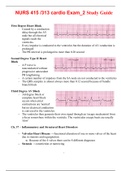
First Degree Heart Block - Caused by a conduction delay through the AV node but all electrical signals reach the ventricles. - Every impulse is conducted to the ventricles but the duration of AV conduction is prolonged - The PR interval is prolonged to more than 0.20 second Second Degree Type II Heart Block - A P wave is nonconducted without progressive antecedent PR lengthening - A certain number of impulses from the SA node are not conducted to the ventricles - The QRS complex is almost always more than 0.12 second because of bundle branch block Third Degree AV Block - 3rd degree block or complete heart block occurs when atrial contractions are 'normal' but no electrical conduction is conveyed to the ventricles. - The ventricles then generate their own signal through an 'escape mechanism' from a focus somewhere within the ventricle. The ventricular escape beats are usually 'slow' Ch. 37 – Inflammatory and Structural Heart Disorders - Valvular Heart Disease functional alteration of one or more valves of the heart due to stenosis and regurgitation o Because of the 4 valves there can be 8 different diagnoses - Stenosis constriction or narrowing o Can be due to hardening o So narrow, it doesn’t close completely, allowing leakage o In a stenotic valve, the valve orifice is smaller, impeding the forward flow of blood and creating a press ure gradient difference across and open valve o The degree of the stenosis is seen in the pressure gradient differences the higher the gradient, the greater the stenosis - Regurgitation insufficiency that permits leakage or backward flow through the incompetent valve; blood goes back and forth o Incomplete closure of the valve leaflets results in the backward flow of blood o In a normal heart, blood coming out of the atrium causes the valve to open as the ventricle fills, the valve closes - Cardiac output decreases, LV has to work harder trying to compensate for decreased CO CHF evolves - Valvular disorders occur in children and adolescents primarily from congenital conditions such as tricuspid atresia, pulmonary stenosis, and aortic stenosis. Mitral Valve Stenosis shortening, thickening of the (mitral) valve - Most cases result from rheumatic heart disease o Due to mostly infection or complication of streptococcal infection o Tonsils are the first structures that filter microorganisms in your system if your immune system is already weak, the microorganism multiples and creates a colony o It begins to circulate and goes to the valves of the heart o It eventually heals but creates a scar resulting in stenosis - Patho: o Rheumatic carditis causes scarring of the valve leaflets and the chordae tendineae contractures and adhesions develop between the commissures (the junctional areas) stenosic mitral valve takes on a “fish mouth” shape because of the thickening and shortening of the valve structures o These structural deformities cause obstruction of blood flow and create a pressure difference between the LA and LV during diastole o LA pressure and volume elevation cause increased pulmonary vasculature pressure and subsequent hypertrophy of the pulmonary vessels o Chronic mitral stenosis pressure overload occurs in the LA, the pulmonary bed, and the RV - Less common causes are congenital mitral stenosis, rheumatoid arthritis, and systemic lupus erythematosus - Manifestations: o Exertional dyspnea due to reduced lung compliance o Fatigue and palpitations from atrial fibrillation due to cardiac hypertrophy (ventricle enlarges because of constant compensation; atria enlarges because of constant backflow of blood) o Heart sounds include a loud first heart sound and a low-pitched, rumbling diastolic murmur (best heard at the apex with a stethoscope) murmur caused by turbulence of blood passing through a narrow passageway o Hoarseness from atrial enlargement pressing on the laryngeal nerve o Hemoptysis from pulmonary HTN o Chest pain from decreased CO o Seizures or stroke from emboli that can arise from blood stasis in the LA Mitral Valve Regurgitation backward flow of blood from LV to LA - Mitral valve function depends on intact mitral leaflets, mitral annulus, chordae Tendineae, papillary muscles, LA, and LV any defect in any of these structures can result in regurgitation - Allows blood to flow backward from the LV to LA due to incomplete valve closure during systole - LV and LA both work harder to preserve an adequate CO - Causes: o MI o Chronic rheumatic heart disease o Mitral valve prolapse o Ischemic papillary muscle dysfunction o Inflammatory due to the damage from the valve lifting and due to infection o Degenerative o Infective o Structural/congenital it just doesn’t close or fit together - Manifestations: o Chronic MR: Atrial enlargement, ventricular dilatation, and eventual ventricular hypertrophy resulting from additional volume load Weakness, fatigue, palpitations, dyspnea, orthopnea, paroxysmal nocturnal dyspnea, peripheral edema secondary to LV failure Systolic murmur due to accentuated LV filling o Acute MR LA and ventricle do not abruptly dilate Pulmonary edema and shock due to sudden increase in pressure and volume that is transmitted to the pulmonary bed Thready peripheral pulses, cool clammy extremities secondary to decreased CO Mitral Valve Prolapse abnormality of the mitral valve leaflets and the papillary muscles or chordae that allows the leaflets to prolapse, or buckle, back into the LA during systole - Etiology unknown - Most patients asymptomatic for their entire lives - Characteristic murmur from regurgitation that gets more intense through systole Aortic Valve Stenosis causes obstruction of flow from the LV to the aorta during systole - Results in LV hypertrophy and increased myocardial oxygen consumption because of the increased myocardial mass - As the disease progresses and compensatory mechanisms fail, reduced CO leads to pulmonary HTN and HF - Mitral valve disease often accompanies this when occurs secondary to rheumatic fever - Causes: o Congenital o Older patients usually a result of rheumatic fever or senile fibrocalcific degeneration - Manifestations: o Symptoms develop when the valve orifice becomes about one third its normal size o Symptoms include classic triad angina, syncope, and exertional dyspnea o Systolic crescendo-decrescendo murmur Aortic Valve Regurgitation retrograde blood flow from the ascending aorta into the LV during diastole, resulting in volume overload - LV initially compensates for chronic AR by dilation and hypertrophy - Myocardial contractility eventually declines and blood volumes increase in the LA and pulmonary bed pulmonary HTN and RV failure - Causes: o Result of primary disease of the aortic valve leaflets, the aortic root, or both o Acute AR trauma, IE, or aortic dissection Life-threatening emergency o Chronic AR result of rheumatic heart disease, a congenital bicuspid aortic valve, syphilis, or chronic rheumatic conditions - Manifestations: o Acute AR sudden signs of cardiovascular collapse (severe dyspnea, chest pain, and hypotension) o Chronic AR water hammer pulse (a strong, quick beat that collapses immediately) Generally remains asymptomatic or years and is seen with exertional dyspnea, orthopnea, and paroxysmal nocturnal dyspnea only after considerable myocardial dysfunction has occurred TABLE 37-13 Clinical Manifestations of Valvular Heart Diseases Clinical Manifestations Mitral valve stenosis Dyspnea on exertion, hemoptysis; fatigue; palpitations; loud, accentuated S1; low-pitched, rumbling diastolic murmur; atrial fibrillation on ECG Mitral valve regurgitation Acute—generally poorly tolerated, with fulminating pulmonary edema and shock developing rapidly; new systolic murmur Chronic—weakness, fatigue, exertional dyspnea, palpitations; an S3 gallop, holosystolic or pansystolic murmur Mitral valve prolapse Palpitations, dyspnea, chest pain, activity intolerance, syncope; midsystolic click, late or holosystolic murmur Aortic valve stenosis Angina, syncope, dyspnea on exertion, heart failure; normal or soft S1, diminished or absent S2, systolic crescendo-decrescendo murmur, prominent S4 Aortic valve regurgitation Acute—abrupt onset of profound dyspnea, chest pain, left ventricular failure and shock Chronic—fatigue, exertional dyspnea, orthopnea, PND; water-hammer pulse; heaving precordial impulse; diminished or absent S1, S3, or S4; soft decrescendo high-pitched diastolic murmur, Austin-Flint murmur, systolic ejection click Tricuspid and pulmonic stenosis Tricuspid—peripheral edema, ascites, hepatomegaly; diastolic low-pitched, decrescendo murmur with increased intensity during inspiration Pulmonic—fatigue, loud midsystolic murmur Management of Valvular Heart Disease - Prevent recurrent rheumatic fever or infective endocarditis prophylactic antibiotic therapy - Focused on preventing exacerbations of HF, acute pulmonary edema, thromboembolism, and recurrent endocarditis - If manifestations of HF present vasodilators, positive inotropes, beta blockers, diuretics, and low-sodium diet - Anticoagulant therapy is used to prevent and treat systemic or pulmonary embolization and is also used prophylactically in patients with A. fib - Dysrhythmias treated with digoxin, antidysrhythmic drugs, or electrical cardioversion - Beta blockers may be used to slow the ventricular rate in pts with A. fib Nursing Therapeutics - Prevent acquired rheumatic valvular disease - Prevent recurrent infection through antibiotics prophylactic treatment should continue for life in individuals who develop rheumatic heart disease o Additional prophylaxis is necessary if a patient with known rheumatic heart disease has dental or surgical procedures involving the upper respiratory, GI, or GU tract - Hospitalization due to CHF and arrhythmia - Exercise plan to increase cardiac tolerance strenuous physical activity should be avoided because damaged valves may not be able to handle the demand for an increase in CO o Restrict activities that regurlarly produce fatigue and dyspnea - Smoking cessation may increase incidences of respiratory and upper respiratory infections - Assist in planning ADLs emphasis on conserving energy, setting priorities, and taking planned rest periods Ch 38 – Vascular Disorders Aortic Aneurysm - Out pouchings or dilations of the arterial wall - May involve the aortic arch, thoracic aorta, and/or abdominal aorta o Most aneurysms found in abdominal aorta below the level of the renal arteries - The larger the aneurysm, the greater the risk of rupture - Patho: o The dilated aortic wall becomes lined with thrombi that can embolize, leading to acute ischemic symptoms in distal branches o Primary causes: Atherosclerosis plaques deposit beneath the intima causing degenerative changes in the media leading to loss of elasticity, weakening, and eventual aortic dilation • When the high pressure gets to be too much, an out pouching forms Genetic predisposition Penetrating or blunt trauma Infection - Classifications: o True Aneurysm one in which the wall of the artery forms the aneurysm, with at least one vessel layer still intact Fulsiform aneurysm circumferential and relatively uniform in shape Saccular aneurysm pouch like with a narrow neck connecting the bulge to one side of the arterial wall o False Aneurysm not an aneurysm, but a disruption of all layers of the arterial wall resulting in bleeding that is contained by surrounding structures May result from trauma or infection, or occur after peripheral artery bypass graft surgery at the site of the graft to artery anastomosis May also result from arterial leakage after removal of cannulae such as upper or lower extremity catheters and intraaortic balloon pump devices - Manifestations: o Often asymptomatic because the blood still flows through Becomes symptomatic when the delivery at the distal part no longer receives oxygen o Deep, diffuse chest pain that may extend to the interscapular area o Hoarseness a result of pressure on the recurrent laryngeal nerve o Dysphagia pressure on esophagus o Distended neck veins and edema of the head and arms caused by decreased venous return if aneurysm presses on superior vena cava o Pulsatile mass in the periumbilical area never touch pulsation (can result in another out pouching or rupture) o Audible bruit from the turbulence of blood in the structure o Pain, abdominal or back r/t compression of nearby anatomic structures o Discomfort with or without alteration of bowel elimination from bowel compression - Complications: o Rupture/Bleeding/Death o Grey Turner’s Sign severe back pain secondary to rupture occurring into the retroperitoneal space o If rupture occurs anteriorly into the abdominal cavity, most pts font survive long enough to get to the hospital die from massive hemorrhage - Collaborative Care o Goal prevent rupture of aneurysm If aneurysm is 4 cm conservative treatment (i.e., no lifting etc…anything that can increase abdominal pressure, basic lifestyle modifications) Greater that 5-6 cm surgical repair - Nursing Therapeutics: o Decrease risk factors associated with atherosclerosis o Pre-op support and teaching o ICU care post surgery o Maintain BP an adequate BP is important to maintain graft patency Prolonged hypotension may result in graft thrombosis Severe HTN may cause undue stress on the arterial anastomoses, resulting in leakage of blood or rupture at the suture lines o O2 Supply if any reason the oxygen level decreases, the heart will want to work harder, therefore increasing pressure and increasing the tension on the suture line resulting in an eruption o Prevention of infection/ ABT the development of a prosthetic vascular graft infection is a relatively rare but potentially life-threatening complication o Prevention of paralytic ileus through early ambulation – start with isometric movements (sitting in bed and letting their legs dangle before letting them walk) o Monitor peripheral perfusion status a decreased or absent pulse in conjunction with a cool, pale, mottled, or painful extremity may indicate embolization of aneurismal thrombus or plaque, or graft occlusion o Monitor renal perfusion urine output – one cause of decreased renal perfusion is embolization of a fragment of thrombus or plaque from the aorta that subsequently lodges in one or both of the renal arteries o Avoid heavy lifting 4-6 weeks post op o Monitor for S/S of infection Chapter 26 – Respiratory System Structures and Functions • Primary purpose gas exchange, which involves the transfer of oxygen and carbon dioxide between the atmosphere and the blood Two Parts of the Pulmonary System - Upper respiratory tract nose, pharynx, adenoids, tonsils, epiglottis, larynx, and trachea - Lower respiratory tract bronchi, bronchioles, alveolar ducts, and alveoli Physiology of Respiration - Ventilation involves inspiration and expiration o Air moves in and out of the lungs because intrathoracic pressure changes in relation to pressure at the airway opening - Perfusion how the oxygen crosses the capillaries o Oxygen is inhaled alveoli capillary circulation o How oxygen gets into the capillaries is perfusion - Diffusion oxygen and carbon dioxide move back and forth across the alveolar capillary membrane o Oxygen delivery to the tissue o O2 from alveolar gas into arterial blood o CO2 from arterial blood into alveolar gas Assessment of the Respiratory System - Inspection RR, depth, rhythm, and skin color - Palpation tracheal position, symmetry of chest expansion - Percussion assess density of aeration of the lungs - Auscultation Fine crackles Series of short-duration, discontinuous, high-pitched sounds heard just before the end of inspiration; result of rapid equalization of gas pressure when collapsed alveoli or terminal bronchioles suddenly snap open; similar sound to that made by rolling hair between fingers just behind ear Idiopathic pulmonary fibrosis, interstitial edema (early pulmonary edema), alveolar filling (pneumonia), loss of lung volume (atelectasis), early phase of heart failure Coarse crackles Series of long-duration, discontinuous, low-pitched sounds caused by air passing through airway intermittently occluded by mucus, unstable bronchial wall, or fold of mucosa; evident on inspiration and, at times, expiration; similar sound to blowing through straw under water; increase in bubbling quality with more fluid Heart failure, pulmonary edema, pneumonia with severe congestion, COPD Rhonchi Continuous rumbling, snoring, or rattling sounds from obstruction of large airways with secretions; most prominent on expiration; change often evident after coughing or suctioning COPD, cystic fibrosis, pneumonia, bronchiectasis Wheezes Continuous high-pitched squeaking or musical sound caused by rapid vibration of bronchial walls; first evident on expiration but possibly evident on inspiration as obstruction of airway increases; possibly audible without stethoscope Bronchospasm (caused by asthma), airway obstruction (caused by foreign body, tumor), COPD Stridor Continuous musical or crowing sound of constant pitch; result of partial obstruction of larynx or trachea Croup, epiglottitis, vocal cord edema after extubation, foreign body Absent breath sounds No sound evident over entire lung or area of lung Pleural effusion, mainstem bronchi obstruction, large atelectasis, pneumonectomy, lobectomy Pleural friction rub Creaking or grating sound from roughened, inflamed surfaces of the pleura rubbing together; evident during inspiration, expiration, or both and no change with coughing; usually uncomfortable, especially on deep inspiration Pleurisy, pneumonia, pulmonary infarct Bronchophony, whispered pectoriloquy Spoken or whispered syllable more distinct than normal on auscultation Pneumonia Egophony Spoken “e” similar to “a” on auscultation because of altered transmission of voice sounds Pne Pneumonia, pleural effusion Chapter 28 – Lower Respiratory Problems Pneumonia - An acute inflammation of the lung parenchyma (tissue) caused by a microbial organism - Consolidation of the lung tissue/lobe(s) - Pneumonitis inflammation of the lung tissue Acquisition of Organisms - Aspiration from nasopharynx or oropharynx - Inhalation of microbes present in the air - Hematogenous Spread from a primary infection elsewhere in the body Classification of Pneumonia - Community-Acquired Pneumonia onset in the community or during the first 2 days of hospitalization o Smoking is an important risk factor o If patient is hospitalized, IV antibiotics are initiated and may include 2 or 3 drugs o Antibiotic prescribed needs to be started “door to dose,” within 4 hours of arrival at the hospital early treatment reduces mortality - Hospital-Acquired occurs 48 hours or longer after hospital admission and not incubating at the time of hospitalization o Could be secondary to intubation as well suppresses cough and causes aspiration - Pneumonia in the Immunocompromised Host o Those at risk include those who have severe protein-calorie malnutrition; those who have immune deficiencies; those who have received transplants and been treated with immunosuppressive drugs; and patients who are being treated with radiation therapy, chemotherapy, and corticosteroids. - Aspiration Pneumonia refers to the sequelae occurring from abnormal entry of secretions or substances into the lower airway o Usually follows aspiration of material from the mouth or stomach into the trachea and subsequently the lungs o Patient typically has a hx of loss of consciousness (gag and cough reflexes depressed), and also tube feedings o Inert substance (i.e. barium) initial manifestation is usually caused by mechanical obstruction of airways o Toxic fluids (i.e. gastric juices) chemical injury to the lung with infection as a secondary event, usually 48-72 hours later o Bacterial infection usually from the normal oropharyngeal flora Risk Factors - Conditions that increase mucous or bronchial secretions smoking, COPD, etc. - Immunosuppressed patients - Smoking - Prolonged immobility - Depressed cough reflex patients on ventilators - NPO with placement of NG tube, ET tube - Supine position decreased lung expansion - Antibiotic therapy - Alcohol intoxication decreased cough reflex - Anesthetic agent - Advancing age - Nosocomial procedures done in the hospital including, NG tube placement, G-tube, and not washing hands Pathophysiology of Pneumonia - Risk factors (predisposing/precipitating) decrease immunologic defenses o Predisposing smoking o Precipitating intubation - Infectious agent enters the sterile lung field comes from the blood and makes its way to the lung - System microorganism from blood trapped in the alveoli-capillary bed - Inflammation of the alveoli increased circulation to that area creating increased amount of exudates - Exudate formation fluid, dead WBC’s, and dead bacteria create a solid medium/obstruction resulting in a decrease in oxygen perfusion and diffusion causing consolidation in the lobe - Interfere with diffusion of oxygen and carbon dioxide - Edema of lung tissue causing obstruction - Inflammation of exudate and edema - Hardening of lung tissue/lobe(s) o Lobar pneumonia the whole lobe is hardened due to exudate formation secondary to the infection Clinical Manifestations - Sudden onset of fever or chills - Chest pain (pleuritic) chest pain during respiratory activity - Tachypnea - Headache - Mucoid mucopurulent sputum yellow sputum - Central cyanosis - Poor appetite - Increased tactile fremitus, dullness to percussion - Bronchial breath sounds and crackles Complications of Pneumonia - Shock and respiratory failure - Pleural effusion - Atelectasis usually clear with effective coughing and deep breathing - Super infection Nursing Interventions - Improving airway patency o Encourage hydration loosens hardened or dense phlegm (2-3L/day unless contraindicated) o Humidification decreases thickness of mucous o Coughing/ deep breathing/ incentive spirometer helps increase pressure to expel mucous o Chest physiotherapy creates pressure to help mobilize secretions - Promote rest and conserve energy engage patient in moderate activity; do not over exert patient - Promote fluid intake replace insensible water loss secondary to increased RR - Maintain nutrition small, frequent meals don’t compromise breathing (health shake is a good option – less oxygen demand to consume) - Promoting patient knowledge costs, management, S/S, risk factors, and complications - Monitor/ management of potential complications observe responses to antibiotic therapy (change in fever etc.) o Shock/Respiratory Failure be prepared to intubate patient o Atelectasis/Pleural Effusion pt may need to undergo thoracentesis o Superinfection monitor for all s/s of infection; if fever doesn’t go down 24-48 hrs after initiation of antibiotics, then inform doctor o Confusion secondary to hypoxia; poor prognosis; sign of increased fever, dehydration Pulmonary Tuberculosis - Leading cause of death from infection in third world countries poor health practices - Infection/Infectious disease primarily affecting the lung parenchyma - Caused by Mycobacterium tuberculosis usually involves the lungs, but it also occurs in the larynx, kidneys, bones, adrenal glands, lymph nodes, and meninges and can be disseminated throughout the body - Transmitted via airbone person to person Conditions Associated with TB - Malnutrition - Overcrowding, poverty prisons, nursing homes - Substandard housing - Inadequate health care Risk Factor/Transmission - Contact with person having active TB - Immunocompromised status HIV, cancer, those taking immunosuppressive drugs - Substance abuse injection drug users, malnutrition, alcoholics - No adequate health care - Preexisting medical condition diabetics, organ transplant - Immigration illegal immigrants - Institution long-term psychiatric, prisons - Overcrowded/ substandard housing - High risk jobs medical field Pathophysiology - Person inhales M. tuberculosis bacilli commonly spread by repeated close contact with the infected person - Infection of the tracheobronchial tree (most common) - Multiply in the alveoli favorable environment (warm, moist, oxygenated, dark) - Transport to other body parts via lymph/blood - Inflammatory process increased circulation - Neutrophils/ macrophages engulf bacteria - Accumulation of exudate in the lung/lobe - Granulomas form formed from alveolar macrophages after the cellular immune system is activated o Dead bacteria, WBCs, neutrophils, and macrophages - Transformation to a fibrous mass (Ghon tuberculi) evident in CXR - Formation of cheesy mass and cavitation of lobe decreased oxygenation creating necrosis underneath the surface - Tissue necrosis - Calcification and formation of collagen scar uneven surface, very evident in CXR - Bacteria becomes dormant / no progression of the disease Clinical Manifestations (insidious or slow to develop) - Low grade fever - Cough usually starts as non-productive cough, then becomes frequent and produces white, frothy sputum o Hemoptysis can occur seen in more advanced cases; occurs because of cavitations (exposes an open capillary causing bright red blood to be spit up) - Night sweats - Fatigue - Weight loss TB Infection occurs when the bacteria are inhaled but there is an effective immune response and the bacteria become inactive - Positive PPD indicates the person has been exposed to TB and has developed antibodies active - Artificial positive PPD secondary to immunization - If positive, will do 2 step PPD to determine a consistent reaction if positive again, you have antibody showing you have been exposed to TB - CXR is next step to determine if its TB disease checking for cavitation TB Disease defined as active bacteria that multiply and cause clinically active disease Diagnostic Findings - History and Physicals - TB Skin Test Mantoux Test using purified protein derivative (PPD) o 10 cm induration (regular population) not redness o 5 cm induration for immunocompromised - QFT – G Test (Quantiferon TB – Gold) very specific, reacts in 24 hours; expensive so not widely used; reacts to TB bacilli only (not immunization, not infected people, only active TB disease) - Chest Xray suggestive of TB include upper lobe infiltrates, cavitary infiltrates, and lymph node involvement - AFB Smear confirms tubercle bacilli; can take up to 8 weeks - Sputum/Culture Sensitivity Classification of TB - Class 0 No TB exposure o No TB exposure, not infected (no history of exposure, negative tuberculin skin test) - Class 1 TB exposure, no infection o TB exposure, no evidence of infection (history of exposure, negative tuberculin skin test) - Class 2 Latent TB infection, no disease o TB infection without disease (significant reaction to tuberculin skin test, negative bacteriologic studies, no x-ray findings compatible with TB, no clinical evidence of TB) - Class 3 TB clinically active o TB infection with clinically active disease (positive bacteriologic studies or both a significant reaction to tuberculin skin test and clinical or x-ray evidence of current disease) - Class 4 TB, but not clinically active o No current disease (history of previous episode of TB or abnormal, stable x-ray findings in a person with a significant reaction to tuberculin skin test; negative bacteriologic studies if done; no clinical or x-ray evidence of current disease) - Class 5 TB suspect o TB suspect (diagnosis pending); person should not be in this classification for more than 3 months Management of TB - Treated primarily with chemo therapeutic agent for 6-12 months (short-term chemo therapy) - Use of multiple drug therapy TB has a chance to develop resistance over time Types of Drug Resistance - Primary drug resistance one drug; first line drug - Secondary drug resistance one or more TB agents - Multiple drug resistance resistance to 2 or more agents; Rifampin, INH First Line TB Medications Drug Mechanism of Action Side Effects Comments Isoniazid (INH) Bacteriocidal against rapidly dividing cells Asymptomatic elevation of aminotransferases, clinical hepatitis, fulminant hepatitis, peripheral neurotoxicity, hypersensitivity (skin rash, arthralgia, fever) Metabolism primarily by liver and excretion by kidneys, pyridoxine (vitamin B6) administration during high-dose therapy as prophylactic measure; routine monthly monitoring of liver tests not necessary unless preexisting liver disease or abnormal liver tests; safe in pregnancy. Increases liver enzymes – given at 300 mg/day max Rifampin (Rifadin) Bacteriocidal against rapidly dividing cells and against semidormant bacteria Cutaneous reactions, GI disturbance (nausea, anorexia, abdominal pain), flulike syndrome, hepatotoxicity, immunologic reactions, orange discoloration of bodily fluids (sputum, urine, sweat, tears); drug interactions Most common use with isoniazid; safe in pregnancy; low incidence of side effects; suppression of effect of oral contraceptives; possible orange urine. 600 mg/day max May develop hepatitis Ethambutol (Myambutol) Bacteriostatic for the tubercle bacillus Retrobulbar neuritis (decreased red-green color discrimination), peripheral neuritis (rare), skin rash Side effects uncommon and reversible with discontinuation of drug; most common use as substitute drug when toxicity occurs with isoniazid or rifampin; safe in pregnancy; baseline Snellen test and color discrimination and monthly if dose 15-25 mg/kg. Rare, but can cause blindness Pyrazinamide (PZA) Bacteriocidal effect against dormant or semidormant organisms Hepatotoxicity, GI symptoms (nausea, vomiting), polyarthralgias, skin rash, hyperuricemia, dermatitis No data on safety of PZA in pregnancy; World Health Organization recommends it for use in pregnancy. Nursing Interventions for TB - Promote airway clearance - Advocate adherence to treatment regimen noncompliance can create a multi-drug resistance form o Teach side effects to watch for o Stress that complying with meds is most sufficient form of treatment and most effective way to prevent transmission o Cover mouth, hand washing, properly disposing used tissues - Promote activity and adequate nutrition o Small, frequent meals - Monitor and mange for potential complications o Malnutrition high caloric intake along with supplements o Side effects of medication therapy take on an empty stomach or 1 hour before meals INH extreme headache, hypotension, diaphoresis • If mixed with foods containing tyramine (cheese, tuna, red wine, aged cheeses, soy sauce, foods with yeast) Rifampin increases metabolism of other medications (decreased effectiveness of those meds); adjust doses of other medications o Multiple drug resistance watch VS and spikes in temp (TB may be resisting current treatment) o Spread of TB infection monitor other organ involvement (urine output, bones, muscle, cognitive function) Pleural Effusion - The pleural space lies between the lung and chest wall and normally contains a very thin layer of fluid - Collection of fluid in the pleural space - Type of pleural effusion can be determined by thoracentesis o Exudates have high protein content fluid generally dark yellow or amber o Transudates have a low protein content or contain no protein fluid is clear or pale yellow - Empyema pleural effusion that contains pus Causes of Pleural Effusion - Imbalance in hydrostatic pressure pressure from outside is so great that it fits into the less pressured pleural space so fluid is able to move into that space o Transudate - Exudate and extravasation of fluids - Transudate occurs primarily in non-inflammatory conditions and is an accumulation of protein-poor, cell-poor fluid o Caused by increased hydrostatic pressure found in heart failure (HF) most common cause of pleural effusion o Or by decreased oncotic pressure (from hypoalbuminemia) found in chronic liver or renal disease fluid movement is facilitated out of the capillaries and into the pleural space - Exudative effusion accumulation of fluid and cells in an area of inflammation o Results from increased capillary permeability characteristic of the inflammatory reaction o Occurs secondary to conditions such as pulmonary malignancies, pulmonary infections, pulmonary embolization, and GI disease Clinical Manifestations - Symptoms of underlying disease process CHF (increased hydrostatic pressure), dyspnea o Adequate treatment of HF with diuretics and sodium restriction will result in decreased pleural effusion - Fever, chills, chest pain (pleuritic) - Orthopnea difficulty breathing when laying down - Absent breath sounds secondary to fluid accumulation - Dull, flat on percussion fluid in pleural space - Tracheal deviation in severe cases; d/t increased accumulation and creates pressure to that pressure and causing the trachea to deviate from the midline; goes to the unaffected side; may push the organs to the unaffected side as well (lungs, heart) - X-ray showed fluid accumulation Medical Management - Goal prevent accumulation of fluid to relive discomfort - Thoracentesis removal of fluid from pleural space with large needle o Diagnostic test needed to obtain pleural fluid for analysis o Can relieve symptoms (dyspnea) improves oxygenation o Nursing Responsibilities: Assist patient, relive anxiety, positioning, prepping Drape and prep site Have patient sit upright and lean forward on bedside table to help facilitate downward movement of fluid 16-18 gauge needle X-ray guided through 8th intercostal space Draw fluid slowly rapid removal can result in hypotension, hypoxemia, or pulmonary edema - Chest tube insertion - Pleurodesis o Induction of chemical agent to produce adhesion to close the space prevents fluid accumulation; irritates visceral and parietal layers (irritation causes layers to stick together) Nursing Management - Assist in thoracentesis positioning, documentation, obtain specimen - Monitoring/care of chest tube - Pain management analgesics Acute Respiratory Failure - A sudden and life threatening deterioration of gas exchange function in the lungs insufficient O2 is transferred to the blood or inadequate CO2 is removed from the lungs - A condition that occurs as a result of one or more diseases involving the lungs or other body systems Causes of Respiratory Failure - Decreased respiratory drive brain injury, lesions, overuse of sedative medications, hypothyroidism - Dysfunction of the chest wall musculoskeletal disorders that affect expansion, GBS (progressive paralysis), ALS (spinal cord disorder, spinal cord loses its control in the muscle, when nerve innervating diaphragm fails resulting in death) - Dysfunction of the lung parenchyma pleural effusion, pneumothorax, hemothorax, trauma to lung itself - Other causes analgesics, anesthetics, sedatives Predisposing Factors Mechanisms of Respiratory Failure Airways and Alveoli Acute respiratory distress syndrome •Direct lung injury: aspiration; severe, disseminated pulmonary infection; near-drowning; toxic gas inhalation; airway contusion •Indirect lung injury: sepsis/septic shock, severe nonthoracic trauma, cardiopulmonary bypass Fluid enters the interstitial space and subsequently the alveoli, markedly impairing gas exchange. The result is an initial ↓ in PaO2 and later an ↑ in PaCO2. A low-flow state to pulmonary capillaries can result in ischemic injury to lung tissues with loss of integrity of the alveolar-capillary membrane. Asthma Bronchospasm escalates in severity rather than responding to therapy. Bronchospasm, edema of the bronchial mucosa, and plugging of small airways with secretions greatly reduce airflow. Work of breathing increases, causing respiratory muscle fatigue. ↓ PaO2 and ↑ PaCO2. Chronic obstructive pulmonary disease (COPD) Alveoli are destroyed by protease-antiprotease imbalance or respiratory infection, or an exacerbation of COPD escalates in severity rather than responding to therapy. Secretions obstruct airflow. Work of breathing increases and causes respiratory muscle fatigue. ↓ PaO2 and ↑ PaCO2. Cystic fibrosis Abnormal Na+ and Cl− transport produces secretions that are viscous, poorly cleared, and therefore foci for infection. Over time the airways become clogged with copious, purulent, often greenish colored sputum. Secretions obstruct airflow. Repeated infections destroy alveoli. Work of breathing increases, causing respiratory muscle fatigue. ↓ PaO2 and ↑ PaCO2. Central Nervous System Opioid or other drug overdose with CNS depressant Respirations slowed by drug effect. Insufficient CO2 is excreted, resulting in ↑ PaCO2. Brainstem infarction, head injury Medulla cannot alter respiratory rate in response to changes in PaCO2. Total loss of respiratory drive secondary to severe brainstem injury. Chest Wall Severe soft tissue injury, flail chest, rib fracture, pain Prevent normal rib cage expansion resulting in inadequate gas exchange. Kyphoscoliosis Change in spinal configuration compresses the lungs and prevents normal expansion of the chest wall. Morbid obesity Weight of the chest and abdominal contents prevents normal rib cage movement. Neuromuscular Conditions Cervical cord injury, phrenic nerve injury Neural control is lost, preventing use of the diaphragm, the major muscle of respiration. As a consequence, the patient inspires a smaller tidal volume, which predisposes to an ↑ in PaCO2. Amyotrophic lateral sclerosis (ALS), Guillain-Barré, muscular dystrophy, multiple sclerosis, poliomyelitis, myasthenia gravis, myopathy, critical illness polyneuropathy, prolonged effects of neuromuscular blocking agents Respiratory muscle weakness or paralysis occurs, preventing normal CO2 excretion. Dysfunction may be slowly progressive (e.g., muscular dystrophy, multiple sclerosis), progressive with no potential of recovery (e.g., ALS), rapid with good expectation of recovery (e.g., Guillain-Barré), or stable for extended periods of time (e.g., poliomyelitis, myasthenia gravis). Clinical Manifestations - Restlessness - Fatigue - Headache - Dyspnea - Air hunger use of accessory muscles - Tachycardia compensation - Increased BP - Central cyanosis - Diaphoresis - Decreased breath sounds lungs are no longer expanding - Signs of SNS flight and fight because of decreased oxygenation and possibility of shock Medical Management - Goal correct the underlying cause, restore adequate gas exchange - Intubation - Mechanical ventilation o Both of which done in ICU Nursing Management - Assist in intubation positioning - Maintain mechanical ventilation ICU - Assess respiratory status - Monitor level of responsiveness, BG, pulse ox, VS - Turning schedule, mouth care prevent pneumonia - Skin care - ROM - Provide means of communication high tech communication, pen paper, picture boards, blinking, give PENCIL because ink by gravity won’t reach the paper, magnetic boards - Provide health teaching patient or family Lung Cancer - Proliferation of atypical cells in the lungs o Absence of predictability o One cell grows and spreads each cell has its own characteristic Pathophysiology - 80-90% caused by inhaled carcinogens o Cigarette smoking, asbestos, radon, nickel, iron and iron oxides, uranium, polycyclic aromatic hydrocarbons, chromates, arsenic, and air pollution - Damages the cell’s DNA - Result in cellular changes/abnormal growth of cell (uncontrolled) o Has ability to metastasize Risk Factors of Lung Cancer - Tobacco Smoking single most preventable cause o 10x more risk of developing lung cancer than a nonsmoker (identified by how many PPD/year history) o The younger the person starts smoking, the higher the risk - Second Hand Smoking passive smoking - Environmental and Occupational Exposure industrial carcinogens - Genetics family hx - Dietary Factors especially if low fruit and vegetable intake in addition to being a smoker Clinical Manifestations - Coughing dry, persistent, without sputum - Dyspnea - Hemoptysis coughing out blood o If dark, coffee ground color from GI o If bright red from lungs o Why? HCl coming from the stomach mixes with the enzymes and blood creating the coffee ground color - Chest and shoulder pain pleuritic (intensifies with respiratory effort) o Late sign with bone cancer indication of metastasis - Fever - Hoarseness - Dysphagia - Head and neck edema - Weakness, anorexia, weight loss general cancer manifestations Common Sites of Metastasis - Lymph nodes - Bone - Brain confusion, agitation, restlessness - Contra lateral lung opposite lung - Adrenal glands - Liver Medical Management - Surgical Management preferred, especially for localized tumor with no metastasis o Be sure to check cardiopulmonary status before surgery (needs clearance) pulmonary function tests, arterial blood gases, etc. o Lobectomy removal of lobe o Pneumonectomy removal of lung - Radiation Therapy useful for a neoplasm that cant be surgically removed o Can reduce size and reduce symptoms localized to area to shrink growth o Can damage normal or healthy cells and cause anemia making the patient prone for infection! o Monitor S/S for infection - Chemotherapy used to alter tumor growth o Indicated for distant metastasis o Given IV o More systemic can target metastasis o Can be used in combination with surgery and radiation - Palliative Therapy end of life/hospice care o Symptom control o Focus more on comfort o Chemotherapy and radiation can still be used to managed symptoms o Blood transfusion patient is anemic from radiation Transfusion will help reduce respiratory efforts by increasing H&H Nursing Management - Managing symptoms dyspnea, anorexia, etc. - Relieving breathing problem hydrate pt to loosen up secretions, proper positioning, suction if indicated, removal of excess secretions o Suction only in oral cavity the more you suction, the more secretions (suctioning irritates the lining causing more mucous production) - Reducing fatigue plan for activities - Providing psychological support counseling therapy or supporting religious preference Pneumothorax - Presence of air in the pleural space causing restriction of lung expansion and collapse - Usually complication of respiratory complication collapse of alveoli - Should be suspected after any blunt trauma to the chest wall Types of Pneumothorax - Simple or Closed Pneumothorax has no associated external wound o Spontaneous accumulation of air in the pleural space without an apparent antecedent event Typically caused by rupture of small blebs on the visceral pleural space o Complication of a respiratory problem and it causes the over distension o Other causes include: Injury to the lungs from mechanical ventilation Injury to the lungs from insertion of a subclavian catheter Perforation of the esophagus Injury to the lungs from broken ribs Ruptured blebs or bullae in a patient with COPD - Traumatic or Open Pneumothorax occurs when air enters the pleural space through an opening in the chest wall o Examples include stab or gunshot wounds and surgical thoracotomoy o Another example includes wrong placement of CPR (pushing the left side of the chest and pushing the rib cage, which will break and it’ll end up puncturing the lung) o Open pneumothorax should be covered with a vented dressing one that is secured on three sides with the fourth side left untaped This allows air to escape from the vent and decreases the likelihood of tension pneumothorax developing - Tension Pneumothorax pneumothorax with rapid accumulation of air in the pleural space causing severely high intrapleural pressures with resultant tension on the heart and great vessels o Can result from either an open or closed pneumothorax o Open chest wound a flap may act as a one-way valve; thus air can enter on inspiration but cannot escape The intrathoracic pressure increases, the lung collapses, and the mediastinum shifts towards the unaffected side which is subsequently compressed As the pressure increases, cardiac output is altered because of decreased venous return and compression of the vena cava and aorta o Can occur with mechanical ventilation and resuscitative efforts o Can also occur if chest tubes are clamped or become blocked in a patient with pneumothorax unclamping the tube or fixing the obstruction will fix this o To prevent this, you want to seal (emergency) 3 way -sided covering (before chest tube is done) Every time a pt inhales air from the outside gets sucked in and into the chest, putting this covering on will help prevent air from getting in, but let’s air get out through the one side so it doesn’t get trapped to prevent the mediastinal shift - Hemothorax an accumulation of blood in the intrapleural space o Frequently found in association with open pneumothorax hemopneumothorax (blood and air) o Causes include chest trauma, lung malignancy, complication of anticoagulant therapy, pulmonary embolus, and tearing of pleural adhesions - Mediastinal Flutter/Swing shift; pushes organs to other side Clinical Manifestations - Pain sudden and pleuritic - Tachypnea - Anxiety - Dyspnea - Use of accessory muscles - Central cyanosis - Diminished breath sounds on affected lung - Tracheal deviation/shift towards unaffected side - Agitation secondary to decreased oxygenation - Hypotension - Profuse diaphoresis Medical/Nursing Management - Goal to evacuate the air or blood from pleural space - Chest tube most definitive and common form of treatment - Autotransfusion patients own blood from chest tube drainage can be filtered and given back (especially when large amount of blood is lost) - Emergency care seal/cover the area or do a 3-side dressing - Thoracentesis large bore needle inserted at 2nd intercostal space, midclavicular ling (air is higher) to relieve air until chest tube can be inserted - Thoracotomy surgical opening into thoracic cavity (done if there is more than 1500 ml of blood) - Care for tension pneumothorax large bore needle into chest wall to release the trapped air (14 guage) Chest Tube/ Pleural Drainage - Purpose is to remove the air and fluid from the pleural space and restore normal intrapleural pressure to allow the lungs to reexpand - Done to decrease tension in pleural space - Can be inserted in ER (bedside), or OR o OR inserted via thoracotomy incision; done in open heart surgery (CABG) or any open chest surgery; out from OR with chest tube because they opened the chest and there could be bleeding and air that came in during surgery and need to evacuate it o ER patient is placed in a sitting position or is lying down with the affected side elevated - Air to be removed catheter is placed anteriorly through the second ICS to remove air (pneumothorax) - Fluid to be removed chest tube placed posteriorly through the 8th or 9th ICS to drain to and blood (hemothorax) 3 Basic Components of Pleural Drainage - Collection Chamber receives fluid and air from the chest cavity o Fluid drains through chest tube into chamber (can hold up to 2000 ml) o Fluid stays in chamber and air vents to the second compartment - Second Chamber/ Water Seal Chamber contains 2 cm of water, which acts as a one-way valve o The incoming air enters from the collection chamber and bubbles up through the water o The water acts as a one-way valve to prevent backflow of air into the patient from the system o Fluctuations or “tidaling” will be seen that reflect the pressures in the pleural space o No tidaling think obstruction o Bubbling (consistent) think air leak o Bubbling only occurs when there is still air in the space (this will be intermittent) - Third Chamber/ Suction Control Chamber applies controlled suction to the chest drainage system o Uses a column of water with the top end vented to the atmosphere to control the amount of suction from the wall regulator o Chamber typically filled with 20 cm of water when the negative pressure generated by the suction source exceeds the set 20 cm, air from the atmosphere enters the chamber through the vent on top and the air bubbles up through the water, causing a suction-beaker effect resulting in the relief of excess pressure o Amount of suction applied is regulated by amount of water in the chamber o Applies suction to the chest tube drainage o Bubbling occurs when negative suction pressure exceeds 20 cm it controls too much suctioning pressure o Monitor water level evaporation occurs secondary to bubbling o Amount of wall suction doesn’t matter amount of water controls amount of suction Nursing Therapeutics - Keep all tubing straight as much as possible below chest level When you get into the room, check it right away; check the level; follow-up with the CNA or transporters and keep them from putting the chest tube on the bed with the pt - the fluid will go up into the tube and into the lungs increasing the pressure - Keep all connection tight and sealed - Keep appropriate water level, use sterile water 2 cm of water (remember evaporation) - Mark the time of measurement and fluid level date and time - Observe air bubbling/tidaling in water seal chamber - Bubbling is intermittent in water seal, if continuous determine leakage by momentarily clamping tube distal from the patient until the bubbling stops must have 2 straight clamps at bedside (hemostat, Kelly clamps) one closest to the patient, and one clamped next to it - Monitor VS and chest movements - Never elevate drainage to the level of patient’s chest - Encourage deep breathing and ROM to affected side to improve circulation - Do not strop or milk chest tubes change the old drainage tube if obstructed - If drainage tube breaks place the distal end of the drainage tube in sterile water at 2 cm level without water seal, air can get in and create a pneumothorax again - Clamp with rubber stopper at bedside (2) if one would dislodge, you have another one clamped as a backup - Always have a Vaseline gauze at bedside to reinforce dressing if leakage is present will create a seal; do not remove to apply a new one (only used as reinforcement!) TABLE 28-21 Clinical Guidelines for Care of Patient with Chest Tubes and Water-Seal Drainage Drainage System 1. Keep all tubing as straight as possible and coiled loosely below chest level. Do not let the patient lie on it. 2. Keep all connections between chest tubes, drainage tubing, and the drainage collector tight and tape at connections. 3. Observe for air bubbling in the water-seal chamber and fluctuations (tidaling). •If no tidaling is observed (rising with inspiration and falling with expiration in the spontaneously breathing patient), the drainage system is blocked, the lungs are reexpanded, or the system is attached to suction. •If bubbling increases, there may be an air leak in the drainage system or a leak from the patient (bronchopleural leak). 4. If the chest tube is connected to suction, disconnect from wall suction to check for tidaling. 5. Bubbling in the water seal may occur intermittently. •When bubbling is continuous and constant, the source of the air leak may be determined by momentarily clamping the tubing at successively distal points, starting at the patient's chest site and ending at the drainage set, until the bubbling ceases. •When bubbling ceases, the leak is above the clamp. •Retaping tubing connections, replacing the drainage apparatus, or securing the chest tube with air-occlusive dressing may be necessary to correct the air leak. 6. Keep the water-seal chamber at the appropriate water level by adding sterile water as needed due to evaporation of water. 7. High fluid levels in the water seal indicate residual negative pressure. •The chest system may need to be vented by using the high-negativity release valve available on the drainage system to release residual pressure from the system. •Do not lower water-seal column when wall suction is not operating or when patient is on gravity drainage. Patient's Clinical Status 1. Monitor the patient's clinical status. •Take and document vital signs, auscultate lungs, observe chest wall. Document pain level. 2. Assess every shift for manifestations of reaccumulation of air and fluid in the chest (↓ or absent breath sounds), significant bleeding (100 ml/hr), chest drainage site infection (drainage, erythema, fever, ↑ WBC), or poor wound healing. Notify physician for management plan. Evaluate for subcutaneous emphysema at chest tube site. 3. Encourage the patient to breathe deeply periodically to facilitate lung expansion and encourage range-of-motion exercises to the shoulder on the affected side. Incentive spirometry every hour while awake may be necessary to prevent atelectasis or pneumonia. 4. Chest tubes are not routinely clamped. They are not clamped for transport. A physician may require clamping for 24 hr to evaluate for reaccumulation of fluid or air prior to discontinuing the chest tube. A physician order is required. Chest Drainage 1. Never elevate the drainage system to the level of the patient's chest because this will cause fluid to drain back into the lungs. Secure the unit to the drainage stand. If the drainage chambers are full, change the system. Do not try to empty it. 2. Mark the time of measurement and the fluid level on the drainage bottle according to the prescribed orders. Marking intervals may range from once per hour to q8hr. Any change in the quantity or characteristics of drainage (e.g., clear yellow to bloody) should be reported to the physician and recorded. Notify physician if 100 ml/hr drainage. 3. Monitor the fluid drainage and evacuate no more than 1000 to 1200 ml of pleural fluid from the pleural space at one time to prevent rebound hypotension or reexpansion pulmonary edema. 4. Check the position of the chest drainage container. If the drainage system is overturned and the water seal is disrupted, return it to an upright position and encourage the patient to take a few deep breaths, followed by forced exhalations and cough maneuvers. 5. If the drainage system breaks, place the distal end of the chest tubing connection in a sterile water container at a 2-cm level as an emergency water seal. 6. Do not strip or milk chest tubes routinely since this dangerously increases pleural pressures. Stripping: pinch tubing close to chest with one hand and, using a thumb and forefinger, compress and slide fingers down toward receptacle; release pressure on tube and repeat stripping action down tube. Milking: alternately folding or squeezing and then releasing drainage tubing. Milk only if drainage and evidence of clots/obstruction. Take 15-cm strips of the chest tube and squeeze and release starting close to the chest and repeating down the tube distally. Suction Control Chamber in Wet Suction System 1. Keep the suction control chamber at the appropriate water level by adding sterile water as needed due to evaporation 2. Keep the muffler in place covering the suction control chamber opening to prevent more rapid evaporation of water and to decrease the noise of the bubbling. 3. After filling the suction control chamber to the ordered suction amount (generally 20 cm water suction), connect the suction tubing to the wall suction. 4. Dial the wall suction regulator higher than the ordered suction amount until bubbling is seen in the suction control chamber (generally 80-120 mm Hg). Vigorous bubbling is not necessary and will cause quicker evaporation of the water in the chamber. Use gentle bubbling. 5. This suction control chamber should have constant bubbling. This indicates the suction is functioning. 6. If there is no bubbling seen in the suction control chamber, this indicates (1) no suction/suction loss, (2) suction not high enough, or (3) pleural air leak so large that suction not high enough to evacuate it. Chest Tube Dressings 1. Change dressing when wet; change routinely Monday, Wednesday, and Friday unless ordered more frequently by physician. 2. Remove old dressing carefully to avoid removing unsecured chest tube. Evaluate the site and culture site if necessary. 3. Clean site with sterile normal saline. Apply sterile 4 × 4 gauze and tape to secure the dressing. Vaseline gauze may be used around the tube to prevent air leak. Date the dressing and document dressing change. Tracheostomy - A surgical incision into the trachea for purpose of establishing an airway o Double lumen outside part and holds it in place; and has an inner tube that fits inside; it can be changed because that’s where secretions are lodged; remove and replace with sterile technique o Single lumen has a balloon o Obturator only used for purpose of insertion otherwise it’s an obstruction Indications for a Tracheostomy - Bypass an upper airway obstruction - Facilitate removal of secretions - Permit long-term mechanical ventilation - Permit oral intake and speech in the patient who requires long-term mechanical ventilation Nursing Therapeutics Providing Tracheostomy Care - Educate patient/family prior to procedure won’t be able to speak while balloon is inflated (need doctors order to deflate balloon) - Explain to patient the type of tracheostomy being used Outer cannula, inner cannula (remove for cleaning), obturator (guide; has to be removed) o Face plate where you put the ties o Remove the tie by removing very carefully o Remove one, put the new one where the old one is so you have something to hold it in place o Need to have the same size or one size smaller at the bedside - Suction to remove secretions don’t apply suction while going in; circular motion going out 10-15 seconds; consider oxygenation hyperventilate the patient - Cleaning around the stoma - Change tracheostomy tie remember when changing the string to be sure to only untie one side first, replace, then do the other (don’t want trach to dislodge) - Check cuff inflation o Know the danger of an over inflated cuff risk for ischemia d/t occlusion; possibility of damaging the nerve of the trachea o Use MLT (minimal leak technique) inflate prescribed amount, then deflate 0.1 ml of air (reduces risk for ischemia) o Some cases, cuff is deflated to remove secretion, let patient cough out secretions and then suction to prevent aspirations Be ready to suction as soon as they cough it out when cuff is deflated (there is no seal when the cuff is deflated) If cuff is deflated and there’s secretions on the sides, the secretions can go down and create aspiration = pneumonia o Deflate cuff during exhalation, re-inflate cuff during inspiration o Monitor cuff pressure daily - Tape free ends of retention suture to patient’s skin black tie, not absorbable suture; tape down to prevent edges getting caught and suture pulled out - Do not dislodge trach tube from stoma during the first few days when stoma is not mature (healed) - Replace tube with equal or smaller size kept at bedside (easily accessible for emergency reinsertion) - Do not change tracheostomy tapes for at least 24 hours post insertion procedure - First tube change is done by doctor 7 days post trach - If tube is accidentally dislodged, RN should attempt to reinsert use hemostat to spread the opening to facilitate the insertion of the tube; use obturator to replace, lubricate with saline (lubrication makes it less traumatic) - Mild dyspnea position patient in semi-fowler’s - Respiratory arrest cover trach site with sterile dressing and use bag-mask ventilation until help arrives - The spontaneously breathing patient may be able to talk by deflating the cuff can be enhanced by occluding the tube deflate cuff first (if you don’t and you cover the tube, there’s no breathing facilitated or air exchange) TABLE 27-6 Procedure for Suctioning a Tracheostomy Tube 1. Assess the need for suctioning q2hr. Indications include coarse crackles or rhonchi over large airways, moist cough, increase in peak inspiratory pressure on mechanical ventilator, and restlessness or agitation if accompanied by decrease in SpO2 or PaO2. Do not suction routinely or if patient is able to clear secretions with cough. 2. If suctioning is indicated, explain procedure to patient. 3. Collect necessary sterile equipment: suction catheter (no larger than half the lumen of the tracheostomy tube), gloves, water, cup, and drape. If a closed tracheal suction system is used, the catheter is enclosed in a plastic sleeve and reused. No additional equipment is needed. 4. Check suction source and regulator. Adjust suction pressure until the dial reads 2120 to 2150 mm Hg pressure with tubing occluded. 5. Assess SpO2, heart rate and rhythm to provide baseline for detecting change during suctioning. 6. Wash hands. Put on goggles and gloves. 7. Use sterile technique to open package, fill cup with water, put on gloves, and connect catheter to suction. Designate one hand as contaminated for disconnecting, bagging, and operating the suction control. Suction water through the catheter to test the system. 8. Provide preoxygenation by (1) adjusting ventilator to deliver 100% O2; (2) using a reservoir-equipped manual resuscitation bag (MRB) connected to 100% oxygen; or (3) asking the patient to take 3–4 deep breaths while administering oxygen. The method chosen will depend on the patient's underlying disease and acuity of illness. The patient who has had a tracheostomy for an extended period of time and is not acutely ill may be able to tolerate suctioning without use of an MRB or the ventilator. 9. Gently insert catheter without suction to minimize the amount of oxygen removed from the lungs. Insert the catheter the length of the artificial airway. Stop if an obstruction is met. 10. Withdraw the catheter ½-¾ inch (1–2 cm) and apply suction intermittently, while withdrawing catheter in a rotating manner. If secretion volume is large, apply suction continuously. 11. Limit suction time to 10 seconds. Discontinue suctioning if heart rate decreases from baseline by 20 beats/minute, increases from baseline by 40 beats/minute, an arrhythmia occurs, or SpO2 decreases to less than 90%. 12. After each suction pass, oxygenate with 3–4 breaths by ventilator, MRB, or deep breaths with oxygen. 13. Rinse catheter with sterile water (if in suction kit). 14. Repeat procedure until airway is clear. Limit insertions of suction catheter to as few as needed. 15. Return oxygen concentration to prior setting. 16. Rinse catheter and suction the oropharynx or use mouth suction. 17. Dispose of catheter by wrapping it around fingers of gloved hand and pulling glove over catheter. Discard equipment in proper waste container. 18. Auscultate to assess changes in lung sounds. Record time, amount, and character of secretions and response to suctioning. TABLE 27-7 Tracheostomy Care 1. Explain procedure to patient. 2. Use tracheostomy care kit or collect necessary sterile equipment (e.g., suction catheter, gloves, water, basin, drape, tracheostomy ties, tube brush or pipe cleaners, 4 × 4 gauze pads, hydrogen peroxide [3%], sterile water, and tracheostomy dressing [optional]). Note: Clean rather than sterile technique is used at home. 3. Position patient in semi-Fo
Document information
- Uploaded on
- January 29, 2021
- Number of pages
- 61
- Written in
- 2020/2021
- Type
- Exam (elaborations)
- Contains
- Questions & answers


