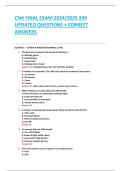
CNA FINAL EXAM 2024/2025 200
UPDATED QUESTIONS + CORRECT
ANSWERS
SECTION 1 — SAFETY & INFECTION CONTROL (1–40)
1. The best way to prevent the spread of infection is:
A. Wearing gloves
B. Handwashing
C. Using masks
D. Keeping doors closed
Answer: B – Handwashing is the most effective method.
2. A resident is in restraints. The CNA must check the resident at least every:
A. 15 minutes
B. 30 minutes
C. 1 hour
D. 2 hours
Answer: A – Must check every 15 min, release every 2 hours.
3. When making an occupied bed, the CNA should:
A. Raise the bed to a comfortable working height
B. Lower the side rails
C. Leave wrinkles in the sheets
D. Ask the nurse to do it
Answer: A
4. A resident is choking and cannot speak. What should the CNA do first?
A. Call a code
B. Start back blows
C. Perform abdominal thrusts
D. Do CPR
Answer: C
5. To prevent falls, the CNA should:
A. Turn off all lights
B. Keep call light within reach
C. Leave bed in high position
D. Remove assistive devices
Answer: B
6. The most common cause of injury in a nursing home is:
A. Fires
B. Falls
, C. Abuse
D. Burns
Answer: B
7. Transmission-based precautions include all except:
A. Contact
B. Airborne
C. Droplet
D. Reverse isolation only
Answer: D
8. A resident with tuberculosis requires:
A. Standard precautions only
B. Airborne precautions
C. Contact precautions
D. Droplet precautions
Answer: B
9. Soiled linen is placed:
A. On the floor
B. In a designated bag
C. On the chair
D. On the bedside table
Answer: B
10. A contaminated glove should be removed:
A. After completing all tasks
B. Immediately
C. After handwashing
D. Before PPE
Answer: B
(Let me know if you want full rationales for ALL 200.)
SECTION 2 — PERSONAL CARE SKILLS (41–80)
41. When giving a partial bed bath, the CNA washes:
A. Entire body
B. Face, hands, underarms, perineal area
C. Arms only
D. Back only
Answer: B
42. Perineal care should be done:
A. Front to back
B. Back to front
C. In a circular motion
D. Only when soiled
Answer: A
, 43. The CNA should shave a resident with a bleeding risk using:
A. Razor
B. Electric razor
C. Disposable blade
D. Tweezers
Answer: B
44. Oral care for an unconscious resident requires:
A. Large amounts of water
B. Using a spoon
C. Turning head to the side
D. Brushing teeth only
Answer: C
45. Denture care includes:
A. Hot water
B. Cold/warm water
C. Soaking in bleach
D. Drying overnight
Answer: B
SECTION 3 — BASIC NURSING SKILLS (81–120)
81. Normal oral temperature is:
A. 95.4°F
B. 96.8°F
C. 98.6°F
D. 100.6°F
Answer: C
82. Normal blood pressure is:
A. 140/90
B. 130/80
C. 120/80
D. 150/100
Answer: C
83. The CNA must report a pulse of:
A. 60
B. 72
C. 42
D. 88
Answer: C
84. If a resident is diabetic and refuses to eat, the CNA should:
A. Ignore it
B. Offer another food
C. Report to the nurse immediately
, D. Give candy
Answer: C
85. A catheter drainage bag must be kept:
A. Above bladder level
B. Below bladder level
C. On the bed
D. Tied tightly to rails
Answer: B
SECTION 4 — EMERGENCY PROCEDURES (121–150)
121. If a resident is unconscious but breathing, position them in:
A. Prone position
B. Trendelenburg
C. Recovery position (side-lying)
D. Sitting upright
Answer: C
122. A CNA finds a resident having a seizure. The CNA should:
A. Hold the resident down
B. Put a tongue blade in their mouth
C. Protect the head and move hazards
D. Give water
Answer: C
123. If fire occurs, follow:
A. PASS
B. RACE
C. TOSS
D. CARE
Answer: B — Rescue, Alarm, Contain, Extinguish.
SECTION 5 — RESIDENT RIGHTS & COMMUNICATION (151–180)
151. Residents have the right to:
A. Be restrained at staff request
B. Refuse treatment
C. Have no privacy
D. Be ignored
Answer: B
152. A hearing-impaired resident understands better if the CNA:
A. Shouts
B. Faces the resident
C. Talks from another room
D. Covers their mouth
Answer: B
UPDATED QUESTIONS + CORRECT
ANSWERS
SECTION 1 — SAFETY & INFECTION CONTROL (1–40)
1. The best way to prevent the spread of infection is:
A. Wearing gloves
B. Handwashing
C. Using masks
D. Keeping doors closed
Answer: B – Handwashing is the most effective method.
2. A resident is in restraints. The CNA must check the resident at least every:
A. 15 minutes
B. 30 minutes
C. 1 hour
D. 2 hours
Answer: A – Must check every 15 min, release every 2 hours.
3. When making an occupied bed, the CNA should:
A. Raise the bed to a comfortable working height
B. Lower the side rails
C. Leave wrinkles in the sheets
D. Ask the nurse to do it
Answer: A
4. A resident is choking and cannot speak. What should the CNA do first?
A. Call a code
B. Start back blows
C. Perform abdominal thrusts
D. Do CPR
Answer: C
5. To prevent falls, the CNA should:
A. Turn off all lights
B. Keep call light within reach
C. Leave bed in high position
D. Remove assistive devices
Answer: B
6. The most common cause of injury in a nursing home is:
A. Fires
B. Falls
, C. Abuse
D. Burns
Answer: B
7. Transmission-based precautions include all except:
A. Contact
B. Airborne
C. Droplet
D. Reverse isolation only
Answer: D
8. A resident with tuberculosis requires:
A. Standard precautions only
B. Airborne precautions
C. Contact precautions
D. Droplet precautions
Answer: B
9. Soiled linen is placed:
A. On the floor
B. In a designated bag
C. On the chair
D. On the bedside table
Answer: B
10. A contaminated glove should be removed:
A. After completing all tasks
B. Immediately
C. After handwashing
D. Before PPE
Answer: B
(Let me know if you want full rationales for ALL 200.)
SECTION 2 — PERSONAL CARE SKILLS (41–80)
41. When giving a partial bed bath, the CNA washes:
A. Entire body
B. Face, hands, underarms, perineal area
C. Arms only
D. Back only
Answer: B
42. Perineal care should be done:
A. Front to back
B. Back to front
C. In a circular motion
D. Only when soiled
Answer: A
, 43. The CNA should shave a resident with a bleeding risk using:
A. Razor
B. Electric razor
C. Disposable blade
D. Tweezers
Answer: B
44. Oral care for an unconscious resident requires:
A. Large amounts of water
B. Using a spoon
C. Turning head to the side
D. Brushing teeth only
Answer: C
45. Denture care includes:
A. Hot water
B. Cold/warm water
C. Soaking in bleach
D. Drying overnight
Answer: B
SECTION 3 — BASIC NURSING SKILLS (81–120)
81. Normal oral temperature is:
A. 95.4°F
B. 96.8°F
C. 98.6°F
D. 100.6°F
Answer: C
82. Normal blood pressure is:
A. 140/90
B. 130/80
C. 120/80
D. 150/100
Answer: C
83. The CNA must report a pulse of:
A. 60
B. 72
C. 42
D. 88
Answer: C
84. If a resident is diabetic and refuses to eat, the CNA should:
A. Ignore it
B. Offer another food
C. Report to the nurse immediately
, D. Give candy
Answer: C
85. A catheter drainage bag must be kept:
A. Above bladder level
B. Below bladder level
C. On the bed
D. Tied tightly to rails
Answer: B
SECTION 4 — EMERGENCY PROCEDURES (121–150)
121. If a resident is unconscious but breathing, position them in:
A. Prone position
B. Trendelenburg
C. Recovery position (side-lying)
D. Sitting upright
Answer: C
122. A CNA finds a resident having a seizure. The CNA should:
A. Hold the resident down
B. Put a tongue blade in their mouth
C. Protect the head and move hazards
D. Give water
Answer: C
123. If fire occurs, follow:
A. PASS
B. RACE
C. TOSS
D. CARE
Answer: B — Rescue, Alarm, Contain, Extinguish.
SECTION 5 — RESIDENT RIGHTS & COMMUNICATION (151–180)
151. Residents have the right to:
A. Be restrained at staff request
B. Refuse treatment
C. Have no privacy
D. Be ignored
Answer: B
152. A hearing-impaired resident understands better if the CNA:
A. Shouts
B. Faces the resident
C. Talks from another room
D. Covers their mouth
Answer: B