MPTC FIRST RESPONDER | THE SMART WAY TO PASS
| REAL TESTS, REAL RESULTS!
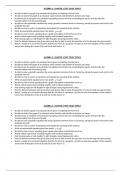
Stages of grief - Answer: denial, anger, bargaining, depression, acceptance
Informed consent - Answer: The patient understands who you are what you want to do and what
happens and allow you to treat them
Implied consent - Answer: The patient does not specifically refuse emergency care
Negligence - Answer: Patient suffers further injury or harm because the care administrator did
not meet standard of care
Recovery position - Answer: A side-lying position used to maintain a clear airway in unconscious
patients without injuries who are breathing adequately. Allows secretions to drain from the
mouth
Person dead at scene - Answer: Decapitation
Rigor Morris
Tissue decomposition
Dependent lucidity
Sample - Answer: Sign and Symptoms
Allergies
Medication
Past Medical History
Last oral intake
Events leading up to the injury or illness
APPHIA – Crafted with Care and Precision for Academic Excellence. 1
, Signs of adequate breathing - Answer: Look,listen,feel
Jaw-thrust maneuver - Answer: Use for patients that have neck injury
Secondary Assessment - Answer: Deformities
Open injuries
Tenderness
Swelling
Signs of anaphylactic shock - Answer: Itchy,hives,swelling,wheezing and serve respiratory
distress,loss of consciousness rapid weak pulse,rapid onset
Angina pectoris - Answer: Chest pain or discomfort,shortness of breath,sweating
Heart attack - Answer: Chest pain shortness of breath associated jaw or arm pain
CHF (congestive heart failure) - Answer: Shortness of breath dizziness,weakness,rapid/shallow
breathing,sweating,moist/gurgling breathing,enlarged neck veins swollen ankles
Stroke - Answer: Weakness on on side,dizziness,garbled d or unable to speak could have trouble
seeing
Diabetes - Answer: Inability's to produce insulin process glucose
Ingestion - Answer: 80% of poisonings may see chemicals or residue around mouth
Inhalation - Answer: Toxic substance is entered body via breathing absorbed into lungs
APPHIA – Crafted with Care and Precision for Academic Excellence. 2
| REAL TESTS, REAL RESULTS!
Stages of grief - Answer: denial, anger, bargaining, depression, acceptance
Informed consent - Answer: The patient understands who you are what you want to do and what
happens and allow you to treat them
Implied consent - Answer: The patient does not specifically refuse emergency care
Negligence - Answer: Patient suffers further injury or harm because the care administrator did
not meet standard of care
Recovery position - Answer: A side-lying position used to maintain a clear airway in unconscious
patients without injuries who are breathing adequately. Allows secretions to drain from the
mouth
Person dead at scene - Answer: Decapitation
Rigor Morris
Tissue decomposition
Dependent lucidity
Sample - Answer: Sign and Symptoms
Allergies
Medication
Past Medical History
Last oral intake
Events leading up to the injury or illness
APPHIA – Crafted with Care and Precision for Academic Excellence. 1
, Signs of adequate breathing - Answer: Look,listen,feel
Jaw-thrust maneuver - Answer: Use for patients that have neck injury
Secondary Assessment - Answer: Deformities
Open injuries
Tenderness
Swelling
Signs of anaphylactic shock - Answer: Itchy,hives,swelling,wheezing and serve respiratory
distress,loss of consciousness rapid weak pulse,rapid onset
Angina pectoris - Answer: Chest pain or discomfort,shortness of breath,sweating
Heart attack - Answer: Chest pain shortness of breath associated jaw or arm pain
CHF (congestive heart failure) - Answer: Shortness of breath dizziness,weakness,rapid/shallow
breathing,sweating,moist/gurgling breathing,enlarged neck veins swollen ankles
Stroke - Answer: Weakness on on side,dizziness,garbled d or unable to speak could have trouble
seeing
Diabetes - Answer: Inability's to produce insulin process glucose
Ingestion - Answer: 80% of poisonings may see chemicals or residue around mouth
Inhalation - Answer: Toxic substance is entered body via breathing absorbed into lungs
APPHIA – Crafted with Care and Precision for Academic Excellence. 2