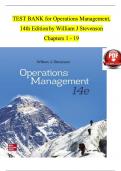
TEST BANK For Operations Management,
m m m m
14th EditionBy William J Stevenson
m m m m m
Chapters 1 - 19
m m m m
,Table of Contents
m m
Chapter 01 Introduction to Operations Management Chapter
m m m m m m
m 02 Competitiveness, Strategy, and Productivity Chapter 03
m m m m m m
m Forecasting
Chapter 04 Product and Service Design
m m m m m
m Chapter 04S Reliability
m m
Chapter 05 Strategic Capacity Planning for Products and Services Chapter
m m m m m m m m m
05S Decision Theory
m m m
Chapter 06 Process Selection and Facility Layout
m m m m m m
m Chapter 07 Work Design and Measurement
m m m m m
m Chapter 07S Learning Curves
m m m
Chapter 08 Location Planning and Analysis
m m m m m
m Chapter 08S The Transportation Model
m m m m
m Chapter 09 Management of Quality
m m m m
m Chapter 10 Quality Control
m m m
Chapter 10S Acceptance Sampling
m m m
Chapter 11 Aggregate Planning and Master Scheduling
m m m m m m
m Chapter 12 MRP and ERPm m m m
Chapter 13 Inventory Management
m m m
m Chapter 14 JIT and Lean Operations
m m m m m
m Chapter 14S Maintenance
m m
Chapter 15 Supply Chain Management
m m m m
m Chapter 16 Scheduling m m
Chapter 17 Project Management
m m m
, Chapter 18 Management of Waiting Lines Chapter
m m m m m m
19 Linear Programming
m m m
Chapter01 Introduction toOperations Management m m m m m
Student:
1. Operations managers are responsible for assessing consumer wants and needs and selling and
m m m m m m m m m m m m
mpromoting the organization's goods or services.
m m m m m
True False
2. Often, the collective success or failure of companies' operations functions will impact the
m m m m m m m m m m m m
mability of a nation to compete with other nations.
m m m m m m m m
True False
3. Companies are either producing goods or delivering services. This means that only one of the two
m m m m m m m m m m m m m m m
types of operations management strategies are used.
m m m m m m m
True False
4. Operations, marketing, and finance function independently of each other in most
m m m m m m m m m m
morganizations.
True False
5. The greater the degree of customer involvement, the more challenging the design and
m m m m m m m m m m m m
mmanagement of operations. m m
True False
, 6. Goods producing organizations are not involved in service activities.
m m m m m m m m
mTrue False
7. Service operations require additional inventory because of the unpredictability of consumer
m m m m m m m m m m
mdemand.
True False
8. The value of outputs is measured by the prices customers are willing to pay for goods or
m m m m m m m m m m m m m m m m
mservices.
True False
9. The use of models will guarantee the best possible decisions.
m m m m m m m m m
mTrue False
10. People who work in the field of operations should have skills that include both knowledge and
m m m m m m m m m m m m m m m
people skills.
m m
True False
11. Assembly lines achieved productivity but at the expense of standard of living.
m m m m m m m m m m m
mTrue False
12. The operations manager has primary responsibility for making operations system design
m m m m m m m m m m
mdecisions, such as system capacity and location of facilities.
m m m m m m m m
True False
13. The word "technology" is used only to refer to "information technology".
m m m m m m m m m m
mTrue False
m m m m
14th EditionBy William J Stevenson
m m m m m
Chapters 1 - 19
m m m m
,Table of Contents
m m
Chapter 01 Introduction to Operations Management Chapter
m m m m m m
m 02 Competitiveness, Strategy, and Productivity Chapter 03
m m m m m m
m Forecasting
Chapter 04 Product and Service Design
m m m m m
m Chapter 04S Reliability
m m
Chapter 05 Strategic Capacity Planning for Products and Services Chapter
m m m m m m m m m
05S Decision Theory
m m m
Chapter 06 Process Selection and Facility Layout
m m m m m m
m Chapter 07 Work Design and Measurement
m m m m m
m Chapter 07S Learning Curves
m m m
Chapter 08 Location Planning and Analysis
m m m m m
m Chapter 08S The Transportation Model
m m m m
m Chapter 09 Management of Quality
m m m m
m Chapter 10 Quality Control
m m m
Chapter 10S Acceptance Sampling
m m m
Chapter 11 Aggregate Planning and Master Scheduling
m m m m m m
m Chapter 12 MRP and ERPm m m m
Chapter 13 Inventory Management
m m m
m Chapter 14 JIT and Lean Operations
m m m m m
m Chapter 14S Maintenance
m m
Chapter 15 Supply Chain Management
m m m m
m Chapter 16 Scheduling m m
Chapter 17 Project Management
m m m
, Chapter 18 Management of Waiting Lines Chapter
m m m m m m
19 Linear Programming
m m m
Chapter01 Introduction toOperations Management m m m m m
Student:
1. Operations managers are responsible for assessing consumer wants and needs and selling and
m m m m m m m m m m m m
mpromoting the organization's goods or services.
m m m m m
True False
2. Often, the collective success or failure of companies' operations functions will impact the
m m m m m m m m m m m m
mability of a nation to compete with other nations.
m m m m m m m m
True False
3. Companies are either producing goods or delivering services. This means that only one of the two
m m m m m m m m m m m m m m m
types of operations management strategies are used.
m m m m m m m
True False
4. Operations, marketing, and finance function independently of each other in most
m m m m m m m m m m
morganizations.
True False
5. The greater the degree of customer involvement, the more challenging the design and
m m m m m m m m m m m m
mmanagement of operations. m m
True False
, 6. Goods producing organizations are not involved in service activities.
m m m m m m m m
mTrue False
7. Service operations require additional inventory because of the unpredictability of consumer
m m m m m m m m m m
mdemand.
True False
8. The value of outputs is measured by the prices customers are willing to pay for goods or
m m m m m m m m m m m m m m m m
mservices.
True False
9. The use of models will guarantee the best possible decisions.
m m m m m m m m m
mTrue False
10. People who work in the field of operations should have skills that include both knowledge and
m m m m m m m m m m m m m m m
people skills.
m m
True False
11. Assembly lines achieved productivity but at the expense of standard of living.
m m m m m m m m m m m
mTrue False
12. The operations manager has primary responsibility for making operations system design
m m m m m m m m m m
mdecisions, such as system capacity and location of facilities.
m m m m m m m m
True False
13. The word "technology" is used only to refer to "information technology".
m m m m m m m m m m
mTrue False