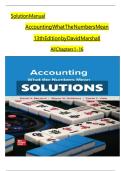
Solution Manual
v v
Accounting What The Numbers Mean
v v v v v
13th Edition by David Marshall
v v v v v
All Chapters 1 - 16
v v v v v
,CHAPTER
1
Accounting—Present and Past v v
CHAPTER OUTLINE: v
I. What Is Accounting?
v v
A. Definition
B. Uses of Accounting Information
v v v
C. Classifications
1. Financial Accounting v
2. Managerial Accounting / Cost Accounting v v v v
3. Auditing — Public Accounting v v v
4. Internal Auditing v
5. Governmentaland Not-for-Profit Accounting v v v
6. Income Tax Accounting v v
II. How Has Accounting Developed?
v v v
A. Early History v
B. The Accounting Profession in the United States
v v v v v v
C. Financial Accounting Standard Setting at the Present Time
v v v v v v v
1. Financial Accounting Standards Board v v v
2. Standards are Evolving v v
D. Standards for Other Types of Accounting v v v v v
1. Managerial Accounting / Cost Accounting v v v v
2. Auditing
3. Governmentaland Not-for-Profit Accounting v v v
4. Income Tax Accounting v v
E. International Accounting Standards v v
F. Ethics and the Accounting Profession
v v v v
III. The Conceptual Framework
v v
A. Context
B. Summary of Concepts Statement No. 8, Chapter 1 — The Objective of General
v v v v v v v v v v v v
v PurposeFinancial Reporting v v
C. Objectives of Financial Reporting for Nonbusiness Organizations v v v v v v
IV. Plan of the Book
v v v
,TEACHING/LEARNING OBJECTIVES: v
Principal:
1. To present a definition of accounting.
v v v v v
2. To identifyand describe different classifications of accounting.
v v v v v v v
3. To emphasize that financial accounting standards are not a ―fixed code of rules,‖ but
v v v v v v v v v v v v v
are established in response to user needs and business developments. Accountants
v v v v v v v v v v v
need to applyprofessional judgment in the application of accounting principles.
v v v v v v v v v v v
4. To emphasize the role and sources of ethics for the accounting profession.
v v v v v v v v v v v
Supporting:
5. To summarize how accounting has evolved over time.
v v v v v v v
6. To identify sources of standards for other types of accounting and to contrast these
v v v v v v v v v v v v v
withfinancial accounting standards.
v v v v
7. To introduce the issues associated with the development of international
v v v v v v v v v
accountingstandards.
v v
8. To describe the context of the FASB Conceptual Framework project.
v v v v v v v v v
9. To summarize Concepts Statement No. 8, Chapter 1 — The Objective of General
v v v v v v v v v v v v
PurposeFinancial Reporting.
v v v
10. To relate the objectives of financial reporting for nonbusiness organizations to
v v v v v v v v v v
vthose ofbusiness enterprises.
v v v
TEACHING OBSERVATIONS/ASSIGNMENT SUGGESTIONS:
v v
1. Students should be put on notice about the jargon of accounting, the use of
v v v v v v v v v v v v v
synonymous terms, the importance of the context within which a term is used, and the
v v v v v v v v v v v v v v v
need for precisionin the use of terminology. The first example of jargon is the term
v v v v v v v v v v v v v v v v
entity.
v
, 2. When discussing "Auditing — Public Accounting," have students find the auditors'
v v v v v v v v v v
opinionin the Campbell Soup Company 2020 Annual Report (see pages 87-88 of the
v v v v v v v v v v v v v v
Appendix). Emphasize that a "clean opinion" is not a "clean bill of health."
v v v v v v v v v v v v v
3. Discuss the Summary of Concepts Statement No. 8, Chapter 1 — The Objective of
v v v v v v v v v v v v v
FinancialReporting, in detail.
v v v v
v v
Accounting What The Numbers Mean
v v v v v
13th Edition by David Marshall
v v v v v
All Chapters 1 - 16
v v v v v
,CHAPTER
1
Accounting—Present and Past v v
CHAPTER OUTLINE: v
I. What Is Accounting?
v v
A. Definition
B. Uses of Accounting Information
v v v
C. Classifications
1. Financial Accounting v
2. Managerial Accounting / Cost Accounting v v v v
3. Auditing — Public Accounting v v v
4. Internal Auditing v
5. Governmentaland Not-for-Profit Accounting v v v
6. Income Tax Accounting v v
II. How Has Accounting Developed?
v v v
A. Early History v
B. The Accounting Profession in the United States
v v v v v v
C. Financial Accounting Standard Setting at the Present Time
v v v v v v v
1. Financial Accounting Standards Board v v v
2. Standards are Evolving v v
D. Standards for Other Types of Accounting v v v v v
1. Managerial Accounting / Cost Accounting v v v v
2. Auditing
3. Governmentaland Not-for-Profit Accounting v v v
4. Income Tax Accounting v v
E. International Accounting Standards v v
F. Ethics and the Accounting Profession
v v v v
III. The Conceptual Framework
v v
A. Context
B. Summary of Concepts Statement No. 8, Chapter 1 — The Objective of General
v v v v v v v v v v v v
v PurposeFinancial Reporting v v
C. Objectives of Financial Reporting for Nonbusiness Organizations v v v v v v
IV. Plan of the Book
v v v
,TEACHING/LEARNING OBJECTIVES: v
Principal:
1. To present a definition of accounting.
v v v v v
2. To identifyand describe different classifications of accounting.
v v v v v v v
3. To emphasize that financial accounting standards are not a ―fixed code of rules,‖ but
v v v v v v v v v v v v v
are established in response to user needs and business developments. Accountants
v v v v v v v v v v v
need to applyprofessional judgment in the application of accounting principles.
v v v v v v v v v v v
4. To emphasize the role and sources of ethics for the accounting profession.
v v v v v v v v v v v
Supporting:
5. To summarize how accounting has evolved over time.
v v v v v v v
6. To identify sources of standards for other types of accounting and to contrast these
v v v v v v v v v v v v v
withfinancial accounting standards.
v v v v
7. To introduce the issues associated with the development of international
v v v v v v v v v
accountingstandards.
v v
8. To describe the context of the FASB Conceptual Framework project.
v v v v v v v v v
9. To summarize Concepts Statement No. 8, Chapter 1 — The Objective of General
v v v v v v v v v v v v
PurposeFinancial Reporting.
v v v
10. To relate the objectives of financial reporting for nonbusiness organizations to
v v v v v v v v v v
vthose ofbusiness enterprises.
v v v
TEACHING OBSERVATIONS/ASSIGNMENT SUGGESTIONS:
v v
1. Students should be put on notice about the jargon of accounting, the use of
v v v v v v v v v v v v v
synonymous terms, the importance of the context within which a term is used, and the
v v v v v v v v v v v v v v v
need for precisionin the use of terminology. The first example of jargon is the term
v v v v v v v v v v v v v v v v
entity.
v
, 2. When discussing "Auditing — Public Accounting," have students find the auditors'
v v v v v v v v v v
opinionin the Campbell Soup Company 2020 Annual Report (see pages 87-88 of the
v v v v v v v v v v v v v v
Appendix). Emphasize that a "clean opinion" is not a "clean bill of health."
v v v v v v v v v v v v v
3. Discuss the Summary of Concepts Statement No. 8, Chapter 1 — The Objective of
v v v v v v v v v v v v v
FinancialReporting, in detail.
v v v v