CLASS 1
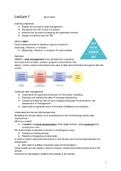
,Three states of change:
To achieve change it is necessary to:
1. Assess the current organizational situation;
2. Determine the desired future organizational state;
3. Determine how to get there.
,Forces for change:
1. Nature of the workforce (greater diversity);
2. Technology (faster, cheaper, more mobile);
3. Economic shocks (e.g. mortgage meltdown);
4. Competition (global marketplace);
5. Social trends (e.g. baby boomers retiring);
6. World politics (e.g. the Iraq war and economic opening up of China).
Both individual characteristics and organization context are sources of behavior.
Organization change seeks to create long-term, sustainable alterations in employee
behavior.
, Tactics for overcoming resistance to change:
1. Education and communication (show those affected the logic behind the change);
2. Participation (participation in the decision process lessens resistance);
3. Building support and commitment (counseling, therapy or new-skills training);
4. Implementing change fairly (be consistent and procedurally fair);
5. Manipulation and cooptation (“spinning” the message to gain cooperation);
6. Selecting people who accept change (hire people who inherently enjoy change);
7. Coercion (direct threats and force).
,Three states of change:
To achieve change it is necessary to:
1. Assess the current organizational situation;
2. Determine the desired future organizational state;
3. Determine how to get there.
,Forces for change:
1. Nature of the workforce (greater diversity);
2. Technology (faster, cheaper, more mobile);
3. Economic shocks (e.g. mortgage meltdown);
4. Competition (global marketplace);
5. Social trends (e.g. baby boomers retiring);
6. World politics (e.g. the Iraq war and economic opening up of China).
Both individual characteristics and organization context are sources of behavior.
Organization change seeks to create long-term, sustainable alterations in employee
behavior.
, Tactics for overcoming resistance to change:
1. Education and communication (show those affected the logic behind the change);
2. Participation (participation in the decision process lessens resistance);
3. Building support and commitment (counseling, therapy or new-skills training);
4. Implementing change fairly (be consistent and procedurally fair);
5. Manipulation and cooptation (“spinning” the message to gain cooperation);
6. Selecting people who accept change (hire people who inherently enjoy change);
7. Coercion (direct threats and force).