Topic 1 - Lifestyle, health & risk
, 1.1 What is cardiovascular disease?
Why have a heart and circulation?
● To move substances around the body.
● Very small organisms (e.g. unicellular creatures) where distance
is short substances move around the body by diffusion.
● Complex multicellular organisms are too large for diffusion,
they rely on a mass transport system. A heart and blood is
required instead of diffusion, they have a circulatory system.
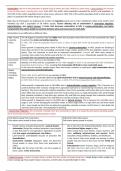
Circulatory Explanation Differences Image
System
Open A simple heart pumps Faster movement
circulatory blood out into the cavity compared to
system surrounding the animal's diffusion
organs and the Slow compared to
substances then diffuse double circulation
between the blood and Low blood pressure
the cells. When the Animals with open
heart relaxes blood is circulatory systems
drawn from the cavity tend to have a low
back into the heart. metabolism rate
Closed Blood is enclosed in Faster flow of blood
circulatory tubes, this means there High blood pressure
system is a higher blood Animals with closed
pressure, blood travels circulatory systems
faster and it is more tend to have high
efficient at delivering metabolism rate
substances. Blood leaves therefore they tend
the heart and travels to to be bigger animals
capillaries through
arteries. The capillaries
are close to the cells so
substances are
exchanged. The blood
then travels back to the
heart through the veins.
Valves ensure that blood
, flows in one direction
only. Bigger more active
animals have a closed
system.
Single Animals with closed systems have either a
circulatory single or double circulation.
systems Fish have single circulation.
1. Heart pumps deoxygenated blood to the
gills.
2. Gaseous exchange takes place in the gills,
diffusion between CO2 in blood and O2 in
the water.
3. Blood leaves the gills and flows round the
rest of the body, before eventually
returning to the heart.
Double Birds and mammals have double circulation.
circulatory 1. Right ventricle pumps blood into the lungs
systems where it receives oxygen.
2. Oxygenated blood returns to the heart
to get pumped around the body by the
left ventricle.
The heart gives the blood returning from the
lungs an extra ‘boost’ to get around the body
faster. This allows a higher metabolic rate as
O2 and food substances can be delivered
faster and meet the needs of the organism.
Pulmonary circuit - the portion of the circulatory system which
carries deoxygenated blood away from the heart, to the lungs, and
returns oxygenated blood:
● Lower pressure and slower blood flow this is for maximum gas
exchange and minimum damage to the lung capillaries
Systemic circuit - the part of your circulatory system that carries
blood away from your heart, delivers it to most of your organs and
tissues, and returns it to your heart again
● Higher pressure and faster blood flow this is for rapid delivery
of oxygen and glucose to cells for respiration
, 1.1 What is cardiovascular disease?
Why have a heart and circulation?
● To move substances around the body.
● Very small organisms (e.g. unicellular creatures) where distance
is short substances move around the body by diffusion.
● Complex multicellular organisms are too large for diffusion,
they rely on a mass transport system. A heart and blood is
required instead of diffusion, they have a circulatory system.
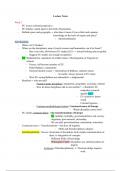
Circulatory Explanation Differences Image
System
Open A simple heart pumps Faster movement
circulatory blood out into the cavity compared to
system surrounding the animal's diffusion
organs and the Slow compared to
substances then diffuse double circulation
between the blood and Low blood pressure
the cells. When the Animals with open
heart relaxes blood is circulatory systems
drawn from the cavity tend to have a low
back into the heart. metabolism rate
Closed Blood is enclosed in Faster flow of blood
circulatory tubes, this means there High blood pressure
system is a higher blood Animals with closed
pressure, blood travels circulatory systems
faster and it is more tend to have high
efficient at delivering metabolism rate
substances. Blood leaves therefore they tend
the heart and travels to to be bigger animals
capillaries through
arteries. The capillaries
are close to the cells so
substances are
exchanged. The blood
then travels back to the
heart through the veins.
Valves ensure that blood
, flows in one direction
only. Bigger more active
animals have a closed
system.
Single Animals with closed systems have either a
circulatory single or double circulation.
systems Fish have single circulation.
1. Heart pumps deoxygenated blood to the
gills.
2. Gaseous exchange takes place in the gills,
diffusion between CO2 in blood and O2 in
the water.
3. Blood leaves the gills and flows round the
rest of the body, before eventually
returning to the heart.
Double Birds and mammals have double circulation.
circulatory 1. Right ventricle pumps blood into the lungs
systems where it receives oxygen.
2. Oxygenated blood returns to the heart
to get pumped around the body by the
left ventricle.
The heart gives the blood returning from the
lungs an extra ‘boost’ to get around the body
faster. This allows a higher metabolic rate as
O2 and food substances can be delivered
faster and meet the needs of the organism.
Pulmonary circuit - the portion of the circulatory system which
carries deoxygenated blood away from the heart, to the lungs, and
returns oxygenated blood:
● Lower pressure and slower blood flow this is for maximum gas
exchange and minimum damage to the lung capillaries
Systemic circuit - the part of your circulatory system that carries
blood away from your heart, delivers it to most of your organs and
tissues, and returns it to your heart again
● Higher pressure and faster blood flow this is for rapid delivery
of oxygen and glucose to cells for respiration