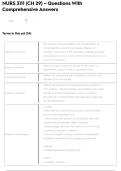
NURS 3111 (CH 29) – Questions With
Comprehensive Answers
Save
Terms in this set (34)
The invasion of a susceptible host by pathogens or
microorganisms, resulting in disease. Disease or
Nature of Infection infection results only if the pathogens multiply and alter
normal tissue function. Some infections have a low or no
risk for transmission.
infectious agent, reservoir, portal of exit, mode of
chain of infection
transmission, portal of entry, susceptible host
Patient will experience pain, tenderness, warmth, and
Localized infection
redness at the wound site.
Patient will experience more generalized symptoms
such as fever, nausea/vomiting, and malaise. Can cause
Systemic infection elevation of body temperature which can lead to
episodes of increased heart and respiratory rates and
low blood pressure.
Contact
-direct (person to person) physical contact between
source and susceptible host
-indirect-personal contact of susceptible host with
contaminated inanimate object (needles)
-droplet-large particles that travel up to 3 ft during
coughing, sneezing, or talking
Modes of transmission -airborne-droplet nuclei or residue or evaporated
droplets suspended in air coughing or sneezing
Vehicles
-contaminated items, blood, food
Vector
-mosquito, flea, tick
, a localized response to an injury or to the destruction of
Inflammation
tissues
the invasion of a susceptible host by pathogens or
Infection
microorganisms, resulting in disease
-Skin-provides barrier to microorganisms and
antibacterial activity, removes organisms that adhere to
outer layers of skin, and contains fatty acid that kills
some bacteria
-Mucous membranes, saliva-mechanical barrier to
microorganisms
-Eye-provides mechanism to reduce entry or help wash
Natural Defense
away particles
Mechanisms
-Respiratory tract-traps inhaled microbes and sweeps
them outward in mucus
-Urinary tract-flushing action of urine flow and washes
away microorganisms on lining of bladder
-GI tract-acidity of gastric secretions prevents retention
of bacterial contents
-Vagina-normal flora inhibits growth of microorganisms
-Urinary tract-unsterile insertion of urinary catheter,
improper positioning of drainage tubing
-Surgical/traumatic wounds-improper skin prep before
Sites For And Causes of
surgery, failure to clean skin properly
Health Care-Associated
-Respiratory tract-contaminated respiratory therapy
Infections
equipment, failure to use aseptic technique
-Bloodstream-contaminated IV fluids by tubing,
contaminated needles
Older adults have a decreased immune system which
makes them more susceptible to infections. Older adults
are also less capable of producing lymphocytes to
Older adults risk for
combat challenges to the immune system. Poor
infection
nutrition, unintentional weight loss, lack of exercise,
poor social support increase the risk of infections and
HAI's.
Comprehensive Answers
Save
Terms in this set (34)
The invasion of a susceptible host by pathogens or
microorganisms, resulting in disease. Disease or
Nature of Infection infection results only if the pathogens multiply and alter
normal tissue function. Some infections have a low or no
risk for transmission.
infectious agent, reservoir, portal of exit, mode of
chain of infection
transmission, portal of entry, susceptible host
Patient will experience pain, tenderness, warmth, and
Localized infection
redness at the wound site.
Patient will experience more generalized symptoms
such as fever, nausea/vomiting, and malaise. Can cause
Systemic infection elevation of body temperature which can lead to
episodes of increased heart and respiratory rates and
low blood pressure.
Contact
-direct (person to person) physical contact between
source and susceptible host
-indirect-personal contact of susceptible host with
contaminated inanimate object (needles)
-droplet-large particles that travel up to 3 ft during
coughing, sneezing, or talking
Modes of transmission -airborne-droplet nuclei or residue or evaporated
droplets suspended in air coughing or sneezing
Vehicles
-contaminated items, blood, food
Vector
-mosquito, flea, tick
, a localized response to an injury or to the destruction of
Inflammation
tissues
the invasion of a susceptible host by pathogens or
Infection
microorganisms, resulting in disease
-Skin-provides barrier to microorganisms and
antibacterial activity, removes organisms that adhere to
outer layers of skin, and contains fatty acid that kills
some bacteria
-Mucous membranes, saliva-mechanical barrier to
microorganisms
-Eye-provides mechanism to reduce entry or help wash
Natural Defense
away particles
Mechanisms
-Respiratory tract-traps inhaled microbes and sweeps
them outward in mucus
-Urinary tract-flushing action of urine flow and washes
away microorganisms on lining of bladder
-GI tract-acidity of gastric secretions prevents retention
of bacterial contents
-Vagina-normal flora inhibits growth of microorganisms
-Urinary tract-unsterile insertion of urinary catheter,
improper positioning of drainage tubing
-Surgical/traumatic wounds-improper skin prep before
Sites For And Causes of
surgery, failure to clean skin properly
Health Care-Associated
-Respiratory tract-contaminated respiratory therapy
Infections
equipment, failure to use aseptic technique
-Bloodstream-contaminated IV fluids by tubing,
contaminated needles
Older adults have a decreased immune system which
makes them more susceptible to infections. Older adults
are also less capable of producing lymphocytes to
Older adults risk for
combat challenges to the immune system. Poor
infection
nutrition, unintentional weight loss, lack of exercise,
poor social support increase the risk of infections and
HAI's.