NR 324 Adult Health ROK 1 LATEST UPDATE
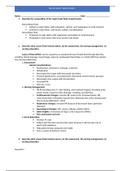
Name: _____________________________________________________ Date: _____________________ 1. Describe the composition of the major body fluid compartments. Extracellular fluid: • Sodium is main Cation, with potassium, calcium, and magnesium in small amounts • Chloride is main Anion, with bicarb, sulfate, and phosphate Intracellular fluid: • Potassium is main cation with magnesium and sodium in small amounts • Phosphate is main anion with some protein and bicarb 2. Describe what causes Fluid volume deficit, (a) the assessment, (b) nursing management, (c) nursing education. Cause of fluid deficit: Can be caused by an unexpected loss of body fluid through diarrhea, vomiting, fistula drainage, hemorrhage, polyuria; inadequate fluid intake; or a fluid shift from plasma into the interstitial fluid. a. Assessment: clinical manefestations: • Restlessness, drowsiness, lethargy, confusion • Dehydration • Decreased skin turgor with decreased circulation • Postural hypotension, increased pulse, decreased central venous pressure • Decreased urine output with discoloration • Increased RR • Siezures, coma b. Nursing Management: • I & O: including oral, IV, tube feeding, and retained irrigants; Including urine, excess sweat, wound or tube drainage, vomiting, and diarrhea. • Cardiovascular changes: monitor BP; pulse force; Increased pulse/ HR; vasoconstriction; orthostatic hypotension; flattened neck veins; thread pulse that is easily obliterated; shock • Respiratory changes: increase RR because of decreased tissue perfusion (hypoxia) • Neurological changes: LOC, perrla, reflexes, patient safety • Daily weights: an increase of 1kg (2.2 lb) is equal to 1000mL • Skin assessment and care c. Nurse Education: • Moniter IV rates • Patient with NG tube cannot drink water because it will increase risk of electrolyte imbalance • Help patients keep adequate oral intake • Give a variety of fluids for choice 3. Describe what causes Fluid volume excess, (a) the assessment, (b) nursing management, (c) nursing education. Cause of Fluid volume excess: Excessive intake of fluids, abnormal retention of fluids due to heart failure or renal failure, or a shift from interstitial fluid into plasma fluid, resulting in changes in the intravascular volume. a. Assessment: Clinical manifestations: • Headaache, confusion, lethargy • Peripheral edema • JVD • Bounding pulse, increased BP, Increased central venous pulse • Polyuria • Dyspnea, crackles, pulmonary edema • Muscle spasms • Weight gain • Seeizures, coma b. Nursing Management: • I & O: including oral, IV, tube feeding, and retained irrigants; Including urine, excess sweat, wound or tube drainage, vomiting, and diarrhea. • Cardiovascular changes: monitor BP, pulse force, JVD, pulse is full bounding, and not easily obliterated. • Respiratory changes: pulmonary conjestion and pulmonary edema • Neurological changes: cerebral edema • Daily weights: an increase of 1kg (2.2 lb) is equal to 1000mL • Skin assessment and care: Edema and coolness from decreased blood flow secondary to the fluid pressure. Can feel taut and hard. Frequent skin care is important. Elevate edema c. Nurse education • Remove fluid without producing abnormal changes in the electrolyte composition or osmolality of EFC. • Primary cause must be found and treated • Diuretics and fluid restriction are primary forms of therapy • Restriction of sodium intake • 4. Describe the laboratory normal values, clinical manifestations, assessment priorities (i.e. Neuro, Cardiac, cardiovascular, etc
Written for
Document information
- Uploaded on
- January 23, 2021
- Number of pages
- 14
- Written in
- 2020/2021
- Type
- Exam (elaborations)
- Contains
- Questions & answers
Subjects
-
name date 1 describe the composition of the major body fluid compartments extracellular fluid • sodium is main cation

Also available in package deal