NR324- Adult Health I- STUDY GUIDE Exam 3
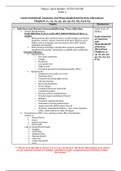
Gastrointestinal, Immune and Musculoskeletal System Alterations Chapters 11, 14, 15, 39, 42, 43, 62, 63, 64 & 65 Topics Resources 1. Infection and Human Immunodeficiency Virus Infection: a. Clinical Manifestations Acute infection (w/in 2-4 wks after initial infection & last 1-3 weeks) • Mononucleosis like syndrome (fever, swollen lymph, sore throat, headache, malaise, nausea, muscle & joint pain, diarrhea, &/or diffuse rash accompanies seroconversion (when HIV-specific antibodies developed)) • Some develop neurologic complications (aseptic meningitis, peripheral neuropathy, facial palsy or guillain-barre syndrome) Chronic infection • Asymptomatic o Not many symptoms o Fatigue o Headache o Low-grade fever o Night sweats o Persistent generalized lymphadenopathy (PGL) • Symptomatic o Symptoms seen earlier are worse o Persistent fever o Frequent drenching night sweats o Chronic diarrhea o Recurrent headaches o Severe fatigue o Localized infections (bacterial) o Lymphadenopathy o Nervous system manifestations o Oropharyngeal candidiasis (thrush) o Shingles o Persistent vaginal infections o Outbreaks of oral & genital herpes o Kaposi sarcoma (KS) (herpes virus 8) o Oral hairy leukoplakia (Epstein – barr virus) (painless, white, raised lesions on sides of tongue) b. Transmission of HIV virus and factors that affect transmission. Contact w/ • infected blood • semen • vaginal secretions • breast milk cant be transmitted through • hugging • dry kissing • shaking hands • sharing utensils • toilet seat • casual encounters • tears • saliva • urine • emesis • sputum • feces • sweat • respiratory droplets • enteric routes passed through sex; exposure to HIV-infected blood or blood products; pregnancy to baby while in womb, delivery &breastfeeding can be transmitted w/in a few days after becoming infective; can be transmitted for life; larger amount in blood & less in semen during first 6 months of infection & again in late stages; variables that influence whether infection will happen after exposure • duration & frequency of contact w/ organism • volume, virulence & concentration • host immune status c. Pathophysiology of HIV infection. d. Diagnostic criteria for acquired immunodeficiency syndrome (AIDS). e. Describe methods used to test for HIV infection. f. Collaborative management of HIV infection. g. Opportunistic diseases associated with AIDS. 2. Altered Immune Responses a. Describe the functions and components of the immune system. b. Compare and contrast humoral and cell-mediated immunity, including lymphocytes involved, types of reactions, and effects on antigens. c. Differentiate among the four types of hypersensitivity reactions in terms of immunologic mechanisms and resulting alterations. d. Identify the clinical manifestations and emergency management of a systemic anaphylactic reaction. Neurological – headache; dizziness; paresthesia; feeling of impending doom Skin – pruritus; angioedema; erythema; urticaria Respiratory – hoarseness; coughing; sensation of narrowed airway; wheezing; stridor; dyspnea & tachypnea; respiratory arrest Cardiovascular – hypotension; dysrhythmias; tachycardia; cardiac arrest Gastrointestinal – cramping, abdominal pain; nausea, vomiting; diarrhea Management is speed • Recognition of signs & symptoms • Keeping airway open • Prevention of spread of allergen by using tourniquet • Give drugs • Treatment for shock Emergency management Initial – • Ensure airway • High-flow O2 via non-rebreather mask • If stinger, remove • IV • Epinephrine 1:1000, 0.01mL/kg (0.3-0.5 mL) IM into mid-anterior lateral thigh; repeat every 5-15 min • Nebulized albuterol (Proventil) • Diphenhydramine (Benadryl) IM or IV • Corticosteroids: methylprednisolone (solu-medrol) IV Hypotension – • Place recumbent & elevate legs • Epinephrine 1:10,000 , 0.1mL/kg IV every 2-5 min • Maintain blood pressure w/ fluids, volume expanders, vasopressors (dopamine) Ongoing monitoring – • Monitor vital signs, respiratory effort, O2 saturation, LOC, & cardiac rhythm • Anticipate intubation w/ severe respiratory distress • Anticipate cricothyrotomy or tracheostomy w/ severe laryngeal edema. e. Describe the assessment and collaborative care of a patient with chronic allergies. f. Describe the etiologic factors, clinical manifestations, and treatment modalities of autoimmune diseases. g. Describe the etiologic factors and categories of immunodeficiency disorders. h. Identify the types and side effects of immunosuppressive therapy. Corticosteroids Prednisone, methylprednisolone (solu-medrol) • Peptic ulcer • Hypertension • Osteoporosis • Na & H2O retention • Muscle weakness • Easy bruising • Delayed healing • Hyperglycemia • Increase risk for infection Calcineurin inhibitors Cyclosporine (sandimmune, neural, gengraf) / tacrolimus (prograf) • Nephrotoxicity • Increased risk of infection • Neurotoxicity (tremors, seizures) • Hepatotoxicity • Lymphoma • Hypertension • Tremors • Hirsutism • Leukopenia • Gingival hyperplasia Cytotoxic (antiproliferative) Mycophenolate mofil (CellCept) / mycophenolate acid • Diarrhea • Nausea & vomiting • Severe neutropenia • Thrombocytopenia • Increased risk for infection • Increased incidence of malignancies Cyclophosphamide (Cytoxan, neosar) • Neutropenia • Hemorrhage cystitis Azathioprine (Imuran) • Bone marrow suppression: neutropenia, anemia, thrombocytopenia Sirolimus (rapamune) • Increased fisk for infections • Leukopenia • Anemia • Thrombocytopenia • Hyperlipidemia • Hypercholesterolemia • Arthralgias • Diarrhea • Increased incidence of malignancies • Not used in liver & lung transplant Everolimus (zortress) • Peripheral edema • Constipation • Hypertension • Nausea • Anemia • UTI • Hyperlipidemia Monoclonal antibodies Muromonah-CD3 (orthoclone okt3) • Fever • Chills • Dyspnea • Chest pain • Nausea & vomiting • Anaphylactic reactions (pulmonary edema, cardiac or respiratory arrest) Daclizumab (zenapax) / Basiliximab (simulect) • Hypersensitivity reaction including anaphylaxis Polyclonal antibody Lymphocyte immune globulin (atgam) • Serum sickness (fever, chills, muscle & joint pain) • Tachycardia • Back pain • SOB • Hypotension • Anaphylaxis • Leukopenia • Thrombocytopenia • Rash • Increased risk of infection Other Belatacept (Nulojix) • Anemia • Constipation • UTI • Peripheral edema 3. Gastrointestinal System a. Select significant subjective and objective assessment data related to the gastrointestinal system that should be obtained from a patient. Subjective - Past health history; medication; surgeries & treatments; how health is managed; nutritional intake; supplements & vitamins; elimination pattern; physical activity; sleeping & resting pattern; changes in taste, sensitivity, appetite; self-perception of weight & image; any changes in social roles & performance; sexual activity; stress tolerance; cultural beliefs Objective – inspect mouth; palpate mouth & face; inspect abdomen; auscultate abdomen; percuss abdomen; palpate abdomen; inspect perianal area (palpate any masses) b. Identify the appropriate techniques used in the physical assessment of the gastrointestinal system. Inspect, auscultate then palpate last c. Differentiate normal from abnormal findings of a physical assessment of the gastrointestinal system. Normal findings – Mouth – • Moist & pink lips, buccal mucosa; gingivae w/ plaques or lesions • Teeth in good repair • Protrusion of tongue & pink uvula in centered; soft palate, tonsils & posterior pharynx • Swallows smoothly w/out coughing or gagging Abdomen – • Flat w/out masses or scars; no bruises • Bowel sounds in all quadrants • No abdominal tenderness; nonpalpable liver & spleen • Liver 10cm in right midclavicular line • Generalized tympany Anus • Absence of lesions, fissures, & hemorrhoids • Good sphincter tone • Rectal walls smooth & soft • No masses • Stool soft, brown & heme negative d. Describe the etiology, complications, collaborative care, and nursing management of nausea and vomiting. e. Explain the types, pathophysiology, clinical manifestations, complications, and collaborative care (including surgical therapy and nursing management) of gastroesophageal reflux disease (GERD) and hiatal hernia. f. Describe the pathophysiology, clinical manifestations, complications, and collaborative care of esophageal cancer, diverticula, achalasia, and esophageal strictures. Esophageal cancer – Patho – majority are adenocarcinomas w/ remainder being squamous cell tumors; arises from glands lining esophagus & resemble cancers of stomach & small intestine; malignant tumor usually appears as ulcerated lesion & advances by the time pt has symptoms; Manifestations – late onset; progressive dysphagia (feeling as if food not passing) first w/ meat, then soft food a& then liquid; pain develops late & radiates to neck, jaw, ears & shoulders; sore throat, choking & hoarseness (if upper 3rd esophagus); weight loss; esophageal stenosis (narrowing) is severe then regurgitation of blood-flecked content is common; Complications – hemorrhage if cancer erodes through esophagus & into aorta; fistula formation into lung or trachea; esophageal obstruction; liver & lung are common sites of metastasis Collaborative care – depends on location & metastasis; Diagnostic • History & physical exam • Endoscopy of esophagus w/ biopsy • Endoscopic ultrasonography • Esophagram (barium swallow) • Bronchoscopy • CT, MRI Collaborative therapy • Surgery o Esophagectomy o Esophagogastrostomy o Esophagoenterostomy • Endoscopic procedures o Photodynamic therapy o Endoscopic mucosal resection • Radiation therapy • Chemotherapy • Palliative treatment o Dilation o Stent or prosthesis o Laser therapy o gastrostomy Diverticula – saclike outpouchings of one or more layers Patho – 3 main areas • above the upper esophageal sphincter (Zenker’s diverticulum); most common over 60 yrs • near midpoint (traction diverticulum) • above the LES (epiphrenic diverticulum) Manifestations – dysphagia, regurgitation, chronic cough, aspiration, weight loss, tasting sour foods & smelling foul odor Complications – malnutrition, aspiration & perforation Collaborative care – no treatment; soft foods; endoscopic or open approach if nutrition disrupted; decrease complications by endoscopic stapling diverticulotomy or diverticulostomy. Achalasia – delayed emptying of lower esophagus, associated w/ squamous cell cancer. Patho – peristalsis of lower 2/3 (smooth muscle) of esophagus is absent; obstruction of esophagus at or near diaphragm; food & fluid accumulate in lower esophagus causes dilation of lower esophagus proximal to tapering affected segment of lower esophagus; selective loss of inhibitory neurons causes unopposed contraction of LES Manifestations – usually insidious; dysphagia; chest pain during or immediately after meal; 1/3 of pt have nocturnal regurgitation, foul-smelling breath (halitosis); inability to burp; GERD & regurgitation of sour-tasting food & liquid especially when laying down; weight loss Complications – GERD w/ esophagitis; Collaborative care – no known causes so treatment is to manage symptoms; treatment is to relieve dysphagia & regurgitation; improve esophageal emptying by disrupting LES & prevent development of megaesophagus (enlargement of lower esophagus); injection of botulinum toxin gives short term relief; muscle relaxants before meals; eating semisoft, eating slowly & drinking fluids w/ it, sleep w/ head elevated Esophageal strictures – from chronic GERD Patho – ingesting strong acids or alkalis, external beam radiation, & surgical anastomosis; throat lacerations & gunshot wound Manifestations – dysphagia, regurgitation, weight loss Complications – Collaborative care – can by dilated by endoscopy using bougies or balloon; sometimes done through surgical excision g. Differentiate between acute and chronic gastritis, including the etiology, pathophysiology, collaborative care, and nursing management. h. Compare and contrast gastric and duodenal ulcers, including the etiology, pathophysiology, clinical manifestations, complications, collaborative care, and nursing management. Gastric ulcer – • Lesion – superficial; smooth margins; round, oval or cone shaped • Location of lesion – predominantly antrum; also in body & fundus of stomach. • Gastric secretion – normal to decreased • Incidence – greater in women; peak age 50-60; lower socioeconomic status; increased w/ smoking, drugs & alcohol use; increase incompetent pyloric sphincter & bile reflux • Manifestations – burning or gaseous pressure in high left epigastrium & back upper abdomen; pain 1-2 hrs after meals (if penetrating then aggravation w/ food)l; occasional nausea & vomiting, weight loss • Recurrence rate – high • Complications – hemorrhage, perforation, gastric outlet obstruction, intractability Duodenal ulcer – • Lesion – penetrating (deformity of duodenal bulb from healing of recurrent ulcers) • Location of lesion – first 1-2 cm • Gastric secretion – increased • Incidence – greater in men; increasing in women (especially postmenopausal); peak age 35-45; associated w/ psychologic stress; increased w/ smoking, drug use, & alcohol; associated w/ COPD, pancreatic disease, hyperparathyroidism, Zollinger-Ellison syndrome, chronic renal failure • Manifestation – burning, cramping, pressure-like pain across midepigastrium & upper abdomen; back pain w/ posterior ulcers; pain 2-4 hrs after meals & midmorning, midafternoon, middle of night; periodic & episodic; pain relief w/ antacid & food; occasional nausea & vomiting • Recurrence rate – high • Complications – hemorrhage, perforation, obstruction Perforation is most common w/ ulcer disease. Peptic ulcer disease is a sore in stomach or duodenum; an open area in contact w/ stomach acid; it can eat through the lining; abdomen is rigid/ board like from bleeding & hemorrhage Most common thing is pt will ask for meds; tell them they cant take NSAIDs or aspirin because it irritates mucosa lining. Tylenol is ok. i. Describe the clinical manifestations, collaborative care, and nursing management of stomach cancer. Manifestation – symptoms happen after cancer spreads; unexplained weight loss, early satiety, indigestion, abdominal discomfort or pain, sign & symptoms of anemia (pale & weak, fatigue, weakness, dizziness, SOB); positive stool occult test; supraclavicular lymph nodes hard & enlarged; ascites Collaborative – Diagnostic – • History & physical exam • Endoscopy & biopsy • CT • Upper GI barium study • Exfoliative cytologic study • Endoscopic ultrasonography • CBC • Urinalysis • Stool examination • Liver enzymes • Serum amylase • Tumor markers o Carcinoembryonic antigen (CEA) o Carbohydrate antigen (CA)-19-9,CA-125, CA 72-4 o Alpha-fetoprotein Therapy – • Surgery o Subtotal gastrectomy- billroth I or II procedure o Total gastrectomy w/ esophagojejunotomy • Adjuvant therapy o Radiation therapy o Chemotherapy o Combination radiation therapy & chemotherapy j. Explain the common etiologies, clinical manifestations, collaborative care, and nursing management of upper gastrointestinal bleeding. Drug Induced • Corticosteroids • Nonsteroidal antiinflammatory drugs (NSAIDs) • Salicylates Esophagus • Esophageal varices • Esophagitis • Mallory-Weiss tear Stomach and Duodenum (aspirin, NSAIDs, corticosteroid) • Stomach cancer • Hemorrhagic gastritis • Peptic ulcer disease • Polyps • Stress-related mucosal disease Systemic Diseases • Blood dyscrasias (e.g., leukemia, aplastic anemia) • Renal failure k. Identify common types of foodborne illnesses and nursing responsibilities related to food poisoning. Staphylococcal (staphylococcus aureus)– • Treat – symptomatic, fluids & electrolytes, antiemetics • Prevent – immediately refrigerate foods, monitor food handlers Clostridial (clostridium perfringens) – • Treat – symptomatic, fluids • Prevent – correctly prepare meat; serve immediately after cooking or rapid cooling Salmonella (salmonella typhimurium) – • Treat – symptomatic, fluids & electrolytes • Prevention – correctly prepare food Botulim (clostridium botulinum) – • Treat – open airway, polyvalent antitoxin, guanidine hydrochloric acid (enhances acetylcholine release) • Prevent – correctly processing canned foods, boiling of suspected canned foods for 15 min before serving Escherichia coli – • Treat – symptomatic, fluids & electrolytes • Prevent – correctly prepare food l. Explain the common etiologies, collaborative care, and nursing management of diarrhea, fecal incontinence, and constipation. m. Describe the collaborative care and nursing management of acute appendicitis, peritonitis, and gastroenteritis. n. Compare and contrast the inflammatory bowel diseases of ulcerative colitis and Crohn's disease, including pathophysiology, clinical manifestations, complications, collaborative care, and nursing management. o. Differentiate among mechanical and non-mechanical bowel obstructions, including causes, collaborative care, and nursing management. p. Differentiate between diverticulosis and diverticulitis, including clinical manifestations, collaborative care, and nursing management. q. Compare and contrast the types of hernias, including etiology and surgical and nursing management. r. Describe the types of malabsorption syndromes and collaborative care of celiac disease, lactase deficiency, and short bowel syndrome. 4. Musculoskeletal System a. Select significant subjective and objective data related to the musculoskeletal system that should be obtained from a patient. b. Select appropriate techniques to use in the physical assessment of the musculoskeletal system. c. Differentiate normal from abnormal findings of a physical assessment of the musculoskeletal system. d. Differentiate among the etiology, pathophysiology, clinical manifestations, and collaborative care of soft tissue injuries, including strains and sprains. Common from abnormal stretching or twisting that happen in vigorous actives; happen around joints & spinal muscles; usually self-limiting w/ full function returning w/in 3-6 weeks; x-rays rule out fracture; hemarthrosis (bleeding into joint space or cavity) or disruption of synovial lining can happen at any time of injury; Stains – • Excessive stretching of muscle, facial or tendon. • Large muscle groups - low back, calf, hamstrings • 3rd degree can cause avulsion fracture (ligament pulls loose a fragment of bone); also cause joint to become unstable & cause subluxation or dislocation • 3rd degree may need surgery to repair muscle, tendon or fascia o 1st degree - mild or slightly pulled o 2nd degree - moderate or moderately torn o 3rd degree - severely torn or ruptured muscle Sprains - • injury to ligaments structures surrounding joints • caused by wrenching & twisting • Ankle, wrist & knee joints • Gap in muscle may be apparent or palpated on skin if muscle is torn • Joints rich in nerve endings so injury can be extremely painful o 1st degree - (mild) tears in only a few fibers; mild tenderness & minimal swelling o 2nd degree - (moderate) partial disruption of tissue; more swelling & tenderness o 3rd degree - (severe) complete tear of ligament; moderate - severe swelling Clinical manifestations - both are similar; edema, decreased function & contusion. Collaborative care - warm up before exercise & vigorous activity then stretch; strengthening & conditioning prevents reinjury • Strengthening exercise - working against resistance builds muscle strength & bone density • Balance exercise - help prevent falling • Endurance exercise - start low level of effort & progress gradually to moderate If injured - RICE & PRN pain reliever for 24- 48 hrs Elastic wrap may provide additional support during activity Physical therapist can help w/ pain using ultrasound & teach exercises for flexibility & strength Etiology - falls; direct blows; crush injury; MVA; sport injury e. Relate the sequential events involved in fracture healing. Multistage healing process called union • Fracture hematoma - bleeding from fracture creates hematoma surrounding the ends of fragments; blood turns from liquid to semisolid clot; first 72 hrs after injury. • Granulation tissue - phagocytosis eats up local necrosis; hematoma turns into granulation tissue (made of new blood vessels, fibroblast & osteoblasts); tissue makes new bone substance called osteoid between 3-14 days post injury. • Callus formation - new bone is formed from minerals and new bone matrix deposited into osteoid; woven around fracture; primarily made of cartilage, osteoblast, calcium & phosphorus; appears at end of second wk after injury; verified by x-ray. • Ossification - happens 3 wks - 6 mths until fracture is healed; sufficient to prevent movement on site when gently stressed; fracture is still seen on x-ray; stage also called "clinical union"; pt allowed limited movement or cast is removed. • Consolidation - distance between fracture diminishes & eventually closes; ossification still going; x-ray shows complete bony union ("radiologic union"); happens up to a 1yr after injury • Remodeling - excess bone tissue is resorbed; gradual return to preinjury structural strength & shape; remodel response to physical loading stress or wolf's law; stress is provided through exercise; weight bearing gradually introduced; new bone is deposited in stress sites and resorbed in little stress areas. f. Compare closed reduction, cast immobilization, open reduction, and traction in terms of purpose, complications, and nursing management. Closed reduction – nonsurgical, manual realignment of bone; o traction & countertraction applied to restore position, length, alignment; o done under local or general anesthesia Cast immobilization – common treatment following closed reduction; pt can do ADL's & still have immobilization stability o Cover effected area w/ stockinette, cut longer than extremity o Put padding over stockinette around bony areas • For plaster of paris cast - immerse in warm water, then wrap & mold around area; layers & technique determines the strength of cast; sets in 15 min; no strong enough for weight bearing until 24-72 hrs. never cover because air will not circulate and cause burn & delay drying; no pressure while drying; edges need to be petaled to avoid skin irritation & to prevent debris falling in the cast (irritation or pressure necrosis) • For plaster of synthetic material - being used more because lightweight, stronger, H2O proof & provide early weight bearing. Activated by dipping in cool or tepid H2O, then molded to fit Open reduction – correction of bone alignment through surgery; o internal fixation of fracture w/ wires, screws, pins, plates, intramedullary rods or nails; o decision for surgery depends on age, fracture and current disease; o can cause infection, complications w/ anesthesia, effects of preexsisting condition; o if surgery w/ internal fixation is used for intraarticular fractures o Use continuous passive motion machines for various joints like knee & shoulder to prevent extraarticular & intraarticular adhesion; faster healing for reconstruction of subchondral bone plate, articular cartilage, decreased incidence of posttraumatic arthritis o Open reduction w/ internal fixation (ORIF) allows for early ambulation; decreases risk for complications related to prolonged immobility Traction - applying pulling force to injured or diseased part of body or extremity; countertraction pulls the opposite direction. o prevent or reduce pain& muscle spasms because of LB pain or CS pain(whiplash) o Immobilize joint or part of body o Reduce fracture or dislocation o Treat pathological joint condition (tumor or infection) o Immobilization to prevent soft tissue damage o Promote active & passive exercise o Expand joint space during arthroscopic procedure o Expand joint space before major joint reconstruction • Skin traction - short-term (48-72 hrs) until skeletal traction or surgery; tape, boots, or splints on skin for alignment, assist in reduction & help diminish muscle spasms; weights limited to 5-10 lbs (2.3-4.5 kg); need to asses skin for breakdown (every 2-4 hrs) • Skeletal traction - longer-term; to align bones & joints, treat joint contractures & congenital hip dysplasia; doc puts pin or wires into bone (partially or completely); 5-45lbs (2.3- 20.4 kg); too much weight causes delayed union or nonunion; infection is major complication causing prolonged immobility o To treat fractures, force is exerted on distal fragment to align proximal fragment o For extremity traction, force needs to be pulled in opposite direction (using body weight or weights pulling in opposite direction) g. Evaluate the neurovascular assessment of an injured extremity. Consist of PVA (color, temp, cap refill, peripheral pulses & edema) & peripheral neurologic assessment (sensation, motor function & pain) • w/ neurovascular assessment, compare both extremities to obtain an accurate assessment • Pallor or cool to cold to the extremity below injury could indicate arterial insufficiency • Warm, cyanotic extremity could mean poor venous return • Cap refil on the nail should be w/in 3 sec • Compare pulses on both (unaffected & injured) extremity for difference & rate; diminished or absent pulse below injury can mean vascular dysfunction & insufficiency • There may be pitting edema • Ulnar, median & radial nerves assessed w/ sensation & motor innervation • Neurovascular can be checked by by abduction & adduction of fingers, opposition of fingers, supination & pronation of hand • Dorsiflex & planterflex indicate motor function for peroneal & tibial nerve (sensory innervation of peroneal evaluated on dorsal part between web space pf great & 2nd toe; tibial nerve is assessed by stroking planter surface (sole) of foot) • Paresthesia (numbness, tingling), hypersensation or hyoeresthesia can be reported. • Partial or full loss of sensation may be late sign of neurovascular damage; tell them to report any changes h. Explain common complications associated with a fracture and fracture healing. • Delayed union - healing is going slower than expected; eventually heals • Nonunion - fails to heal even w/ treatment; no x-ray evidence of callus • Malunion - heals in expected time but not in right position; can result in deformity or dysfunction. • Angulation - heals in abnormal position in relation to center of structure; type of malunion • Pseudoarthrosis - false joint is made w/ abnormal movement in site; type of nonunion. • Refracture - new fracture on original site • Myositis ossificans - calcium deposited in muscle tissue at the site of blunt muscle trauma or repeated muscle injury Direct complications - bone infection, bone union, & avascular necrosis. Indirect complications - blood vessel or nerve damage causing compartment syndrome, venous thromboembolism (veins of lower extremity & pelvis susceptible; hip fracture, total hip or knee replacement), fat embolism (systemic fat globules from fracture distributed into tissue & organs; most often caused by long bones, ribs, tibia, pelvis, total joint replacements, spinal fusion, lipo, crush injuries & marrow transplant), rhabdomyolysis (breakdown of skeletal muscle), & hypovolemic shock. Open fractures, fractures w/ blood loss, & fractures that damage vital organs are medical emergencies. Open fractures & soft tissue injury have high rate of infection. Compartment syndrome - swelling & increased pressure w/in limited space; press on & compromise function of blood vessels, nerve &/or tendons; capillary perfusion reduced; usually in legs but can also happen in arms, shoulders & glutes; associated w/ trauma, fractures (long bone), extensive soft tissue damage, & crush injury; fracture of distal humerus & proximal tibia are most common • Caused by decreased compartment size because of tight dressing, splints, casts, too much traction, or premature closure of fascia • Increased size because of bleeding, inflammation, edema or IV infiltration 6 P's - pain, pressure, paresthesia, pallor, paralysis, pulselessness Pulselessness & paralysis are later signs i. Describe the indications for and the collaborative care and nursing management of the patient with an amputation. Indications - most due to PVD, especially older pt's w/ diabetes mellitus (peripheral neuropathy that turns into tropic ulcers & gangrene); trauma & thermal injuries; tumors; osteomyelitis & congenital limb disorders. Even though there is pain, it is not a reason to amputate. Collaborative care - o Medical - proper management of underlying cause; stabilization of trauma victim o Surgical - residual limb management; immediate or delayed prosthetic fitting o Rehabilitation - coordination of prosthesis-fitting & gait-training activities; coordination of muscle-strengthening & physical therapy regimens Nursing management - • Assessment - assess preexisting illnesses because most are because vascular problems; assess vascular & neurological status • Diagnosis examples - o Disturbed body image related to loss of body part & impaired mobility o Impaired skin integrity related to immobility & improperly fitted prosthesis o Chronic pain related to phantom limb sensation or residual limb pain o Impaired physical mobility related to amputation of lower limb • Planning - o Have proper relief from underlying health problem o Satisfactory pain control o Reach maximum rehab potential w/ use of prosthesis if indicated o Cope w/ body image changes o Make satisfying lifestyle adjustments • Implementation - o Control causative illness to prevent or delay amputation (PVD, diabetes mellitus, chronic osteomyelitis, pressure ulcers) o Teach to examine lower extremities daily of signs; if pt cant teach caregiver o Teach to report changes in feet or toes to doc (skin color or temp, decreased or absent sensation, tingling, burning pain or lesions) o Teach proper safety precautions for recreational activities & potentially hazardous work (responsibility of occupational health nurse) o Use therapeutic communication to help pt & caregiver cope through the grieving process & help have a realistic attitude about the future • Pre op management - o Reinforce info to pt & caregiver have received regarding reason for amputation, proposed prosthesis, & mobility-training o Teach pt about upper extremity exercise for arm strength (push-ups in bed or wheelchair) o Discuss about post op care (positioning, support, residual limb care) o If they need compression bandage after surgery, teach purpose and how to use it o If they are getting prosthesis right after, talk about general ambulation expectations o Tell pt about phantom limb pain & that it may happen after • Post op management - o Monitor for PTSD if surgery was due to emergency trauma surgery o Monitor vital signs & dressings for hemorrhage in surgical site o Sterile technique during dressing change to avoid infection o If they received an immediate post op prosthesis, keep an eye on surgical site. Always keep surgical tourniquet near for emergencies; if excessive bleeding notify doc ASAP o Delayed prosthesis fitting may be best choice for pt w/ amputation above knee or below elbow, older pts, weak pts & pts' w/ infections o Pt may become anxious because of phantom limb pain; pain will usually subside or become chronic; can complain about shooting, buring, or crushing pain & feeling coldness, heaviness & cramping. Mirror therapy can help as a visual to the brain that the limb is still there o They need both physical & occupational therapy o Doc can order compression bandage after surgery; supports soft tissue, reduces edema, hasten healing, minimizes pain & promotes residual limb shrinkage & maturation; worn at all times except during physical therapy & bathing; taken off & reapplied many times daily; put snuggly to affect circulation; once healed pt only wears it when they don’t have prosthesis on o Tell pt not to dangle residual limb over the bedside to minimize edema o Once conditions improve, exercise is started w/ doc & physical therapist. Active ROM starts after surgery if pts pain level & mental status permits o Pt needs to strengthen triceps & shoulders. Needs to learn balance of altered body to prevent falls & injury o Crutch walking starts as soon as pt is able o Before discharging teach pt & caregiver about residual limb care, ambulation, prevention of contractures, recognition of complications, exercise & follow-up care j. Describe the types of joint replacement surgery for arthritis and connective tissue disorders. • Synovectomy - removal of synovial membrane; prophylactic measure & as palliative treatment for rheumatoid arthritis; prevents further joint damage; best if done early in disease process • Osteotomy - removing a wedge or slice of bone to change alignment & to shift weight bearing to correct deformity & relieving pain; subtrochanteric or femoral osteotomy may give relief & improve motion in select pts w/ hip osteoarthritis. Ineffective for pts w/ inflammatory joint disease • Debridement - removal of degenerative debris (loose bodies, joint debris, degenerative menisci from joint); usually on knee or shoulder using fiberoptic arthroscope • Arthroplasty - reconstruction or replacement of joint to relieve pain, improve or maintain ROM & correct deformity; most common for OA,RA, avascular necrosis, congenital deformities or deformities or dislocations, & other systemic problems; several types (surgical reshaping of bones of joints, replacement of part of joint, & total replacement); elbows, shoulders, phalangeal, wrists, hips, knees, ankles & feet • Hip arthroplasty - total hip replacement; for relief & improved function; for pts w/ joint deterioration from OA,RA & other conditions (hip fractures); implant replaces ball & socket joint and upper shaft of femur; socket can be cemented or noncemented • Hip resurfacing - alternative to replacement; femoral head is preserved & reshaped; after resurfaced it is capped w/ metal prosthesis; less rate of wear so it has longer lifetime; favorable for young & active pt's; 6 month waiting period before strenuous activity • Knee arthroplasty - total knee replacement only if unremitting pain & instability; all or part may be replaced w/ metal or plastic prosthetic device; • Finger joint arthroplasty - silicone rubber device used to restore function for pt's w/ RA; restore grasp, pinch, stability, & strength not for cosmetic • Elbow & shoulder arthroplasty - total replacement; elbow done first & shoulder second for easier rehab; for pt's w/ severe pain of RA, OA, avascular necrosis or previous trauma • Ankle arthroplasty - for pt w/ RA, OA, trauma, & avascular necrosis; total replacement; several fixed-bearing & mobile-bearing cementless prosthesis used; • Arthrodesis - surgical fusion of joint; removal of articular hyaline cartilage & addition of bone graft across joint surface; wrist, ankle, cervical spine, lumber spine & metatarsophalangeal joint of great toe. k. Prioritize the preoperative and postoperative management of the patient having joint replacement surgery. Pre op - • Identify risk factors associated w/ post op complications o Previous medical diagnoses & complications (diabetes & thromboembolism) o Pain tolerance & management preference o Functional status & expectations after surgery o Level of social support & home care needs after discharge • Free from infection & acute joint inflammation • If low extremity surgery, assess upper extremity for strength & joint function to know which assistive device to use post op • Teaching is vital for pt & caregiver for post op management & prep them to maximize use & longevity of prosthesis. • They need to know recovery will not happen overnight; support group w/ others that have had surgery will help understand reality of rehab Post-op - • Do neurovascular assessment to assess nerve function & circulatory status • Anticoagulation therapy, analgesia & parenteral antibiotics are given • Joint exercise & ambulation is done as early as possible • Protocols vary depending pt, type of prosthesis & surgeon • Pain management is either epidural or intrathecal analgesia, femoral nerve block, PCA & oral opioid or NSAID. • Assess pt comfort frequently • Hospital stay is 3-5 days depending on the pt's course & need for physical therapy • Physical therapy & ambulation enhances mobility, builds muscle strength & reduces risk of thromboembolism • If taking warfarin, therapy starts day of surgery; prothrombin time measured on regular basis • If taking LMWH (enoxaparin), therapy starts soon after surgery & continues for 2 wks post op; prothrombin time measurement not needed l. Describe the etiology, pathophysiology, clinical manifestations, and collaborative and nursing management of osteomalacia, osteoporosis, and Paget's disease. Osteomalacia – Etiology – lack of UV rays, GI malabsorption, extensive burns, chronic diarrhea, prego, kidney disease, & drugs like phenytoin (Dilantin); morbid obese higher risk (inadequate calcium, decreases physical activity, vit D deficiency, coexisting chronic disease, use of meds because of disease) Patho - caused by vitamin D deficiency; results in decalcification & softening of bones; same as rickets in children; vit D needed for absorption of calcium from intestines w/out it bones get soft because they cant calcify; Manifestations – bone pain, difficulty rising from chair, difficulty; muscle weakness (pelvic girdle), weight loss, progressive deformities of spine (kyphosis) or extremities; fractures are common; labs show decreased serum calcium & phosphorus, vit D and elevated alkaline phosphatase Collaborative – correction of vit D deficiency (vit D3 – cholecalciferol & vit D2 – ergocalciferol); calcium salts or phosphorus supplements; eat eggs, meat, oily fish, milk & cereal (fortified calcium & vit D); sunlight; weight- bearing exercise Osteoporosis – Etiology – “silient thief”; more common in woman • have lower calcium intake than men • less bone mass because smaller frame • resorption starts earlier and accelerates at menopause • pregnancy & breastfeeding depletes a woman’s skeletal reserve unless calcium intake is adequate • longevity increases the likelihood advance aging (>65); female; low body weight; white or Asian; current smoking; nontraumatic fracture; sedentary lifestyle; postmenopausal (estrogen deficiency); family history; low diet of calcium or vit D; excessive alcohol (>2 drink/day); low testosterone level in men; long-term use of corticosteroids, thyroid replacement, heparin, long-acting sedatives or antiseizure meds Patho – bone disease characterized by low bone mass & structural deterioration of bone tissue; bone fragility; bone resorption exceeds bone deposition; diseases associated inflammatory bowel, intestinal malabsorption, kidney disease, RA, hyperthyroidism, chronic alcoholism, cirrhosis of liver, hypogonadism & diabetes mellitus; drugs like corticosteroid, anti-seizure, aluminum-containing antacids, heparin, certain cancers treatments, excessive thyroid hormones Manifestations – commonly in bones of spine, hips, & wrist; back pain or spontaneous fractures; gradual loss of height; humped back (kyphosis or “dowager’s hump”) Collaborative – proper nutrition high in calcuim, calcium supplements, exercise, prevention of falls & fractures, drugs; food high in calcium (whole & skim milk, yogurt, turnip greens, cottage cheese, ice cream, sardines, & spinach); take supplements in divided doses; vit D from diet or sunlight; regular exercise (weight-bearing against gravity, walking, hiking, weight training, stair climbing, tennis & dancing); decreases alcohol; vertebroplasty & kyphoplasty minimally invasive procedure Paget’s disease – Etiology – unknown; viral cause has been proposed Patho – chronic skeletal bone disorder; excessive bone resorption is followed by replacement of normal marrow by vascular, fibrous connective tissue; new bone is larger, disorganized, structurally weaker; pelvis, long bones, spine, ribs, sternum & cranium; Manifestations – mild forms are free of symptoms & disease may be discovered incidentally on xray or serum I high alkaline phosphatase level; insidious bone pain that turns severe, fatigue, waddling gait; complains of becoming shorter or heads becoming larger; headaches, dementia, visual deficits, & loss of hearing because enlarged thickened skull; increases bone volume of spine can cause spinal cord or nerve root compression. Collaborative – symptomatic & supportive care; correction of secondary deformities by surgical intervention or braces; bisphosphonate drugs retard bone resorption; zoledronic acid is bone building drug; calcium & vit D decreases hypocalcemia (side effect of zoledronic); give calcitonin if they can tolerate bisphosphonate drug; pain managed by NSAIDs; surgery may be needed; firm mattress for back support & pain; may wear corset or light brace; no lifting or twisting; physical therapy to increase muscle strength; good body mechanics; diet w/ vit D. calcium, protein; teach to prevent falls & uses assistive devices m. Compare and contrast the sequence of events leading to joint destruction in osteoarthritis and rheumatoid arthritis. n. Detail the clinical manifestations, collaborative care, and nursing management of osteoarthritis and rheumatoid arthritis. o. Describe the pathophysiology, clinical manifestations, and collaborative care of gout, Lyme disease, and septic arthritis. Lewis et al., 9th edition Gastrointestinal, Immune and Musculoskeletal System Alterations Chapters 11, 14, 15, 39, 42, 43, 62, 63, 64 & 65
Written for
Document information
- Uploaded on
- January 23, 2021
- Number of pages
- 20
- Written in
- 2020/2021
- Type
- Exam (elaborations)
- Contains
- Questions & answers
Subjects
-
nr324 adult health i study guide exam 3

Also available in package deal