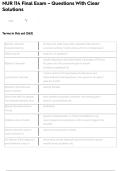
NUR 114 Final Exam – Questions With Clear
Solutions
Save
Terms in this set (363)
Bipolar I disorder at least one week long manic episode that results in
characterized by excessive activity. Mostly mania with mix of depression
Mania can be euphoric or dysphoric
mostly depression and hypomania. Early ages of 20 and
Bipolar II disorder 60 years old. Not severe enough to impair
social/occupational life.
cycle in and out of hypomania (no delusions and
Cyclothymic disorder hallucinations) and depression. Two years for an adult, 1
year for a child
Bipolar II disorders are among females
more common
More than half the people have another psychiatric disorder, most being panic
with bipolar disorder have attacks, social phobia, etc.
Bipolar disorders have a heritability
strong
genetic predisposition or chemical imbalance may
Diathesis stress model never experience symptoms, until an event triggers the
disorder.
Bipolar disorder may be upper socioeconomic classes
more common in
For Bipolar, Early diagnosis preventing suicide attempts, alcohol/substance abuse,
and treatment is key in marital/work problems, etc.
, ○ Mood - highly unstable. May laugh or joke or speak in
a continuous stream. Mood can quickly change to
irritation or anger. Patients have high self confidence
and know no strangers. Excessive spending, elaborate
schemes.
○ Behavior- constant activity and reduced need for
sleep prevent proper rest. Non stop physical activity
Mania characteristics
can lead to physical exhaustion and death if not treated;
this is an EMERGENCY! Act on impulses.
○ Thought processes and speech patterns- flight of
ideas is continuous flow of accelerated speech- change
in topic and plays on word. Speech is usually loud,
vulgar and sexua. Clang associations are stringing
words together based on their rhyming sounds.
For Mania, Always assess if a danger to self or others
the patient is
With people with mania, SET LIMITS! Consistency is key among staff if limit
nurses need to setting is to be carried out consistently.
Big diagnosis for mania is RISK FOR INJURY
primary outcome is injury prevention- stabilizing the
Acute phase patient (hydrating, maintaining cardiac status, getting
enough sleep and rest)
focuses on adhering to the medication regimen and
Continuation phase
preventing relapse
focuses on relapse prevention and limitation of further
Maintenance therapy
episodes
Meds to use during acute use Lithium and Lamictal are the first line of treatment
phase for someone with bipolar disorder
, naturally occurring salt in the body- effective in tx of
bipolar I disorder- start low and go slow- takes about
10-21 days to be effective- must reach therapeutic level
to be effective (7-14 days)- 0.4-1.3 mEq/L-levels should
not exceed 1.5 (considered toxic)- Should be taken 5
days after beginning lithium therapy- after therapeutic
Lithium levels are reached, check every month- after 6 months
of stability, levels should be checked every 3 months.
Risks are hypothyroidism and impairment of the kidneys.
Be sure patients know they need to continually take
medication. IF DIARRHEA, VOMITING OR SWEATING
OCCURS STOP LITHIUM AND CONTACT YOUR
PHYSICIAN. Take with meal, do not take with diuretics.
effective at diminishing impulsive and aggressive
Anticonvulsant drugs behaviors in pts who are not psychotic- Valproate
(Depakote)- monitor liver function and platelet count
should be avoided in patients with h/o substance abuse.
Antianxiety drugs
Clonazepam (Klonopin) and Lorazepam (Ativan)
can be used to subdue manic behavior and severe
depression- side effect is memory loss
ECT
induces a seizure - patient will complain about a h/a,
and may be confused or disoriented for several hours.
SECLUSION AND NEVER TO BE USED AS PUNISHMENT
RESTRAINTS ARE
check every 15 minutes, offer food and fluids every 30
If a patient is secluded
minutes
persistent depressed mood lasting longer than 2 weeks
○ Accompanied by a lack of interest in previous
pleasurable activity (anhedonia), fatigue, sleep
disturbances, changes in appetite, feelings of
Major depressive disorder hopelessness or worthlessness.
○ Complain of problems with family and friends, inability
to concentrate and make decisions, psychomotor
agitation (restless, fidgety, wringing of hands). Can be
preoccupied with death
Terminal insomnia (early is a red flag for depression
morning awakening)
Disruptive mood in children b/w the ages of 6 and 18- frequent temper
dysregulation disorder tantrums resulting in verbal or behavioral outbursts.
Solutions
Save
Terms in this set (363)
Bipolar I disorder at least one week long manic episode that results in
characterized by excessive activity. Mostly mania with mix of depression
Mania can be euphoric or dysphoric
mostly depression and hypomania. Early ages of 20 and
Bipolar II disorder 60 years old. Not severe enough to impair
social/occupational life.
cycle in and out of hypomania (no delusions and
Cyclothymic disorder hallucinations) and depression. Two years for an adult, 1
year for a child
Bipolar II disorders are among females
more common
More than half the people have another psychiatric disorder, most being panic
with bipolar disorder have attacks, social phobia, etc.
Bipolar disorders have a heritability
strong
genetic predisposition or chemical imbalance may
Diathesis stress model never experience symptoms, until an event triggers the
disorder.
Bipolar disorder may be upper socioeconomic classes
more common in
For Bipolar, Early diagnosis preventing suicide attempts, alcohol/substance abuse,
and treatment is key in marital/work problems, etc.
, ○ Mood - highly unstable. May laugh or joke or speak in
a continuous stream. Mood can quickly change to
irritation or anger. Patients have high self confidence
and know no strangers. Excessive spending, elaborate
schemes.
○ Behavior- constant activity and reduced need for
sleep prevent proper rest. Non stop physical activity
Mania characteristics
can lead to physical exhaustion and death if not treated;
this is an EMERGENCY! Act on impulses.
○ Thought processes and speech patterns- flight of
ideas is continuous flow of accelerated speech- change
in topic and plays on word. Speech is usually loud,
vulgar and sexua. Clang associations are stringing
words together based on their rhyming sounds.
For Mania, Always assess if a danger to self or others
the patient is
With people with mania, SET LIMITS! Consistency is key among staff if limit
nurses need to setting is to be carried out consistently.
Big diagnosis for mania is RISK FOR INJURY
primary outcome is injury prevention- stabilizing the
Acute phase patient (hydrating, maintaining cardiac status, getting
enough sleep and rest)
focuses on adhering to the medication regimen and
Continuation phase
preventing relapse
focuses on relapse prevention and limitation of further
Maintenance therapy
episodes
Meds to use during acute use Lithium and Lamictal are the first line of treatment
phase for someone with bipolar disorder
, naturally occurring salt in the body- effective in tx of
bipolar I disorder- start low and go slow- takes about
10-21 days to be effective- must reach therapeutic level
to be effective (7-14 days)- 0.4-1.3 mEq/L-levels should
not exceed 1.5 (considered toxic)- Should be taken 5
days after beginning lithium therapy- after therapeutic
Lithium levels are reached, check every month- after 6 months
of stability, levels should be checked every 3 months.
Risks are hypothyroidism and impairment of the kidneys.
Be sure patients know they need to continually take
medication. IF DIARRHEA, VOMITING OR SWEATING
OCCURS STOP LITHIUM AND CONTACT YOUR
PHYSICIAN. Take with meal, do not take with diuretics.
effective at diminishing impulsive and aggressive
Anticonvulsant drugs behaviors in pts who are not psychotic- Valproate
(Depakote)- monitor liver function and platelet count
should be avoided in patients with h/o substance abuse.
Antianxiety drugs
Clonazepam (Klonopin) and Lorazepam (Ativan)
can be used to subdue manic behavior and severe
depression- side effect is memory loss
ECT
induces a seizure - patient will complain about a h/a,
and may be confused or disoriented for several hours.
SECLUSION AND NEVER TO BE USED AS PUNISHMENT
RESTRAINTS ARE
check every 15 minutes, offer food and fluids every 30
If a patient is secluded
minutes
persistent depressed mood lasting longer than 2 weeks
○ Accompanied by a lack of interest in previous
pleasurable activity (anhedonia), fatigue, sleep
disturbances, changes in appetite, feelings of
Major depressive disorder hopelessness or worthlessness.
○ Complain of problems with family and friends, inability
to concentrate and make decisions, psychomotor
agitation (restless, fidgety, wringing of hands). Can be
preoccupied with death
Terminal insomnia (early is a red flag for depression
morning awakening)
Disruptive mood in children b/w the ages of 6 and 18- frequent temper
dysregulation disorder tantrums resulting in verbal or behavioral outbursts.