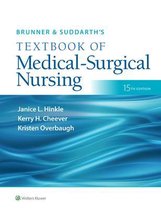
Brunner & Suddarth's Textbook of Medical-
Surgical Nursing
15th Edition
Author(s)Janice Hinkle, Kerry H. Cheever,
Kristen Overbaugh
TEST BANK
1
1️⃣ Reference
Ch. 1️ — Nursing
2️⃣ Question Stem
A 56-year-old patient with COPD asks the nurse how nursing
differs from other health professions. Which nursing statement
best reflects the profession’s unique focus when prioritizing
care?
3️⃣ Options
A. “We diagnose medical diseases and prescribe treatments.”
,B. “We focus on holistic care, integrating physiological and
psychosocial needs.”
C. “We provide only technical procedures ordered by
physicians.”
D. “We mainly perform administrative tasks to coordinate
services.”
4️⃣ Correct Answer
B
5⃣ Rationales
Correct (B): Brunner & Suddarth describe nursing as holistic,
focusing on physiological, psychological, social, and spiritual
needs and integrating these domains into individualized care
planning. This distinguishes nursing’s broad patient-centered
scope.
Incorrect (A): Diagnosing medical diseases and prescribing
treatments are primary functions of medical providers, not the
defining role of nursing.
Incorrect (C): Nursing includes technical skills but extends
beyond performing orders to independent assessment, critical
thinking, and interventions.
Incorrect (D): Administrative coordination is part of nursing but
is not the profession’s central or unique patient-care focus.
6⃣ Teaching Point
Nursing uniquely integrates holistic assessment and
individualized interventions across patient domains.
,7️⃣ Citation (simplified APA)
Hinkle, J., Cheever, K., & Overbaugh, K. (2️02️2️). Brunner &
Suddarth’s Textbook of Medical-Surgical Nursing (1️5th Ed.). Ch.
1️.
2
1️⃣ Reference
Ch. 1️ — The Patient: Consumer of Nursing and Health Care
2️⃣ Question Stem
A patient refuses a recommended wound dressing change due
to cultural beliefs. What is the nurse’s best first action to
respect patient-centered care?
3️⃣ Options
A. Tell the patient dressing changes are mandatory and
continue anyway.
B. Notify the physician to order a restraint.
C. Explore the patient’s beliefs and negotiate a mutually
acceptable plan.
D. Discharge the patient for noncompliance.
4️⃣ Correct Answer
C
5⃣ Rationales
Correct (C): Brunner & Suddarth emphasize patient as
consumer of care: nurses should elicit cultural beliefs, assess
, understanding, and negotiate culturally sensitive plans while
ensuring safety.
Incorrect (A): Forcing care violates autonomy and cultural
respect and can harm therapeutic relationships.
Incorrect (B): Restraints are inappropriate for refusal of care;
they pose safety and ethical issues.
Incorrect (D): Discharging for refusal without exploring reasons
is ethically and legally unsound.
6⃣ Teaching Point
Assess beliefs, communicate respectfully, and negotiate care
plans that respect patient autonomy.
7️⃣ Citation
Hinkle, J., Cheever, K., & Overbaugh, K. (2️02️2️). Brunner &
Suddarth’s Textbook of Medical-Surgical Nursing (1️5th Ed.). Ch.
1️.
3
1️⃣ Reference
Ch. 1️ — The Patient’s Basic Needs: Maslow Hierarchy of Needs
2️⃣ Question Stem
A post-op patient develops hypoxia (SpO₂ 85%) and is anxious.
Using Maslow’s hierarchy, which nursing action should have
highest priority?
Surgical Nursing
15th Edition
Author(s)Janice Hinkle, Kerry H. Cheever,
Kristen Overbaugh
TEST BANK
1
1️⃣ Reference
Ch. 1️ — Nursing
2️⃣ Question Stem
A 56-year-old patient with COPD asks the nurse how nursing
differs from other health professions. Which nursing statement
best reflects the profession’s unique focus when prioritizing
care?
3️⃣ Options
A. “We diagnose medical diseases and prescribe treatments.”
,B. “We focus on holistic care, integrating physiological and
psychosocial needs.”
C. “We provide only technical procedures ordered by
physicians.”
D. “We mainly perform administrative tasks to coordinate
services.”
4️⃣ Correct Answer
B
5⃣ Rationales
Correct (B): Brunner & Suddarth describe nursing as holistic,
focusing on physiological, psychological, social, and spiritual
needs and integrating these domains into individualized care
planning. This distinguishes nursing’s broad patient-centered
scope.
Incorrect (A): Diagnosing medical diseases and prescribing
treatments are primary functions of medical providers, not the
defining role of nursing.
Incorrect (C): Nursing includes technical skills but extends
beyond performing orders to independent assessment, critical
thinking, and interventions.
Incorrect (D): Administrative coordination is part of nursing but
is not the profession’s central or unique patient-care focus.
6⃣ Teaching Point
Nursing uniquely integrates holistic assessment and
individualized interventions across patient domains.
,7️⃣ Citation (simplified APA)
Hinkle, J., Cheever, K., & Overbaugh, K. (2️02️2️). Brunner &
Suddarth’s Textbook of Medical-Surgical Nursing (1️5th Ed.). Ch.
1️.
2
1️⃣ Reference
Ch. 1️ — The Patient: Consumer of Nursing and Health Care
2️⃣ Question Stem
A patient refuses a recommended wound dressing change due
to cultural beliefs. What is the nurse’s best first action to
respect patient-centered care?
3️⃣ Options
A. Tell the patient dressing changes are mandatory and
continue anyway.
B. Notify the physician to order a restraint.
C. Explore the patient’s beliefs and negotiate a mutually
acceptable plan.
D. Discharge the patient for noncompliance.
4️⃣ Correct Answer
C
5⃣ Rationales
Correct (C): Brunner & Suddarth emphasize patient as
consumer of care: nurses should elicit cultural beliefs, assess
, understanding, and negotiate culturally sensitive plans while
ensuring safety.
Incorrect (A): Forcing care violates autonomy and cultural
respect and can harm therapeutic relationships.
Incorrect (B): Restraints are inappropriate for refusal of care;
they pose safety and ethical issues.
Incorrect (D): Discharging for refusal without exploring reasons
is ethically and legally unsound.
6⃣ Teaching Point
Assess beliefs, communicate respectfully, and negotiate care
plans that respect patient autonomy.
7️⃣ Citation
Hinkle, J., Cheever, K., & Overbaugh, K. (2️02️2️). Brunner &
Suddarth’s Textbook of Medical-Surgical Nursing (1️5th Ed.). Ch.
1️.
3
1️⃣ Reference
Ch. 1️ — The Patient’s Basic Needs: Maslow Hierarchy of Needs
2️⃣ Question Stem
A post-op patient develops hypoxia (SpO₂ 85%) and is anxious.
Using Maslow’s hierarchy, which nursing action should have
highest priority?