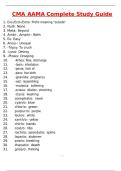
CMA AAMA Complete Study Guide
1. Exo-/Ecto-/Extra: Prefix meaning "outside"
2. Nulli: None
3. Meta: Beyond
4. Ambi-, Amphi-: Both
5. Eu: Easy
6. Aniso-: Unequal
7. -Tripsy: To crush
8. -Lysis: Destroy
9. -Ptosis: Drooping
10. -Rrhea: flow, discharge
11. -Iasis: infestation
12. -penia: lack of
13. -para: live birth
14. -gravida: pregnancy
15. -oid: ressembling
16. -malacia: softening
17. -ectasia: dilation, stretching
18. -clysis: washing
19. oomphal/o: navel
20. cyan/o: blue
21. chlor/o: green
22. purpur/o: purple
23. leuk/o: white
24. xanth/o: yellow
25. chir/o: hands
26. cost/o: ribs
27. rachi/o; spondyl/o: spine
28. lapar/o: abdomen
29. pne/o: breathing
30. thanat/o: death
31. gnos/o: thinking
,32. encephal/o: brain
33. kerat/o: cornea
34. myring/p; tympan/o: ear drum
35. blephar/o: eyelid
36. phon/o: hearing
37. osm/o: smell
38. phas/o: speech
39. lacrim/o: tears
40. op/o: vision
41. aden/o: gland
42. trich/o: hair
43. vas/o: vessel
44. phelb/o: vein
45. Suffix, prefix, root: what order is most appropriate when determining the meaning of
medical term
46. Blood vessels, capillaries, heart: Circulatory System
47. Pituitary gland, thymus, thyroid, adrenal, pancreas: Endocrine
System
48. Lymph vessels, spleen, tonsils: Lymphatic System
49. Mouth, nose, trachea, bronchi, lungs, alveoli: Respiratory System
50. Kidney, Ureter, Urethra, Bladder: excretory
51. Centriole: Reproduction in the cell
52. Mitosis: cell division in which the nucleus divides into nuclei containing the same number
chromosomes
53. Connective tissue: Hard (bone), Liquid (Blood), Fibrous (Tendon), Soft (areolar)
54. Muscle tissue: Cardiac, Smooth (vessels and organs), Skeletal (voluntary muscles)
55. Carcinoma: Malignant epithelial tissue
56. Sarcoma: Malignant connective tissue
57. Distal: Greatest distance away from a point of insertion
58. Proximal: Closest to the point of insertion
59. Sagittal plane: divides body into left and right
60. Transverse Plane: horizontal division of the body into upper and lower portions
61. Frontal or Coronal plane: divides the body into anterior and posterior sections
62. RH: Right hypochondrium
,63. RL: Right lumbar
64. RI: Right inguinal
65. Integumentary system: provision of a protective barrier; regulation of body
temperature; reception of information; linings for body cavities and organs
66. Cyanosis: a bluish discoloration of the skin resulting from poor circulation or inadequate
oxygenation of the blood.
67. Cirrhosis: chronic degenerative disease of the liver
68. Bronze: Adrenal problems
69. Ecchymosis: bruising
70. Jaundice: yellowing of the skin and the whites of the eyes caused by an accumulation of bile
pigment (bilirubin) in the blood; liver, gallbladder, pancreas
71. Impetigo: bacterial skin infection characterized by isolated pustules that become crusted
and rupture.
72. Furuncle: boil; suppurative inflammatory skin lesion due to infected hair follicle
73. Ulna: Inner and larger bone of the forearm, attached to the wrist and located on the side of th
little finger.
74. Radius: lateral bone of the forearm (thumb side)
75. Tibula: shin bone
76. Fibula: The lateral and smaller bone of the lower leg
77. Axial skeleton: Portion of the skeletal system that consists of the skull, rib cage, and
vertebral column, and hips
78. Tendons: Connect muscle to bone
79. Ligaments: Connect bone to bone
80. Open/Compound fracture: broken bone penetrates through the skin
81. Closed/simple fracture: break that does not penetrate the skin
82. Greenstick fracture: bending and incomplete break of a bone; most often seen in
children.
83. Impacted/Compacted fracture: One piece of bone jammed into another
84. Comminuted fracture: bone breaks into many fragments
85. Muscles need....: glucose and oxygen to make ATP for movement
86. Scoliosis: abnormal lateral curvature of the spine
87. Lordosis: abnormal increase in the forward curvature of the lumbar spine
88. Kyphosis: excessive outward curvature of the spine, causing hunching of the back.
89. Frontal lobe: Emotions and personality
, 90. Parietal Lobe: Math and logic
91. Temporal lobe: Processing spoken word
92. Occipital lobe: Processing visual information
1. Exo-/Ecto-/Extra: Prefix meaning "outside"
2. Nulli: None
3. Meta: Beyond
4. Ambi-, Amphi-: Both
5. Eu: Easy
6. Aniso-: Unequal
7. -Tripsy: To crush
8. -Lysis: Destroy
9. -Ptosis: Drooping
10. -Rrhea: flow, discharge
11. -Iasis: infestation
12. -penia: lack of
13. -para: live birth
14. -gravida: pregnancy
15. -oid: ressembling
16. -malacia: softening
17. -ectasia: dilation, stretching
18. -clysis: washing
19. oomphal/o: navel
20. cyan/o: blue
21. chlor/o: green
22. purpur/o: purple
23. leuk/o: white
24. xanth/o: yellow
25. chir/o: hands
26. cost/o: ribs
27. rachi/o; spondyl/o: spine
28. lapar/o: abdomen
29. pne/o: breathing
30. thanat/o: death
31. gnos/o: thinking
,32. encephal/o: brain
33. kerat/o: cornea
34. myring/p; tympan/o: ear drum
35. blephar/o: eyelid
36. phon/o: hearing
37. osm/o: smell
38. phas/o: speech
39. lacrim/o: tears
40. op/o: vision
41. aden/o: gland
42. trich/o: hair
43. vas/o: vessel
44. phelb/o: vein
45. Suffix, prefix, root: what order is most appropriate when determining the meaning of
medical term
46. Blood vessels, capillaries, heart: Circulatory System
47. Pituitary gland, thymus, thyroid, adrenal, pancreas: Endocrine
System
48. Lymph vessels, spleen, tonsils: Lymphatic System
49. Mouth, nose, trachea, bronchi, lungs, alveoli: Respiratory System
50. Kidney, Ureter, Urethra, Bladder: excretory
51. Centriole: Reproduction in the cell
52. Mitosis: cell division in which the nucleus divides into nuclei containing the same number
chromosomes
53. Connective tissue: Hard (bone), Liquid (Blood), Fibrous (Tendon), Soft (areolar)
54. Muscle tissue: Cardiac, Smooth (vessels and organs), Skeletal (voluntary muscles)
55. Carcinoma: Malignant epithelial tissue
56. Sarcoma: Malignant connective tissue
57. Distal: Greatest distance away from a point of insertion
58. Proximal: Closest to the point of insertion
59. Sagittal plane: divides body into left and right
60. Transverse Plane: horizontal division of the body into upper and lower portions
61. Frontal or Coronal plane: divides the body into anterior and posterior sections
62. RH: Right hypochondrium
,63. RL: Right lumbar
64. RI: Right inguinal
65. Integumentary system: provision of a protective barrier; regulation of body
temperature; reception of information; linings for body cavities and organs
66. Cyanosis: a bluish discoloration of the skin resulting from poor circulation or inadequate
oxygenation of the blood.
67. Cirrhosis: chronic degenerative disease of the liver
68. Bronze: Adrenal problems
69. Ecchymosis: bruising
70. Jaundice: yellowing of the skin and the whites of the eyes caused by an accumulation of bile
pigment (bilirubin) in the blood; liver, gallbladder, pancreas
71. Impetigo: bacterial skin infection characterized by isolated pustules that become crusted
and rupture.
72. Furuncle: boil; suppurative inflammatory skin lesion due to infected hair follicle
73. Ulna: Inner and larger bone of the forearm, attached to the wrist and located on the side of th
little finger.
74. Radius: lateral bone of the forearm (thumb side)
75. Tibula: shin bone
76. Fibula: The lateral and smaller bone of the lower leg
77. Axial skeleton: Portion of the skeletal system that consists of the skull, rib cage, and
vertebral column, and hips
78. Tendons: Connect muscle to bone
79. Ligaments: Connect bone to bone
80. Open/Compound fracture: broken bone penetrates through the skin
81. Closed/simple fracture: break that does not penetrate the skin
82. Greenstick fracture: bending and incomplete break of a bone; most often seen in
children.
83. Impacted/Compacted fracture: One piece of bone jammed into another
84. Comminuted fracture: bone breaks into many fragments
85. Muscles need....: glucose and oxygen to make ATP for movement
86. Scoliosis: abnormal lateral curvature of the spine
87. Lordosis: abnormal increase in the forward curvature of the lumbar spine
88. Kyphosis: excessive outward curvature of the spine, causing hunching of the back.
89. Frontal lobe: Emotions and personality
, 90. Parietal Lobe: Math and logic
91. Temporal lobe: Processing spoken word
92. Occipital lobe: Processing visual information