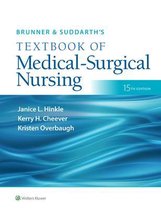
Brunner & Suddarth's Textbook of Medical-
Surgical Nursing
15th Edition
Author(s)Janice Hinkle, Kerry H. Cheever,
Kristen Overbaugh
TEST BANK
Question 1
Reference: Ch. 1 — Nursing — The Patient: Consumer of
Nursing and Health Care
Question Stem: A 68-year-old patient with multiple chronic
conditions expresses concern about medication costs and asks
the nurse how to prioritize which treatments to continue.
Which nursing response best supports patient-centered care
and shared decision making?
A. “Stop the medications you consider least important at home
,and I’ll let your provider know.”
B. “Let’s review your health goals and values so we can discuss
options that match what matters most to you.”
C. “Medication adherence is key — you should continue all
prescribed drugs to prevent complications.”
D. “I’ll arrange for a social worker to find a lower-cost
pharmacy; you don’t need to decide now.”
Correct Answer: B
Rationales:
• Correct (B): This response centers the conversation on the
patient’s goals and values, enabling shared decision
making and individualized care—core to treating the
patient as an informed consumer of health care. (Ch. 1:
The Patient: Consumer of Nursing and Health Care)
• Incorrect (A): Asking the patient to independently stop
meds without clinician input risks harm and bypasses
collaborative care.
• Incorrect (C): Universal continuation without discussing
costs or patient priorities may ignore feasibility and
patient-centered planning.
• Incorrect (D): Referring to resources is useful, but deferring
the discussion delays immediate shared decision making
and patient empowerment.
Teaching Point: Elicit patient goals and values to guide
individualized, shared treatment decisions.
Citation: Hinkle, J., Cheever, K., & Overbaugh, K. (2022).
, Brunner & Suddarth’s Textbook of Medical-Surgical Nursing
(15th Ed.). Ch. 1.
Question 2
Reference: Ch. 1 — The Patient’s Basic Needs: Maslow
Hierarchy of Needs
Question Stem: The nurse triaging four adults after a mass-
casualty incident must prioritize initial interventions. Which
patient should receive immediate attention first?
A. An alert adult with an open femur fracture and active
bleeding controlled by a pressure dressing.
B. A semiconscious adult with gurgling respirations and weak
chest rise.
C. A conscious adult complaining of severe leg pain but stable
vital signs.
D. An adult with an isolated forearm laceration and palpable
distal pulses.
Correct Answer: B
Rationales:
• Correct (B): Airway and ventilation are highest in Maslow’s
physiologic priorities; gurgling respirations with poor chest
rise indicate compromised airway/ventilation requiring
immediate intervention. (Ch. 1: Maslow Hierarchy of
Needs)
, • Incorrect (A): Active bleeding is serious, but the dressing is
controlling hemorrhage; airway compromise outranks
controlled extremity bleeding.
• Incorrect (C): Severe pain is important but follows
stabilization of airway, breathing, and circulation.
• Incorrect (D): Isolated limb injury with intact pulses is
lower priority compared with compromised airway.
Teaching Point: Always prioritize airway/ventilation before
other needs in triage.
Citation: Hinkle, J., Cheever, K., & Overbaugh, K. (2022).
Brunner & Suddarth’s Textbook of Medical-Surgical Nursing
(15th Ed.). Ch. 1.
Question 3
Reference: Ch. 1 — Health Promotion — Wellness
Question Stem: A nurse designing a wellness program for
middle-aged adults aims to reduce cardiovascular risk. Which
program component most effectively targets primary
prevention?
A. Annual blood pressure screening and referral for
hypertensive patients.
B. Smoking cessation classes and community campaigns to
reduce tobacco use.
C. Medication management clinics for patients with established
coronary artery disease.
Surgical Nursing
15th Edition
Author(s)Janice Hinkle, Kerry H. Cheever,
Kristen Overbaugh
TEST BANK
Question 1
Reference: Ch. 1 — Nursing — The Patient: Consumer of
Nursing and Health Care
Question Stem: A 68-year-old patient with multiple chronic
conditions expresses concern about medication costs and asks
the nurse how to prioritize which treatments to continue.
Which nursing response best supports patient-centered care
and shared decision making?
A. “Stop the medications you consider least important at home
,and I’ll let your provider know.”
B. “Let’s review your health goals and values so we can discuss
options that match what matters most to you.”
C. “Medication adherence is key — you should continue all
prescribed drugs to prevent complications.”
D. “I’ll arrange for a social worker to find a lower-cost
pharmacy; you don’t need to decide now.”
Correct Answer: B
Rationales:
• Correct (B): This response centers the conversation on the
patient’s goals and values, enabling shared decision
making and individualized care—core to treating the
patient as an informed consumer of health care. (Ch. 1:
The Patient: Consumer of Nursing and Health Care)
• Incorrect (A): Asking the patient to independently stop
meds without clinician input risks harm and bypasses
collaborative care.
• Incorrect (C): Universal continuation without discussing
costs or patient priorities may ignore feasibility and
patient-centered planning.
• Incorrect (D): Referring to resources is useful, but deferring
the discussion delays immediate shared decision making
and patient empowerment.
Teaching Point: Elicit patient goals and values to guide
individualized, shared treatment decisions.
Citation: Hinkle, J., Cheever, K., & Overbaugh, K. (2022).
, Brunner & Suddarth’s Textbook of Medical-Surgical Nursing
(15th Ed.). Ch. 1.
Question 2
Reference: Ch. 1 — The Patient’s Basic Needs: Maslow
Hierarchy of Needs
Question Stem: The nurse triaging four adults after a mass-
casualty incident must prioritize initial interventions. Which
patient should receive immediate attention first?
A. An alert adult with an open femur fracture and active
bleeding controlled by a pressure dressing.
B. A semiconscious adult with gurgling respirations and weak
chest rise.
C. A conscious adult complaining of severe leg pain but stable
vital signs.
D. An adult with an isolated forearm laceration and palpable
distal pulses.
Correct Answer: B
Rationales:
• Correct (B): Airway and ventilation are highest in Maslow’s
physiologic priorities; gurgling respirations with poor chest
rise indicate compromised airway/ventilation requiring
immediate intervention. (Ch. 1: Maslow Hierarchy of
Needs)
, • Incorrect (A): Active bleeding is serious, but the dressing is
controlling hemorrhage; airway compromise outranks
controlled extremity bleeding.
• Incorrect (C): Severe pain is important but follows
stabilization of airway, breathing, and circulation.
• Incorrect (D): Isolated limb injury with intact pulses is
lower priority compared with compromised airway.
Teaching Point: Always prioritize airway/ventilation before
other needs in triage.
Citation: Hinkle, J., Cheever, K., & Overbaugh, K. (2022).
Brunner & Suddarth’s Textbook of Medical-Surgical Nursing
(15th Ed.). Ch. 1.
Question 3
Reference: Ch. 1 — Health Promotion — Wellness
Question Stem: A nurse designing a wellness program for
middle-aged adults aims to reduce cardiovascular risk. Which
program component most effectively targets primary
prevention?
A. Annual blood pressure screening and referral for
hypertensive patients.
B. Smoking cessation classes and community campaigns to
reduce tobacco use.
C. Medication management clinics for patients with established
coronary artery disease.