Week 2 – Corporate Social Responsibility (CSR)...........................3
Case/Challenge................................................................................3
De Stefano, F., Bagdadli, S., & Camuffo, A. (2018). The HR role in
corporate social responsibility and sustainability: A boundary‐shifting
literature review..............................................................................3
Greenwood, M. (2013). Ethical analyses of HRM: A review and
research agenda..............................................................................4
Järlström, M., Saru, E., & Vanhala, S. (2018). Sustainable human
resource management with salience of stakeholders: A top
management perspective.................................................................6
Roca-Puig, V., Beltrán-Martín, I., & García-Juan, B. (2021).
Incorporating poverty in society into strategic human resource
management...................................................................................7
Contrast, compare and case link.......................................................9
Week 3 – Navigating legitimacy..................................................9
Case/Challenge................................................................................9
Boumans, S. (2021). Neoliberalisation of industrial relations: The
ideational development of Dutch employers’ organisations between
1976 and 2019.................................................................................9
Cardona Mejía, L., Pardo del Val, M., & Dasí Coscollar, Á. (2020). The
institutional isomorphism in the context of organizational changes in
higher education institutions. ........................................................11
Farndale, E., & Paauwe, J. (2018). SHRM and context: Why firms want
to be as different as legitimately possible.......................................12
Lewis, A., Cardy, R. L., & Huang, L. (2019). Institutional theory and
HRM: A new look............................................................................14
Contrast, compare and case link.....................................................15
Week 4 – Navigating flexibility..................................................16
Case/Challenge..............................................................................16
Cappelli, P., & Keller, J. R. (2013). Classifying work in the new
economy........................................................................................16
Milch, V., & Laumann, K. (2016). Interorganizational complexity and
organizational accident risk: A literature review..............................18
Snell, S. A., & Morris, S. S. (2021). Time for realignment: The HR
ecosystem.....................................................................................20
Soundararajan, V., Wilhelm, M., Crane, A., Agarwal, P., & Shetty, H.
(2025). Towards a systemic approach for improving working conditions
in global supply chains: An integrative review and research agenda. 22
Contrast, compare and case link.....................................................24
Week 5 – Navigating Resources................................................25
Case/challenge...............................................................................25
, Bourgeault, I. L. (2017). Conceptualizing the social and political
context of the health workforce: Health professions, the state, and its
gender dimensions.........................................................................25
Di Martino, Marco & Palozzi, Gabriele & Chirico, Antonio. (2024).
Workforce management design and reorganization strategies as
response to staff shortages in nursing homes services.....................27
Contrast, compare and case link.....................................................28
Week 6 - Navigating power and tensions...................................29
Case/challenge...............................................................................29
De Prins, P. (2022). ‘Beyond the clash?’: Union–management
partnership through social dialogue on sustainable HRM..................29
Farndale, E., Paauwe, J., Boselie, P., & Horak, S. (2025). Corporate
scandals as punctuating events that change human resource roles...32
Keegan, A., Brandl, J., & Aust, I. (2019). Handling tensions in human
resource management: Insights from paradox theory.......................33
Roper, I., & Higgins, P. (2020). Hidden in plain sight? The human
resource management practitioner's role in dealing with workplace
conflict as a source of organisational–professional power.................35
Contrast, compare and case link.....................................................37
,Week 2 – Corporate Social Responsibility (CSR)
Case/Challenge
CEVA Logistics
Ethical practice: Offering temporary workers a permanent contract, but
what to do when they don’t want to change to a permanent contract?
De Stefano, F., Bagdadli, S., & Camuffo, A. (2018). The HR role in
corporate social responsibility and sustainability: A boundary‐shifting
literature review.
This article reviews the fragmented literature at the intersection of HRM,
CSR and corporate sustainability (CS). The authors aim to clarify how HR
contributes to social and environmental sustainability and propose a
framework and typology to categorize HR’s potential roles in these
domains.
Research question
How does the HR function contribute to CSR and CS, and how can existing
research on HR’s role in these areas be integrated into a coherent
framework?
Key concepts and frameworks
Corporate Social Responsibility (CSR) how companies act ethically
and contribute to social welfare beyond profit goals.
Corporate Sustainability (CS) integrating social, environmental, and
economic dimensions into long-term business strategies.
Sustainable HRM HR practices that maintain employees’ well-being,
employability, and fairness while supporting sustainability goals.
Framework and typology
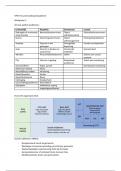
The authors introduce a two-dimensional typology based on:
1. HR orientation
- People-oriented (focus on well-being, dignity and human
sustainability)
- Process-oriented (focus on systems, procedures and performance)
2. CSR/CS focus
- Internal (within the organization)
- External (toward society and external stakeholders)
Which creates four HR roles:
, Key findings
The most existing research focuses on internal, process-oriented HR roles
(HR for CSR), neglecting broader social and ecological dimensions. HR’s
involvement in sustainability is often instrumental and reactive, supporting
projects led by other departments rather than strategically shaping them.
The external roles of HR – influencing community and ecosystem
sustainability – are underdeveloped and under-researched. To become a
strategic actor, HR must extend its boundaries beyond the organization,
integrating employee well-being with societal and environmental goals.
Future research should examine how HR can act as a moral and strategic
driver for sustainability, influencing multiple stakeholders inside and
outside the firm.
So, the HR function is at a crossroads in sustainability. Moving from an
inward, process-focused function toward an outward-looking, people-
centered, and strategically integrated role is essential if HR is to genuinely
contribute to sustainable business and societal impact.
Greenwood, M. (2013). Ethical analyses of HRM: A review and research
agenda.
The article reviews and advances thinking on the ethical dimensions of
HRM. The author argues that HRM is inherently ethical because it deals
with the treatment of human beings in the workplace – yet ethical analysis
remains underdeveloped in the field. The paper critiques existing HRM
perspectives (mainstream and critical) and proposes a distinct ‘ethical
HRM’ perspective, which is both normative (concerned with how things
ought to be) and socio-politically embedded (aware of broader social
and political contexts). The goal is to move beyond HR research beyond
technical, instrumental, or performance-oriented approaches toward
deeper normative inquiry into fairness, justice and dignity at work.
Research question
How can HRM scholarship be reoriented to incorporate a distinct ethical
perspective that is both normatively grounded and socio-politically aware,
and how does this perspective differ from existing mainstream and critical
HRM approaches?
Case/Challenge................................................................................3
De Stefano, F., Bagdadli, S., & Camuffo, A. (2018). The HR role in
corporate social responsibility and sustainability: A boundary‐shifting
literature review..............................................................................3
Greenwood, M. (2013). Ethical analyses of HRM: A review and
research agenda..............................................................................4
Järlström, M., Saru, E., & Vanhala, S. (2018). Sustainable human
resource management with salience of stakeholders: A top
management perspective.................................................................6
Roca-Puig, V., Beltrán-Martín, I., & García-Juan, B. (2021).
Incorporating poverty in society into strategic human resource
management...................................................................................7
Contrast, compare and case link.......................................................9
Week 3 – Navigating legitimacy..................................................9
Case/Challenge................................................................................9
Boumans, S. (2021). Neoliberalisation of industrial relations: The
ideational development of Dutch employers’ organisations between
1976 and 2019.................................................................................9
Cardona Mejía, L., Pardo del Val, M., & Dasí Coscollar, Á. (2020). The
institutional isomorphism in the context of organizational changes in
higher education institutions. ........................................................11
Farndale, E., & Paauwe, J. (2018). SHRM and context: Why firms want
to be as different as legitimately possible.......................................12
Lewis, A., Cardy, R. L., & Huang, L. (2019). Institutional theory and
HRM: A new look............................................................................14
Contrast, compare and case link.....................................................15
Week 4 – Navigating flexibility..................................................16
Case/Challenge..............................................................................16
Cappelli, P., & Keller, J. R. (2013). Classifying work in the new
economy........................................................................................16
Milch, V., & Laumann, K. (2016). Interorganizational complexity and
organizational accident risk: A literature review..............................18
Snell, S. A., & Morris, S. S. (2021). Time for realignment: The HR
ecosystem.....................................................................................20
Soundararajan, V., Wilhelm, M., Crane, A., Agarwal, P., & Shetty, H.
(2025). Towards a systemic approach for improving working conditions
in global supply chains: An integrative review and research agenda. 22
Contrast, compare and case link.....................................................24
Week 5 – Navigating Resources................................................25
Case/challenge...............................................................................25
, Bourgeault, I. L. (2017). Conceptualizing the social and political
context of the health workforce: Health professions, the state, and its
gender dimensions.........................................................................25
Di Martino, Marco & Palozzi, Gabriele & Chirico, Antonio. (2024).
Workforce management design and reorganization strategies as
response to staff shortages in nursing homes services.....................27
Contrast, compare and case link.....................................................28
Week 6 - Navigating power and tensions...................................29
Case/challenge...............................................................................29
De Prins, P. (2022). ‘Beyond the clash?’: Union–management
partnership through social dialogue on sustainable HRM..................29
Farndale, E., Paauwe, J., Boselie, P., & Horak, S. (2025). Corporate
scandals as punctuating events that change human resource roles...32
Keegan, A., Brandl, J., & Aust, I. (2019). Handling tensions in human
resource management: Insights from paradox theory.......................33
Roper, I., & Higgins, P. (2020). Hidden in plain sight? The human
resource management practitioner's role in dealing with workplace
conflict as a source of organisational–professional power.................35
Contrast, compare and case link.....................................................37
,Week 2 – Corporate Social Responsibility (CSR)
Case/Challenge
CEVA Logistics
Ethical practice: Offering temporary workers a permanent contract, but
what to do when they don’t want to change to a permanent contract?
De Stefano, F., Bagdadli, S., & Camuffo, A. (2018). The HR role in
corporate social responsibility and sustainability: A boundary‐shifting
literature review.
This article reviews the fragmented literature at the intersection of HRM,
CSR and corporate sustainability (CS). The authors aim to clarify how HR
contributes to social and environmental sustainability and propose a
framework and typology to categorize HR’s potential roles in these
domains.
Research question
How does the HR function contribute to CSR and CS, and how can existing
research on HR’s role in these areas be integrated into a coherent
framework?
Key concepts and frameworks
Corporate Social Responsibility (CSR) how companies act ethically
and contribute to social welfare beyond profit goals.
Corporate Sustainability (CS) integrating social, environmental, and
economic dimensions into long-term business strategies.
Sustainable HRM HR practices that maintain employees’ well-being,
employability, and fairness while supporting sustainability goals.
Framework and typology
The authors introduce a two-dimensional typology based on:
1. HR orientation
- People-oriented (focus on well-being, dignity and human
sustainability)
- Process-oriented (focus on systems, procedures and performance)
2. CSR/CS focus
- Internal (within the organization)
- External (toward society and external stakeholders)
Which creates four HR roles:
, Key findings
The most existing research focuses on internal, process-oriented HR roles
(HR for CSR), neglecting broader social and ecological dimensions. HR’s
involvement in sustainability is often instrumental and reactive, supporting
projects led by other departments rather than strategically shaping them.
The external roles of HR – influencing community and ecosystem
sustainability – are underdeveloped and under-researched. To become a
strategic actor, HR must extend its boundaries beyond the organization,
integrating employee well-being with societal and environmental goals.
Future research should examine how HR can act as a moral and strategic
driver for sustainability, influencing multiple stakeholders inside and
outside the firm.
So, the HR function is at a crossroads in sustainability. Moving from an
inward, process-focused function toward an outward-looking, people-
centered, and strategically integrated role is essential if HR is to genuinely
contribute to sustainable business and societal impact.
Greenwood, M. (2013). Ethical analyses of HRM: A review and research
agenda.
The article reviews and advances thinking on the ethical dimensions of
HRM. The author argues that HRM is inherently ethical because it deals
with the treatment of human beings in the workplace – yet ethical analysis
remains underdeveloped in the field. The paper critiques existing HRM
perspectives (mainstream and critical) and proposes a distinct ‘ethical
HRM’ perspective, which is both normative (concerned with how things
ought to be) and socio-politically embedded (aware of broader social
and political contexts). The goal is to move beyond HR research beyond
technical, instrumental, or performance-oriented approaches toward
deeper normative inquiry into fairness, justice and dignity at work.
Research question
How can HRM scholarship be reoriented to incorporate a distinct ethical
perspective that is both normatively grounded and socio-politically aware,
and how does this perspective differ from existing mainstream and critical
HRM approaches?