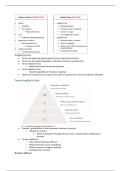
Implied terms
• Terms not expressly agreed upon but are implied into contract
• Terms can be implied regardless of whether contract is written/oral
• Terms implied in fact
o Reflect presumed intentions of parties
• Terms applied in law
o Implied regardless of intention of parties
• Determine if necessary to imply a term and if so what kind is it (can be either/or OR both)
Terms implied in fact
• Purpose - giving effect to the presumed intention of parties
o Fills gap in contract
• Terms that weren't thought of but if were, would've been addressed in
contract
• Can be implied to
o Give contract business efficacy
o Reflect previous course of dealings
o Reflect custom or usage of industry
o Complete the contract
Business efficacy
, • Term must be implied for contract to work effectively
o Implied term must be necessary for purpose of contract
o The Moorcock
• Court slow to imply term and task undertaken with considerable caution
o Overlook Management BV v Foxtel Management Pty Ltd [2002] NSWSC 17
• Where there's no formal contract, HC suggests less rigid approach
o Hospital - Justice Dean
• Actual term of contract must be inferred before any question of implication
arises
o Byrne v Australian Airlines Ltd (1995) 185 CLR 410, Brennan CJ, Dawson and Toohey
JJ
• Is implication of term necessary for reasonable or effective operation of
contract in circumstances of the case
• Adopted test from Justice Dean in Hawkins v Calyton (1988)
▪ Apparent that parties didn't attempt to spell out full terms of
contract, court should imply term by reference to imputed intention
of parties only if implication is necessary for reasonable or effective
operation of contract of that nature in circumstances of case
• Subject to qualification that term may be implied by est
mercantile usage of professional practice or by past course
of dealing
5-tier test
• All 5 conditions must be satisfied for term to be applied - BP Refinery (Westernport) Pty Ltd v
Shire of Hastings (1997) 180 CLR 266
1. Reasonable and equitable
i. Unreasonable and inequitable ≠ intending term to form part of contract
ii. BP refinery
2. Necessary
i. Test of necessity = stringent
• Difficult onus of proof for person seeking to imply term
ii. Scanlan's New Neon Ltd v Tooheys Ltd (1943) 67 CLR 169
3. So obvious it goes w/o saying
i. BP
ii. Wasn't satisfied in Codelfa as it was parties common assumption masking
need to explore provision to cover event that occurred
4. Capable of clear expression
i. Need to formulate term w/ sufficient specificity
• Was an issue in Shell UK Ltd v Lostock Garage Ltd [1977] 1 All ER 481
5. Not contradict any express term of contract of which party's been made aware
i. One of grounds on which Brennan J in Codelfa refused to imply term
• Terms not expressly agreed upon but are implied into contract
• Terms can be implied regardless of whether contract is written/oral
• Terms implied in fact
o Reflect presumed intentions of parties
• Terms applied in law
o Implied regardless of intention of parties
• Determine if necessary to imply a term and if so what kind is it (can be either/or OR both)
Terms implied in fact
• Purpose - giving effect to the presumed intention of parties
o Fills gap in contract
• Terms that weren't thought of but if were, would've been addressed in
contract
• Can be implied to
o Give contract business efficacy
o Reflect previous course of dealings
o Reflect custom or usage of industry
o Complete the contract
Business efficacy
, • Term must be implied for contract to work effectively
o Implied term must be necessary for purpose of contract
o The Moorcock
• Court slow to imply term and task undertaken with considerable caution
o Overlook Management BV v Foxtel Management Pty Ltd [2002] NSWSC 17
• Where there's no formal contract, HC suggests less rigid approach
o Hospital - Justice Dean
• Actual term of contract must be inferred before any question of implication
arises
o Byrne v Australian Airlines Ltd (1995) 185 CLR 410, Brennan CJ, Dawson and Toohey
JJ
• Is implication of term necessary for reasonable or effective operation of
contract in circumstances of the case
• Adopted test from Justice Dean in Hawkins v Calyton (1988)
▪ Apparent that parties didn't attempt to spell out full terms of
contract, court should imply term by reference to imputed intention
of parties only if implication is necessary for reasonable or effective
operation of contract of that nature in circumstances of case
• Subject to qualification that term may be implied by est
mercantile usage of professional practice or by past course
of dealing
5-tier test
• All 5 conditions must be satisfied for term to be applied - BP Refinery (Westernport) Pty Ltd v
Shire of Hastings (1997) 180 CLR 266
1. Reasonable and equitable
i. Unreasonable and inequitable ≠ intending term to form part of contract
ii. BP refinery
2. Necessary
i. Test of necessity = stringent
• Difficult onus of proof for person seeking to imply term
ii. Scanlan's New Neon Ltd v Tooheys Ltd (1943) 67 CLR 169
3. So obvious it goes w/o saying
i. BP
ii. Wasn't satisfied in Codelfa as it was parties common assumption masking
need to explore provision to cover event that occurred
4. Capable of clear expression
i. Need to formulate term w/ sufficient specificity
• Was an issue in Shell UK Ltd v Lostock Garage Ltd [1977] 1 All ER 481
5. Not contradict any express term of contract of which party's been made aware
i. One of grounds on which Brennan J in Codelfa refused to imply term