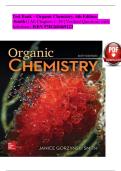
Applied Partial Differential Equations with
Fourier Series and Boundary Value Problems –
ST
5th Edition
UV
SOLUTION
IA
_A
MANUAL
PP
RO
Richard Haberman
VE
Comprehensive Solutions Manual for Instructors
D?
and Students
© Richard Haberman
??
All rights reserved. Reproduction or distribution without permission is prohibited.
©STUDYSTREAM
, Chapter 1. Heat Equation
Section 1.2
1.2.9 (d) Circular cross section means that P = 2πr, A = πr2 , and thus P/A = 2/r, where r is the radius.
Also γ = 0.
1.2.9 (e) u(x, t) = u(t) implies that
ST
du 2h
cρ =− u.
dt r
The solution of this first-order linear differential equation with constant coefficients, which satisfies the
initial condition u(0) = u0 , is · ¸
2h
UV
u(t) = u0 exp − t .
cρr
Section 1.3
1.3.2 ∂u/∂x is continuous if K0 (x0 −) = K0 (x0 +), that is, if the conductivity is continuous.
Section 1.4
IA
1.4.1 (a) Equilibrium satisfies (1.4.14), d2 u/dx2 = 0, whose general solution is (1.4.17), u = c1 + c2 x. The
boundary condition u(0) = 0 implies c1 = 0 and u(L) = T implies c2 = T /L so that u = T x/L.
1.4.1 (d) Equilibrium satisfies (1.4.14), d2 u/dx2 = 0, whose general solution (1.4.17), u = c1 + c2 x. From
_A
the boundary conditions, u(0) = T yields T = c1 and du/dx(L) = α yields α = c2 . Thus u = T + αx.
1.4.1 (f) In equilibrium, (1.2.9) becomes d2 u/dx2 = −Q/K0 = −x2 , whose general solution (by integrating
twice) is u = −x4 /12 + c1 + c2 x. The boundary condition u(0) = T yields c1 = T , while du/dx(L) = 0
yields c2 = L3 /3. Thus u = −x4 /12 + L3 x/3 + T .
1.4.1 (h) Equilibrium satisfies d2 u/dx2 = 0. One integration yields du/dx = c2 , the second integration
PP
yields the general solution u = c1 + c2 x.
x=0: c2 − (c1 − T ) = 0
x=L: c2 = α and thus c1 = T + α.
Therefore, u = (T + α) + αx = T + α(x + 1).
RO
1.4.7 (a) For equilibrium:
d2 u x2 du
2
= −1 implies u = − + c1 x + c2 and = −x + c1 .
dx 2 dx
From the boundary conditions du du
dx (0) = 1 and dx (L) = β, c1 = 1 and −L + c1 = β which is consistent
2
only if β + L = 1. If β = 1 − L, there is an equilibrium solution (u = − x2 + x + c2 ). If β 6= 1 − L,
VE
there isn’t an equilibrium solution. The difficulty is caused by the heat flow being specified at both
ends and a source specified inside. An equilibrium will exist only if these three are in balance. This
balance can be mathematically verified from conservation of energy:
Z Z L
d L du du
cρu dx = − (0) + (L) + Q0 dx = −1 + β + L.
dt 0 dx dx
D?
0
If β + L = 1, then the total thermal energy is constant and the initial energy = the final energy:
Z L Z Lµ 2 
x
f (x) dx = − + x + c2 dx, which determines c2 .
0 0 2
If β + L 6= 1, then the total thermal energy is always changing in time and an equilibrium is never
??
reached.
1
, Section 1.5
d
¡ du ¢
1.5.9 (a) In equilibrium, (1.5.14) using (1.5.19) becomes dr r dr = 0. Integrating once yields rdu/dr = c1
and integrating a second time (after dividing by r) yields u = c1 ln r + c2 . An alternate general solution
is u = c1 ln(r/r1 ) + c3 . The boundary condition u(r1 ) = T1 yields c3 = T1 , while u(r2 ) = T2 yields
c1 = (T2 − T1 )/ ln(r2 /r1 ). Thus, u = ln(r21/r1 ) [(T2 − T1 ) ln r/r1 + T1 ln(r2 /r1 )].
ST
1.5.11 For equilibrium, the radial flow at r = a, 2πaβ, must equal the radial flow at r = b, 2πb. Thus β = b/a.
d
¡ 2 du ¢
1.5.13 From exercise 1.5.12, in equilibrium dr r dr = 0. Integrating once yields r2 du/dr = c1 and integrat-
2
ing a second time (after dividing by r ) yields u = −c1 /r + c2 . The boundary conditions ¡ u(4) ¢ = 80
and u(1) = 0 yields 80 = −c1 /4 + c2 and 0 = −c1 + c2 . Thus c1 = c2 = 320/3 or u = 320 3 1 − 1r .
UV
IA
_A
PP
RO
VE
D?
??
2
, Chapter 2. Method of Separation of Variables
Section 2.3
³ ´ ³ ´
dφ
2.3.1 (a) u(r, t) = φ(r)h(t) yields φ dh = kh d
r dr . Dividing by kφh yields
1 dh
= 1 d
r dφ = −λ or
³ ´ dt r dr kh dt rφ dr dr
dh 1 d dφ
dt = −λkh and r dr r dr = −λφ.
ST
2 2 2 2
2.3.1 (c) u(x, y) = φ(x)h(y) yields h ddxφ2 + φ ddyh2 = 0. Dividing by φh yields 1 d φ
φ dx2 = − h1 ddyh2 = −λ or
d2 φ d2 h
dx2 = −λφ and dy 2 = λh.
4 4
d φ 1 d φ
2.3.1 (e) u(x, t) = φ(x)h(t) yields φ(x) dh
dt = kh(t) dx4 . Dividing by kφh, yields
1 dh
kh dt = φ dx4 = λ.
UV
2 2 2
1 d2 h
2.3.1 (f) u(x, t) = φ(x)h(t) yields φ(x) ddt2h = c2 h(t) ddxφ2 . Dividing by c2 φh, yields c2 h dt2 = 1 d φ
φ dx2 = −λ.
2.3.2 (b) λ = (nπ/L)2 with L = 1 so that λ = n2 π 2 , n = 1, 2, . . .
2.3.2 (d)
√ √ dφ
(i) If λ > 0, φ = c1 cos λx + c2 sin λx. φ(0) = 0 implies c1 = 0, while dx (L) = 0 implies
IA
√ √ √
c2 λ cos λL = 0. Thus λL = −π/2 + nπ(n = 1, 2, . . .).
(ii) If λ = 0, φ = c1 + c2 x. φ(0) = 0 implies c1 = 0 and dφ/dx(L) = 0 implies c2 = 0. Therefore λ = 0
is not an eigenvalue.
√ √
(iii) If λ < 0, let
√ λ = −s√ and φ = c1 cosh sx + c2 sinh sx. φ(0) = 0 implies c1 = 0 and dφ/dx(L) = 0
_A
implies c2 s cosh sL = 0. Thus c2 = 0 and hence there are no eigenvalues with λ < 0.
2.3.2 (f) The simpliest method is to let x0 = x − a. Then d2 φ/dx02 + λφ = 0 with φ(0) = 0 and φ(b − a) = 0.
2
Thus (from p. 46) L = b − a and λ = [nπ/(b − a)] , n = 1, 2, . . ..
P∞ −k(nπ/L)2 t
2.3.3 From (2.3.30), u(x, t) = n=1 Bn sin nπxL e . The initial condition yields
PP
P∞ 2 L
R
nπx
2 cos L = n=1 Bn sin L . From (2.3.35), Bn = L 0 2 cos 3πx
3πx nπx
L sin L dx.
RL P∞ 2
Bn e−k( )
nπ
t 1−cos nπ
2.3.4 (a) Total heat energy = 0
cρuA dx = cρA n=1
L
nπ , using (2.3.30) where Bn
L
satisfies (2.3.35).
RO
2.3.4 (b)
heat flux to right = −K0 ∂u/∂x
total heat flow to right = −K0 A∂u/∂x
¯
heat flow out at x = 0 = K0 A ∂u ¯
¯
∂x x=0
∂u ¯
heat flow out (x = L) = −K0 A ∂x x=L
RL ¯L
d ¯
2.3.4 (c) From conservation of thermal energy, dt u dx = k ∂u ∂u ∂u
∂x ¯ = k ∂x (L) − k ∂x (0). Integrating from
VE
0 0
t = 0 yields
Z L Z L Z t· ¸
∂u ∂u
u(x, t) dx − u(x, 0) dx = k (L) − (0) dx .
∂x ∂x
|0 {z } |0 {z } | 0 {z } | {z }
heat energy initial heat integral of integral of
D?
at t energy flow in at flow out at
x=L x=L
2 p p
2.3.8 (a) The general solution of k ddxu2 = αu (α > 0) is u(x) = a cosh αk x + b sinh αk x. The boundary
condition u(0) = 0 yields a = 0, while u(L) = 0 yields b = 0. Thus u = 0.
??
3
Fourier Series and Boundary Value Problems –
ST
5th Edition
UV
SOLUTION
IA
_A
MANUAL
PP
RO
Richard Haberman
VE
Comprehensive Solutions Manual for Instructors
D?
and Students
© Richard Haberman
??
All rights reserved. Reproduction or distribution without permission is prohibited.
©STUDYSTREAM
, Chapter 1. Heat Equation
Section 1.2
1.2.9 (d) Circular cross section means that P = 2πr, A = πr2 , and thus P/A = 2/r, where r is the radius.
Also γ = 0.
1.2.9 (e) u(x, t) = u(t) implies that
ST
du 2h
cρ =− u.
dt r
The solution of this first-order linear differential equation with constant coefficients, which satisfies the
initial condition u(0) = u0 , is · ¸
2h
UV
u(t) = u0 exp − t .
cρr
Section 1.3
1.3.2 ∂u/∂x is continuous if K0 (x0 −) = K0 (x0 +), that is, if the conductivity is continuous.
Section 1.4
IA
1.4.1 (a) Equilibrium satisfies (1.4.14), d2 u/dx2 = 0, whose general solution is (1.4.17), u = c1 + c2 x. The
boundary condition u(0) = 0 implies c1 = 0 and u(L) = T implies c2 = T /L so that u = T x/L.
1.4.1 (d) Equilibrium satisfies (1.4.14), d2 u/dx2 = 0, whose general solution (1.4.17), u = c1 + c2 x. From
_A
the boundary conditions, u(0) = T yields T = c1 and du/dx(L) = α yields α = c2 . Thus u = T + αx.
1.4.1 (f) In equilibrium, (1.2.9) becomes d2 u/dx2 = −Q/K0 = −x2 , whose general solution (by integrating
twice) is u = −x4 /12 + c1 + c2 x. The boundary condition u(0) = T yields c1 = T , while du/dx(L) = 0
yields c2 = L3 /3. Thus u = −x4 /12 + L3 x/3 + T .
1.4.1 (h) Equilibrium satisfies d2 u/dx2 = 0. One integration yields du/dx = c2 , the second integration
PP
yields the general solution u = c1 + c2 x.
x=0: c2 − (c1 − T ) = 0
x=L: c2 = α and thus c1 = T + α.
Therefore, u = (T + α) + αx = T + α(x + 1).
RO
1.4.7 (a) For equilibrium:
d2 u x2 du
2
= −1 implies u = − + c1 x + c2 and = −x + c1 .
dx 2 dx
From the boundary conditions du du
dx (0) = 1 and dx (L) = β, c1 = 1 and −L + c1 = β which is consistent
2
only if β + L = 1. If β = 1 − L, there is an equilibrium solution (u = − x2 + x + c2 ). If β 6= 1 − L,
VE
there isn’t an equilibrium solution. The difficulty is caused by the heat flow being specified at both
ends and a source specified inside. An equilibrium will exist only if these three are in balance. This
balance can be mathematically verified from conservation of energy:
Z Z L
d L du du
cρu dx = − (0) + (L) + Q0 dx = −1 + β + L.
dt 0 dx dx
D?
0
If β + L = 1, then the total thermal energy is constant and the initial energy = the final energy:
Z L Z Lµ 2 
x
f (x) dx = − + x + c2 dx, which determines c2 .
0 0 2
If β + L 6= 1, then the total thermal energy is always changing in time and an equilibrium is never
??
reached.
1
, Section 1.5
d
¡ du ¢
1.5.9 (a) In equilibrium, (1.5.14) using (1.5.19) becomes dr r dr = 0. Integrating once yields rdu/dr = c1
and integrating a second time (after dividing by r) yields u = c1 ln r + c2 . An alternate general solution
is u = c1 ln(r/r1 ) + c3 . The boundary condition u(r1 ) = T1 yields c3 = T1 , while u(r2 ) = T2 yields
c1 = (T2 − T1 )/ ln(r2 /r1 ). Thus, u = ln(r21/r1 ) [(T2 − T1 ) ln r/r1 + T1 ln(r2 /r1 )].
ST
1.5.11 For equilibrium, the radial flow at r = a, 2πaβ, must equal the radial flow at r = b, 2πb. Thus β = b/a.
d
¡ 2 du ¢
1.5.13 From exercise 1.5.12, in equilibrium dr r dr = 0. Integrating once yields r2 du/dr = c1 and integrat-
2
ing a second time (after dividing by r ) yields u = −c1 /r + c2 . The boundary conditions ¡ u(4) ¢ = 80
and u(1) = 0 yields 80 = −c1 /4 + c2 and 0 = −c1 + c2 . Thus c1 = c2 = 320/3 or u = 320 3 1 − 1r .
UV
IA
_A
PP
RO
VE
D?
??
2
, Chapter 2. Method of Separation of Variables
Section 2.3
³ ´ ³ ´
dφ
2.3.1 (a) u(r, t) = φ(r)h(t) yields φ dh = kh d
r dr . Dividing by kφh yields
1 dh
= 1 d
r dφ = −λ or
³ ´ dt r dr kh dt rφ dr dr
dh 1 d dφ
dt = −λkh and r dr r dr = −λφ.
ST
2 2 2 2
2.3.1 (c) u(x, y) = φ(x)h(y) yields h ddxφ2 + φ ddyh2 = 0. Dividing by φh yields 1 d φ
φ dx2 = − h1 ddyh2 = −λ or
d2 φ d2 h
dx2 = −λφ and dy 2 = λh.
4 4
d φ 1 d φ
2.3.1 (e) u(x, t) = φ(x)h(t) yields φ(x) dh
dt = kh(t) dx4 . Dividing by kφh, yields
1 dh
kh dt = φ dx4 = λ.
UV
2 2 2
1 d2 h
2.3.1 (f) u(x, t) = φ(x)h(t) yields φ(x) ddt2h = c2 h(t) ddxφ2 . Dividing by c2 φh, yields c2 h dt2 = 1 d φ
φ dx2 = −λ.
2.3.2 (b) λ = (nπ/L)2 with L = 1 so that λ = n2 π 2 , n = 1, 2, . . .
2.3.2 (d)
√ √ dφ
(i) If λ > 0, φ = c1 cos λx + c2 sin λx. φ(0) = 0 implies c1 = 0, while dx (L) = 0 implies
IA
√ √ √
c2 λ cos λL = 0. Thus λL = −π/2 + nπ(n = 1, 2, . . .).
(ii) If λ = 0, φ = c1 + c2 x. φ(0) = 0 implies c1 = 0 and dφ/dx(L) = 0 implies c2 = 0. Therefore λ = 0
is not an eigenvalue.
√ √
(iii) If λ < 0, let
√ λ = −s√ and φ = c1 cosh sx + c2 sinh sx. φ(0) = 0 implies c1 = 0 and dφ/dx(L) = 0
_A
implies c2 s cosh sL = 0. Thus c2 = 0 and hence there are no eigenvalues with λ < 0.
2.3.2 (f) The simpliest method is to let x0 = x − a. Then d2 φ/dx02 + λφ = 0 with φ(0) = 0 and φ(b − a) = 0.
2
Thus (from p. 46) L = b − a and λ = [nπ/(b − a)] , n = 1, 2, . . ..
P∞ −k(nπ/L)2 t
2.3.3 From (2.3.30), u(x, t) = n=1 Bn sin nπxL e . The initial condition yields
PP
P∞ 2 L
R
nπx
2 cos L = n=1 Bn sin L . From (2.3.35), Bn = L 0 2 cos 3πx
3πx nπx
L sin L dx.
RL P∞ 2
Bn e−k( )
nπ
t 1−cos nπ
2.3.4 (a) Total heat energy = 0
cρuA dx = cρA n=1
L
nπ , using (2.3.30) where Bn
L
satisfies (2.3.35).
RO
2.3.4 (b)
heat flux to right = −K0 ∂u/∂x
total heat flow to right = −K0 A∂u/∂x
¯
heat flow out at x = 0 = K0 A ∂u ¯
¯
∂x x=0
∂u ¯
heat flow out (x = L) = −K0 A ∂x x=L
RL ¯L
d ¯
2.3.4 (c) From conservation of thermal energy, dt u dx = k ∂u ∂u ∂u
∂x ¯ = k ∂x (L) − k ∂x (0). Integrating from
VE
0 0
t = 0 yields
Z L Z L Z t· ¸
∂u ∂u
u(x, t) dx − u(x, 0) dx = k (L) − (0) dx .
∂x ∂x
|0 {z } |0 {z } | 0 {z } | {z }
heat energy initial heat integral of integral of
D?
at t energy flow in at flow out at
x=L x=L
2 p p
2.3.8 (a) The general solution of k ddxu2 = αu (α > 0) is u(x) = a cosh αk x + b sinh αk x. The boundary
condition u(0) = 0 yields a = 0, while u(L) = 0 yields b = 0. Thus u = 0.
??
3