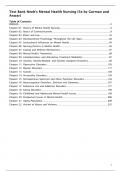
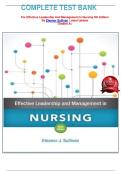
EFFECTIVE LEADERSHIP AND MANAGEMENT IN
NURSING 9TH EDITION TEST BANK
COMPREHENSIVE EXAM PREP WITH 100%
VERIFIED SOLUTIONS 2026
◉A nurse is facing a malpractice suit after a client was injured in a fall.
When establishing whether the nurse committed a breach of duty, the
court will consult with:
A. Medical experts from the same area of specialty
B. Members of public who have been treated in similar care setting
C. The administrators of health facility where the fall occurred
D. Other nurses who practice in similar settings and specialties . Answer:
D. Other nurses who practice in similar settings and specialties
Feedback: The testimony of other nurses in the same specialty as the
defendant may be used
to prove breach of duty. These people are considered a reliable and valid
source of
information by the court, more so than members of the public,
administrators, or medical
experts
,◉A health care provider prescribes a medical procedure that the staff
nurse has reason to believe will harm the client. Which principle should
guide the nurses choice of action?
a. The staff nurse cannot be held legally liable for any harm to the client
if the
procedure is carried out with due care.
b. The nurse may lose his or her license by refusing to carry out the
procedure.
c. The nurse can be held legally liable for any harm if the procedure is
carried out
without questioning it.
d. Liability rests with the health-care provider, not the nurse. . Answer:
ANS: C
Feedback: The rule of personal liability says that every person is liable
for his or her own
conduct, even if someone else prescribed the intervention. The law does
not permit a
wrongdoer to avoid legal liability for his or her own wrongdoing, even
though someone else
also may be sued and held legally liable. "Due care" does not negate the
consequences of
the nurse's actions or release the nurse from liability if he or she
knowingly committed an
unsafe act. Refusal to carry out the procedure would not be a basis for
losing a nursing
,license.
◉The preoperative admitting nurse witnessed a client sign an operative
consent form. The
nurse then cosigned the same document as a witness. The client suffered
an injury during
surgery and names the nurse in the suit because the nurse witnessed the
consent form. What
is the most likely outcome?
a. The nurse is not likely liable because the signature only specifies that
the nurse
witnessed the client signing the consent form.
b. The nurse is likely not liable because surgery is beyond the nurse's
scope of
practice.
c. The nurse may be liable because cosigning the consent form makes
the nurse an
equal member of the surgical team.
d. The nurse is liable because cosigning the consent form confirms that
the client
fully understood the risks of surgery. . Answer: ANS: A
Feedback: Informed consent is obtained by a physician; therefore, in
most cases, a nurse is
, not legally responsible for informed consent but is confirming that the
client signed the
consent form. If the nurse acts solely in the role of a witness, there are
not likely to be legal
consequences for the nurse. The nurse would not be considered to be a
full member of the
surgical team if his or her role was limited to admitting the client.
Surgery is beyond the
nurse's scope of practice, but this does not form the basis for the nurse's
likely exemption
from liability.
◉A client is preparing to be discharged from the health-care facility and
has told the nurse
that he would like to read his medical record. What is the nurse's best
initial action?
a. Arrange for the medical record to be provided to the client.
b. Inform the client that this request will be communicated to the
facility's ethics
committee.
c. Confirm the facility's policy around providing medical records to
clients.
d. Check whether this provision is included in the jurisdiction's Nurse
Practice Act. . Answer: ANS: C
NURSING 9TH EDITION TEST BANK
COMPREHENSIVE EXAM PREP WITH 100%
VERIFIED SOLUTIONS 2026
◉A nurse is facing a malpractice suit after a client was injured in a fall.
When establishing whether the nurse committed a breach of duty, the
court will consult with:
A. Medical experts from the same area of specialty
B. Members of public who have been treated in similar care setting
C. The administrators of health facility where the fall occurred
D. Other nurses who practice in similar settings and specialties . Answer:
D. Other nurses who practice in similar settings and specialties
Feedback: The testimony of other nurses in the same specialty as the
defendant may be used
to prove breach of duty. These people are considered a reliable and valid
source of
information by the court, more so than members of the public,
administrators, or medical
experts
,◉A health care provider prescribes a medical procedure that the staff
nurse has reason to believe will harm the client. Which principle should
guide the nurses choice of action?
a. The staff nurse cannot be held legally liable for any harm to the client
if the
procedure is carried out with due care.
b. The nurse may lose his or her license by refusing to carry out the
procedure.
c. The nurse can be held legally liable for any harm if the procedure is
carried out
without questioning it.
d. Liability rests with the health-care provider, not the nurse. . Answer:
ANS: C
Feedback: The rule of personal liability says that every person is liable
for his or her own
conduct, even if someone else prescribed the intervention. The law does
not permit a
wrongdoer to avoid legal liability for his or her own wrongdoing, even
though someone else
also may be sued and held legally liable. "Due care" does not negate the
consequences of
the nurse's actions or release the nurse from liability if he or she
knowingly committed an
unsafe act. Refusal to carry out the procedure would not be a basis for
losing a nursing
,license.
◉The preoperative admitting nurse witnessed a client sign an operative
consent form. The
nurse then cosigned the same document as a witness. The client suffered
an injury during
surgery and names the nurse in the suit because the nurse witnessed the
consent form. What
is the most likely outcome?
a. The nurse is not likely liable because the signature only specifies that
the nurse
witnessed the client signing the consent form.
b. The nurse is likely not liable because surgery is beyond the nurse's
scope of
practice.
c. The nurse may be liable because cosigning the consent form makes
the nurse an
equal member of the surgical team.
d. The nurse is liable because cosigning the consent form confirms that
the client
fully understood the risks of surgery. . Answer: ANS: A
Feedback: Informed consent is obtained by a physician; therefore, in
most cases, a nurse is
, not legally responsible for informed consent but is confirming that the
client signed the
consent form. If the nurse acts solely in the role of a witness, there are
not likely to be legal
consequences for the nurse. The nurse would not be considered to be a
full member of the
surgical team if his or her role was limited to admitting the client.
Surgery is beyond the
nurse's scope of practice, but this does not form the basis for the nurse's
likely exemption
from liability.
◉A client is preparing to be discharged from the health-care facility and
has told the nurse
that he would like to read his medical record. What is the nurse's best
initial action?
a. Arrange for the medical record to be provided to the client.
b. Inform the client that this request will be communicated to the
facility's ethics
committee.
c. Confirm the facility's policy around providing medical records to
clients.
d. Check whether this provision is included in the jurisdiction's Nurse
Practice Act. . Answer: ANS: C