Grade 12 Physical Science Electrochemistry Notes 2
Electrochemical cells
Now that we understand the principles of redox reactions, we can start to understand the applications
of these reactions in our everyday lives. We will look at two uses of redox reactions:
• in galvanic (or voltaic) cells where chemical energy is used to produce electrical energy; and
• in electrolytic cells where electrical energy is converted into chemical energy.
The Galvanic Cell – converting chemical energy into electrical energy e.g. batteries
In ordinary redox reactions, the transfer of electrons takes place directly from the reducing agent to the
oxidising agent. If we dip a zinc plate into a solution of copper sulphate in water, the following reaction
occurs:
Zn(s) + Cu2+(aq) ⇌ Zn2+(aq) + Cu(s) (note that sulphate ions are spectator ions)
The two half reactions are:
Zn ⇌ Zn2+ + 2e- (oxidation)
Cu2+ + 2e- ⇌ Cu (reduction)
If we separate the two half reactions by putting a zinc plate into a solution of Zn2+ ions in water, and a
copper plate into a solution of Cu2+ ions in water, we can arrange for the electrons to be transferred
from the zinc plate to the copper plate through a conductor (wire).
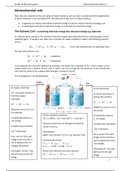
The arrangement is illustrated below.
At copper electrode: At zinc electrode:
Cu2+ ions each remove 2 e- Zn atoms each lose 2 e-
from the copper and go into solution.
electrode.
Zn → Zn2+ + 2e-
Cu2+
+ 2e → Cu
-
Oxidation occurs so Zn is
Reduction occurs so Cu is the anode.
the cathode.
Cell at standard conditions: Zn electrode acquires
Cu electrode acquires a 25°C or 298 K; [Cu2+] and [Zn2+] = 1 mol.dm-3 a -ve charge
+ve charge
Electrons move from Zn through the external Zn plate mass decreases
Cu plate mass increases circuit to the Cu.
[Zn2+] increases
2+
[Cu ] decreases Cell notation:
ZnǀZn2+(aq)(1 mol.dm-3) ǀǀ Cu2+(aq)(1 mol.dm-3) ǀCu thus -ve ions from salt
thus +ve ions from salt bridge move into this ½
bridge move into this ½ Cell potential or emf: cell to balance the extra
cell to balance the –ve E cell = E cathode - E anode +ve charges.
charges left behind. E cell = +0,34 – (-0,76) = 1,1 V
Eventually Zn2+ ions will
Eventually –ve SO42- ions Overall cell reaction (net ionic reaction): drift up into the salt
will drift up into the salt Zn + Cu2+ (aq) → Zn2+(aq) + Cu bridge
bridge
1
, Grade 12 Physical Science Electrochemistry Notes 2
When the electrochemical cell is acting as a galvanic cell, the spontaneous redox reaction will occur.
This is the case where the stronger reducing agent (Zn on the top right-hand side of the table) will be
oxidised and the stronger oxidising agent (Cu2+ on the bottom left-hand side of the table) will be
reduced. Thus the reaction proceeds as: Zn(s) + Cu2+(aq) ⇌ Zn2+(aq) + Cu (s)
The solutions are called electrolytes and the copper and zinc plates are called electrodes. An electrode
is a solid electric conductor through which an electric current enters or leaves an electrochemical cell.
The electrode at which oxidation occurs (the zinc plate) is called the anode and the electrode at which
reduction occurs is called the cathode. Remember REDCAT or ANOX to remember this.
Each half-cell consists of a metal electrode in a solution of the metal ions of that electrode. Thus, the
copper half-cell contains a copper electrode immersed in a solution of copper sulphate.
At the anode, electrons are deposited in the oxidation half-reaction making the zinc electrode
negatively charged. At the cathode, electrons are taken up in the reduction half-reaction, making the
copper cathode positively charged. Electrons flow in the external circuit from the negative anode to the
positive cathode (we are looking here at the flow of electrons, not conventional current!)
The function of the salt bridge
The salt bridge is included to complete the electrical circuit but without introducing any more bits of
metal. It is usually just a glass U-tube filled with an electrolyte like potassium nitrate solution. A salt
bridge must contain an ionic substance, soluble in water and the ions in the solution must not react with
other ions in the cell. A good choice would be KNO3 (aq). The ends are "stoppered" by bits of cotton
wool to prevent too much mixing of the contents of the salt bridge with the contents of the two
beakers.
Electrons move through the external circuit of a galvanic cell from the anode to the cathode. In the
electrolyte, it is the movement of the ions in the solution that ensures the flow of charge between the
two half-cells and hence completing the circuit and allowing the charge to flow.
A salt bridge is a device containing ions in aqueous solution which
• Maintains electrical neutrality in the cell (cancels out the build up of charges in the two half-
cells.
• Provides a path for ions to move between the two half-cells
• Completes the circuit containing the two half-cells and the external circuit.
The salt bridge is able to maintain electrical neutrality of the electrolytes by allowing the flow of cations
and anions from (and through) the salt bridge into the respective half-cells to maintain electrically
neutral electrolytes. Thus, in this example the zinc half-cell where oxidation is occurring will release Zn2+
ions into solution, causing the Zn2+ ion concentration to increase and make the solution more positive.
Immediately, there will be a migration of anions out of the salt bridge into the anode half-cell to
maintain electrical neutrality.
The emf of the cell, E0cell
E cell = E cathode - E anode
The emf of a cell is the difference in the electrode potentials of the anode and cathode. The 0 in the
expression refers to the standard conditions (temperature, pressure and concentrations) of the cell. For
a galvanic cell, the E cell value is always a positive value.
2
Electrochemical cells
Now that we understand the principles of redox reactions, we can start to understand the applications
of these reactions in our everyday lives. We will look at two uses of redox reactions:
• in galvanic (or voltaic) cells where chemical energy is used to produce electrical energy; and
• in electrolytic cells where electrical energy is converted into chemical energy.
The Galvanic Cell – converting chemical energy into electrical energy e.g. batteries
In ordinary redox reactions, the transfer of electrons takes place directly from the reducing agent to the
oxidising agent. If we dip a zinc plate into a solution of copper sulphate in water, the following reaction
occurs:
Zn(s) + Cu2+(aq) ⇌ Zn2+(aq) + Cu(s) (note that sulphate ions are spectator ions)
The two half reactions are:
Zn ⇌ Zn2+ + 2e- (oxidation)
Cu2+ + 2e- ⇌ Cu (reduction)
If we separate the two half reactions by putting a zinc plate into a solution of Zn2+ ions in water, and a
copper plate into a solution of Cu2+ ions in water, we can arrange for the electrons to be transferred
from the zinc plate to the copper plate through a conductor (wire).
The arrangement is illustrated below.
At copper electrode: At zinc electrode:
Cu2+ ions each remove 2 e- Zn atoms each lose 2 e-
from the copper and go into solution.
electrode.
Zn → Zn2+ + 2e-
Cu2+
+ 2e → Cu
-
Oxidation occurs so Zn is
Reduction occurs so Cu is the anode.
the cathode.
Cell at standard conditions: Zn electrode acquires
Cu electrode acquires a 25°C or 298 K; [Cu2+] and [Zn2+] = 1 mol.dm-3 a -ve charge
+ve charge
Electrons move from Zn through the external Zn plate mass decreases
Cu plate mass increases circuit to the Cu.
[Zn2+] increases
2+
[Cu ] decreases Cell notation:
ZnǀZn2+(aq)(1 mol.dm-3) ǀǀ Cu2+(aq)(1 mol.dm-3) ǀCu thus -ve ions from salt
thus +ve ions from salt bridge move into this ½
bridge move into this ½ Cell potential or emf: cell to balance the extra
cell to balance the –ve E cell = E cathode - E anode +ve charges.
charges left behind. E cell = +0,34 – (-0,76) = 1,1 V
Eventually Zn2+ ions will
Eventually –ve SO42- ions Overall cell reaction (net ionic reaction): drift up into the salt
will drift up into the salt Zn + Cu2+ (aq) → Zn2+(aq) + Cu bridge
bridge
1
, Grade 12 Physical Science Electrochemistry Notes 2
When the electrochemical cell is acting as a galvanic cell, the spontaneous redox reaction will occur.
This is the case where the stronger reducing agent (Zn on the top right-hand side of the table) will be
oxidised and the stronger oxidising agent (Cu2+ on the bottom left-hand side of the table) will be
reduced. Thus the reaction proceeds as: Zn(s) + Cu2+(aq) ⇌ Zn2+(aq) + Cu (s)
The solutions are called electrolytes and the copper and zinc plates are called electrodes. An electrode
is a solid electric conductor through which an electric current enters or leaves an electrochemical cell.
The electrode at which oxidation occurs (the zinc plate) is called the anode and the electrode at which
reduction occurs is called the cathode. Remember REDCAT or ANOX to remember this.
Each half-cell consists of a metal electrode in a solution of the metal ions of that electrode. Thus, the
copper half-cell contains a copper electrode immersed in a solution of copper sulphate.
At the anode, electrons are deposited in the oxidation half-reaction making the zinc electrode
negatively charged. At the cathode, electrons are taken up in the reduction half-reaction, making the
copper cathode positively charged. Electrons flow in the external circuit from the negative anode to the
positive cathode (we are looking here at the flow of electrons, not conventional current!)
The function of the salt bridge
The salt bridge is included to complete the electrical circuit but without introducing any more bits of
metal. It is usually just a glass U-tube filled with an electrolyte like potassium nitrate solution. A salt
bridge must contain an ionic substance, soluble in water and the ions in the solution must not react with
other ions in the cell. A good choice would be KNO3 (aq). The ends are "stoppered" by bits of cotton
wool to prevent too much mixing of the contents of the salt bridge with the contents of the two
beakers.
Electrons move through the external circuit of a galvanic cell from the anode to the cathode. In the
electrolyte, it is the movement of the ions in the solution that ensures the flow of charge between the
two half-cells and hence completing the circuit and allowing the charge to flow.
A salt bridge is a device containing ions in aqueous solution which
• Maintains electrical neutrality in the cell (cancels out the build up of charges in the two half-
cells.
• Provides a path for ions to move between the two half-cells
• Completes the circuit containing the two half-cells and the external circuit.
The salt bridge is able to maintain electrical neutrality of the electrolytes by allowing the flow of cations
and anions from (and through) the salt bridge into the respective half-cells to maintain electrically
neutral electrolytes. Thus, in this example the zinc half-cell where oxidation is occurring will release Zn2+
ions into solution, causing the Zn2+ ion concentration to increase and make the solution more positive.
Immediately, there will be a migration of anions out of the salt bridge into the anode half-cell to
maintain electrical neutrality.
The emf of the cell, E0cell
E cell = E cathode - E anode
The emf of a cell is the difference in the electrode potentials of the anode and cathode. The 0 in the
expression refers to the standard conditions (temperature, pressure and concentrations) of the cell. For
a galvanic cell, the E cell value is always a positive value.
2