, Leesbegrip
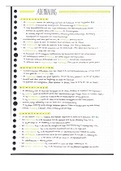
- Section A of Paper 1 always starts with a short newspaper or internet
article (koerantartikel / internetartikel).
- You must read carefully and answer factual, inferential, and vocabulary-based questions.
- The article is usually realistic and current, focusing on a person, animal, or event (e.g.,
Karel the talking crow, a child prodigy, a missing cat, a singer).
Question Types
Waar / Onwaar (True / False)
What it means:
You must decide if the statement given is true or false based on information from the text.
Then you must motivate (prove) your answer by quoting words directly from the passage.
Example:
“Karel is smart because he can only talk like a human.”
Answer: Onwaar. “kan praat, blaf en miaau.”
Examiner wants:
- You must show that you understand the statement.
- You must quote the exact proof — no summarizing or guessing.
- The motivation (the quoted words) must match your answer.
If you write Onwaar but quote something that proves it’s Waar, you lose both marks.
Tip:
- Always read the full sentence in the text — sometimes one extra word changes the
meaning.
- If asked “Motiveer jou antwoord,” never skip the quote — it’s half your mark.
Aanhaling (Quotation questions)
What it means:
When you see “Haal drie opeenvolgende woorde aan…”, you must quote exactly that number
of consecutive wordsfrom the text — no more, no less.
Example:
“Haal drie opeenvolgende woorde aan wat wys dat Karel slim is.”
Answer: “kan praat, blaf ”
Examiner wants:
- Accuracy. You lose marks if you change spelling, punctuation, or quote too many words.
- The quote must make sense alone — don’t include half a word or punctuation error.
Tip:
Count the words carefully (one, two, three). Examiners often check word count exactly.
, Inference / Opinion Questions
What it means:
You must read between the lines — give an answer not directly stated, but that makes logical
sense from the story.
Example:
“Why does Tiaan call Karel a Houdini?”
Answer: Because Houdini was famous for escaping, and Karel escapes easily.
Examiner wants:
- To see that you understand deeper meaning, not just facts.
- Your answer must connect directly to the story — not random opinions.
Tip:
Use your own words, but link to the text’s idea.
Good starts: Because... / He feels that... / It shows that...
Synonym / Meaning Questions
What it means:
You are asked to find one word in the text that has the same meaning as the English or
Afrikaans word given.
Example:
“Haal een woord aan wat beteken ‘move to another place.’”
Answer: verhuis
Examiner wants:
- Proof that you understand vocabulary and context.
- You must quote exactly the word from the passage — not your own version.
Tip:
Study common Afrikaans vocabulary that appears often in articles:
e.g., verhuis, bekommerd, verdwyn, trots, bekend, rede, besluit.
Fact Recall Questions
What it means:
Simple questions about who, where, when, what, or how — the answer is directly stated in the
text.
Example:
“Where did Bari receive his award?”
Answer: In Modderfontein, Gauteng.
Examiner wants:
- Short, clear factual answers — not full sentences.
- Correct spelling of names and places.
Tip:
Underline names, places, and dates when you read — these are almost always tested.
- Section A of Paper 1 always starts with a short newspaper or internet
article (koerantartikel / internetartikel).
- You must read carefully and answer factual, inferential, and vocabulary-based questions.
- The article is usually realistic and current, focusing on a person, animal, or event (e.g.,
Karel the talking crow, a child prodigy, a missing cat, a singer).
Question Types
Waar / Onwaar (True / False)
What it means:
You must decide if the statement given is true or false based on information from the text.
Then you must motivate (prove) your answer by quoting words directly from the passage.
Example:
“Karel is smart because he can only talk like a human.”
Answer: Onwaar. “kan praat, blaf en miaau.”
Examiner wants:
- You must show that you understand the statement.
- You must quote the exact proof — no summarizing or guessing.
- The motivation (the quoted words) must match your answer.
If you write Onwaar but quote something that proves it’s Waar, you lose both marks.
Tip:
- Always read the full sentence in the text — sometimes one extra word changes the
meaning.
- If asked “Motiveer jou antwoord,” never skip the quote — it’s half your mark.
Aanhaling (Quotation questions)
What it means:
When you see “Haal drie opeenvolgende woorde aan…”, you must quote exactly that number
of consecutive wordsfrom the text — no more, no less.
Example:
“Haal drie opeenvolgende woorde aan wat wys dat Karel slim is.”
Answer: “kan praat, blaf ”
Examiner wants:
- Accuracy. You lose marks if you change spelling, punctuation, or quote too many words.
- The quote must make sense alone — don’t include half a word or punctuation error.
Tip:
Count the words carefully (one, two, three). Examiners often check word count exactly.
, Inference / Opinion Questions
What it means:
You must read between the lines — give an answer not directly stated, but that makes logical
sense from the story.
Example:
“Why does Tiaan call Karel a Houdini?”
Answer: Because Houdini was famous for escaping, and Karel escapes easily.
Examiner wants:
- To see that you understand deeper meaning, not just facts.
- Your answer must connect directly to the story — not random opinions.
Tip:
Use your own words, but link to the text’s idea.
Good starts: Because... / He feels that... / It shows that...
Synonym / Meaning Questions
What it means:
You are asked to find one word in the text that has the same meaning as the English or
Afrikaans word given.
Example:
“Haal een woord aan wat beteken ‘move to another place.’”
Answer: verhuis
Examiner wants:
- Proof that you understand vocabulary and context.
- You must quote exactly the word from the passage — not your own version.
Tip:
Study common Afrikaans vocabulary that appears often in articles:
e.g., verhuis, bekommerd, verdwyn, trots, bekend, rede, besluit.
Fact Recall Questions
What it means:
Simple questions about who, where, when, what, or how — the answer is directly stated in the
text.
Example:
“Where did Bari receive his award?”
Answer: In Modderfontein, Gauteng.
Examiner wants:
- Short, clear factual answers — not full sentences.
- Correct spelling of names and places.
Tip:
Underline names, places, and dates when you read — these are almost always tested.