COMMUNICATIEWETENSCHAPPELIJKE ONDERZOEKSDESIGNS
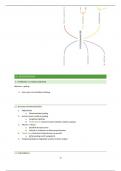
Generic research proces
Starting point: research problem
• Theory and empirical research are constantly influencing each other.
- Identify a theoretical problem refine &adjust it for empirical research
- Identify a research problem through empirical research consult a theory and
embed it theoretically
• Theoretical claim to a generalizable vision on the what, how and why of social
phenomena...
• Repeatedly testing 'grip on reality': refinement, adjustment
Finding a research question
• Research question comes first - everything follows from it...
• Different forms, different sources:
- Observation (bv. je kijkt naar je jongere broertje zijn gamegedrag)
- Public debate
- Personal experience (bv. je ervaart problemen met in slaap vallen na het scrollen
door je social media)
- Open questions in the literature (bv. je vind research gaps in de discussie sectie van
andere artikels)
1
,VOORBEELD: Subtopics social media and well being:
- Social media use en social comparison processes
- Social media use en FOMO…
• Research question...
- Determines the quality of the research design and its elaboration and
interpretation
- Has a theoretical basis, without being hindered by it:
o You should derive your research question from a theory if possible
expand/existing theories
combine different theories.
- Has direction and is not too broad in scope
- Is unambiguous, if necessary divided into sub-questions
(bv. passive, active… sociale media use)
• Possibly gives rise to the formulation of concrete hypotheses. Depending on
epistemiological approach.
• Can take different forms:
1. Descriptive question
o How often (prevalence) or what is the course of a trend?
(bv. How many adolescents follow social media influencers in Belgium?)
(bv. Content analysis: How many newsarticles about covid-19 contain
expert statements?)
2. Explanatory/causal question
o What is the cause?
(bv. How does bingewatching series affect people’s well-being? Through
which mechanism?)
3. Prescriptive question
o How can we intervene?
(bv. Try to find intervening measures to prevent gaming addiction)
• Often concern about originality:
- Conceptual: gap or inconsistency in theories
- Incidental: new phenomenon that arouses interest
2
, • Challenging theories in a new context (e.g. time and space), in a new population, with
a new method.
• Replication is also possible: added value of frequent repetition research in checking
the stability of previous findings.
Refinement through literature study
• Goals of literature study:
1. Context of intellectual development in the field
2. Overview of current status, contradictions, inconsistencies, gaps
3. Positioning of oneself and the research in this field
(bv. vond je de gebruikte methodologie geschikt? Welk epistemologisch standpunt
neem ik in?)
• Types of literature study:
1. Narrative literature study: broad, descriptive exploration
o Literature overview in empirical master thesis
2. Systematic literature review: highly targeted, comprehensive analysis, driven by
close, concrete hypotheses
o In this case, the literature review is the main contribution of the
thesis/paper
• Thorough literature review is a prerequisite:
- Knowledge of the literature provides additional insight to delineate the problem
- You rely on what is known in advance, gives inspiration
- Is open to knowledge based on a multitude of designs
- Is open to a wide range of research outlets
• Critically approaching literature is a necessity:
- Different types of sources, different ways to publish:
o Books - book chapters: peer-reviewed? long time lapse
o Journal articles: ISI, discipline, language, peer-reviewed? medium time
lapse (https://clarivate.com/webofsciencegroup/solutions/journal-citation-
reports/)
o Conference contributions: so-called 'proceedings' short time lapse
o Open access? Predatory publishers? Internet resources? Newspaper
articles?
Publication culture
• Publication cycle and double blind peer review (articles, books, book chapters,
conference contributions):
- Editor as an intermediary: authors and reviewers do not know each other
- Reviewers as advisers reject/revise/accept
- Editor summarizes reviewer comments and makes final decision
3
, • Publication bias:
- Pressure to publish is real - nuanced story
- Tendency to non-publication when not 'interesting' or not statistically
significant
- Both by rejects from editor/reviewers and by not offering (i.e., file drawer
phenomenon).
• Consequences problematic for science:
1. Published material distorted image?
2. Needless effort and resources?
3. Relatively recent - fortunately exceptional - cases of fraud
• Countermovement:
1. Pre-registration of design before conducting the study
o You preregister your hypothesis & design on a platform so you can prove
that you had the hypothesis & design beforehand.
o Non-significant findings will be published
2. Submit data and make it available
3. Initiatives publication 'non-significant' results
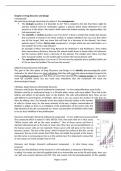
• Franco, Malhortra, Simonovits (2014, in Science):
- Known population of studies carried out
- Timeshare Experiments in the Social Sciences
• Take-home message:
- Use systematics in your literature study, keep an eye on different types of sources
- Take into account the fact that bias exists
- Non-significant results from rigorous design are valuable
Solution for the problem?
4
Generic research proces
Starting point: research problem
• Theory and empirical research are constantly influencing each other.
- Identify a theoretical problem refine &adjust it for empirical research
- Identify a research problem through empirical research consult a theory and
embed it theoretically
• Theoretical claim to a generalizable vision on the what, how and why of social
phenomena...
• Repeatedly testing 'grip on reality': refinement, adjustment
Finding a research question
• Research question comes first - everything follows from it...
• Different forms, different sources:
- Observation (bv. je kijkt naar je jongere broertje zijn gamegedrag)
- Public debate
- Personal experience (bv. je ervaart problemen met in slaap vallen na het scrollen
door je social media)
- Open questions in the literature (bv. je vind research gaps in de discussie sectie van
andere artikels)
1
,VOORBEELD: Subtopics social media and well being:
- Social media use en social comparison processes
- Social media use en FOMO…
• Research question...
- Determines the quality of the research design and its elaboration and
interpretation
- Has a theoretical basis, without being hindered by it:
o You should derive your research question from a theory if possible
expand/existing theories
combine different theories.
- Has direction and is not too broad in scope
- Is unambiguous, if necessary divided into sub-questions
(bv. passive, active… sociale media use)
• Possibly gives rise to the formulation of concrete hypotheses. Depending on
epistemiological approach.
• Can take different forms:
1. Descriptive question
o How often (prevalence) or what is the course of a trend?
(bv. How many adolescents follow social media influencers in Belgium?)
(bv. Content analysis: How many newsarticles about covid-19 contain
expert statements?)
2. Explanatory/causal question
o What is the cause?
(bv. How does bingewatching series affect people’s well-being? Through
which mechanism?)
3. Prescriptive question
o How can we intervene?
(bv. Try to find intervening measures to prevent gaming addiction)
• Often concern about originality:
- Conceptual: gap or inconsistency in theories
- Incidental: new phenomenon that arouses interest
2
, • Challenging theories in a new context (e.g. time and space), in a new population, with
a new method.
• Replication is also possible: added value of frequent repetition research in checking
the stability of previous findings.
Refinement through literature study
• Goals of literature study:
1. Context of intellectual development in the field
2. Overview of current status, contradictions, inconsistencies, gaps
3. Positioning of oneself and the research in this field
(bv. vond je de gebruikte methodologie geschikt? Welk epistemologisch standpunt
neem ik in?)
• Types of literature study:
1. Narrative literature study: broad, descriptive exploration
o Literature overview in empirical master thesis
2. Systematic literature review: highly targeted, comprehensive analysis, driven by
close, concrete hypotheses
o In this case, the literature review is the main contribution of the
thesis/paper
• Thorough literature review is a prerequisite:
- Knowledge of the literature provides additional insight to delineate the problem
- You rely on what is known in advance, gives inspiration
- Is open to knowledge based on a multitude of designs
- Is open to a wide range of research outlets
• Critically approaching literature is a necessity:
- Different types of sources, different ways to publish:
o Books - book chapters: peer-reviewed? long time lapse
o Journal articles: ISI, discipline, language, peer-reviewed? medium time
lapse (https://clarivate.com/webofsciencegroup/solutions/journal-citation-
reports/)
o Conference contributions: so-called 'proceedings' short time lapse
o Open access? Predatory publishers? Internet resources? Newspaper
articles?
Publication culture
• Publication cycle and double blind peer review (articles, books, book chapters,
conference contributions):
- Editor as an intermediary: authors and reviewers do not know each other
- Reviewers as advisers reject/revise/accept
- Editor summarizes reviewer comments and makes final decision
3
, • Publication bias:
- Pressure to publish is real - nuanced story
- Tendency to non-publication when not 'interesting' or not statistically
significant
- Both by rejects from editor/reviewers and by not offering (i.e., file drawer
phenomenon).
• Consequences problematic for science:
1. Published material distorted image?
2. Needless effort and resources?
3. Relatively recent - fortunately exceptional - cases of fraud
• Countermovement:
1. Pre-registration of design before conducting the study
o You preregister your hypothesis & design on a platform so you can prove
that you had the hypothesis & design beforehand.
o Non-significant findings will be published
2. Submit data and make it available
3. Initiatives publication 'non-significant' results
• Franco, Malhortra, Simonovits (2014, in Science):
- Known population of studies carried out
- Timeshare Experiments in the Social Sciences
• Take-home message:
- Use systematics in your literature study, keep an eye on different types of sources
- Take into account the fact that bias exists
- Non-significant results from rigorous design are valuable
Solution for the problem?
4