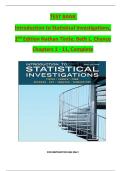
TESTBANK
IntroductiontoStatisticalInvestigations,
2ndEditionNathanTintle;BethL.Chance
Chapters1-11,Complete
FOR INSTRUCTOR USE ON
wq wq wq
L
, R R
Chapter 1 – Significance: How Strong is the Evidence
wq wq wq wq wq wq wq wq
Chapter 2 – wq wq
Generalization: How Broadly Do the Results Apply? Chapter 3
wq wq wq wq wq wq wq wq wq wq
– Estimation: How Large is the Effect?
wq wq wq wq wq wq
Chapter 4 – wq wq
Causation: Can We Say What Caused the Effect? Chapter 5 –
wq wq wq wq wq wq wq wq wq wq wq
wq Comparing Two Proportions wq wq
Chapter 6 – Comparing Two Means
wq wq wq wq wq
Chapter 7 – wq wq
Paired Data: One Quantitative Variable Chapter 8 –
wq wq wq wq wq wq wq wq
Comparing More Than Two Proportions Chapter 9 –
wq wq wq wq wq wq wq wq
wq Comparing More Than Two Means Chapter 10 –
wq wq wq wq wq wq wq
wq Two Quantitative Variables
wq wq
Chapter 11 – Modeling Randomness
wq wq wq wq
FOR INSTRUCTOR USE ON
wq wq wq
L
,Chapter 1 w q
Note: w q TE = Text entry
w q w q wq TE-N = Text entry -
wq wq wq wq
wq NumericMa = Matching w q w q
MS = Multiple selec
w q wq wq
t MC = Multiple choice
wq w q w q wq TF = True-wq wq
FalseE = Easy, M = Medium, H = Hard
wq wq wq wq wq wq wq wq
CHAPTER 1 LEARNING OBJECTIVES wq wq wq
CLO1-
1: Use the chance model to determine whether an observed statistic is unlikely to occu
wq wq wq wq wq wq wq wq wq wq wq wq wq wq
r. CLO1-2: Calculate and interpret a p-
wq wq wq wq wq wq
value, and state the strength of evidence it provides againstthe null hypothesis.
wq wq wq wq wq wq wq wq wq wq wq
CLO1-
3: Calculate a standardized statistic for a single proportion and evaluate the strength ofe
wq wq wq wq wq wq wq wq wq wq wq wq wq
vide nce it provides against a null hypothesis.
wq wq wq wq wq wq wq
CLO1-
4: Describe how the distance of the observed statistic from the parameter value specifiedby
wq wq wq wq wq wq wq wq wq wq wq wq wq
the null hypothesis, sample size, and one- vs. two-
wq wq wq wq wq wq wq wq wq
sided tests affect the strength of evidence against the null hypothesis.
wq wq wq wq wq wq wq wq wq wq
CLO1-5: Describe how to carry out a theory-based, one-proportion z-test.
wq wq wq wq wq wq wq wq wq
Section 1.1: Introduction to Chance Models
wq wq wq wq wq
LO1.1-1: Recognize the difference between parameters and statistics.
wq wq wq wq wq wq wq
LO1.1-
2: Describe how to use coin tossing to simulate outcomes from a chance model of
wq wq wq wq wq wq wq wq wq wq wq wq wq wq wq
the ran- dom choice between two events.
wq wq wq wq wq wq
LO1.1-
3: Use the One Proportion applet to carry out the coin tossing simulation.
wq wq wq wq wq wq wq wq wq wq wq wq w
LO1.1-
q
LO1.1- LO1.1-
FOR INSTRUCTOR USE ON
wq wq wq
L
, 4: Identi d a statistic, simulate results from a chance model, andcomm ent on strength of evidence
wq wq wq wq wq wq wq wq wq wq wq wq wq wq wq
fy wheth against observed study results happening by chance alone.
wq wq wq wq wq wq wq wq wq
er or no wq wq
t study r
wq wq
esults ar 6: Differentiate between saying the chance model is plausible and the chance model is th
wq
wq wq wq wq wq wq wq wq wq wq wq wq wq wq
e statisti ecorrec t explanation for the observed data.
wq wq wq wq wq wq wq
cally sig wq
nificant wq
and whe wq
ther or wq wq
not thec wq
ha
nce mod wq
el is a p
wq wq wq
lausible wq
explanati
on for t wq wq
he data. wq
5
:
w
q
I
m
p
l
e
m
e
n
t
w
q
t
h
e
w
q
3
S
R
s
t
r
a
t
e
g
y
:
w
q
f
i
n
FOR INSTRUCTOR USE ON
wq wq wq
L
IntroductiontoStatisticalInvestigations,
2ndEditionNathanTintle;BethL.Chance
Chapters1-11,Complete
FOR INSTRUCTOR USE ON
wq wq wq
L
, R R
Chapter 1 – Significance: How Strong is the Evidence
wq wq wq wq wq wq wq wq
Chapter 2 – wq wq
Generalization: How Broadly Do the Results Apply? Chapter 3
wq wq wq wq wq wq wq wq wq wq
– Estimation: How Large is the Effect?
wq wq wq wq wq wq
Chapter 4 – wq wq
Causation: Can We Say What Caused the Effect? Chapter 5 –
wq wq wq wq wq wq wq wq wq wq wq
wq Comparing Two Proportions wq wq
Chapter 6 – Comparing Two Means
wq wq wq wq wq
Chapter 7 – wq wq
Paired Data: One Quantitative Variable Chapter 8 –
wq wq wq wq wq wq wq wq
Comparing More Than Two Proportions Chapter 9 –
wq wq wq wq wq wq wq wq
wq Comparing More Than Two Means Chapter 10 –
wq wq wq wq wq wq wq
wq Two Quantitative Variables
wq wq
Chapter 11 – Modeling Randomness
wq wq wq wq
FOR INSTRUCTOR USE ON
wq wq wq
L
,Chapter 1 w q
Note: w q TE = Text entry
w q w q wq TE-N = Text entry -
wq wq wq wq
wq NumericMa = Matching w q w q
MS = Multiple selec
w q wq wq
t MC = Multiple choice
wq w q w q wq TF = True-wq wq
FalseE = Easy, M = Medium, H = Hard
wq wq wq wq wq wq wq wq
CHAPTER 1 LEARNING OBJECTIVES wq wq wq
CLO1-
1: Use the chance model to determine whether an observed statistic is unlikely to occu
wq wq wq wq wq wq wq wq wq wq wq wq wq wq
r. CLO1-2: Calculate and interpret a p-
wq wq wq wq wq wq
value, and state the strength of evidence it provides againstthe null hypothesis.
wq wq wq wq wq wq wq wq wq wq wq
CLO1-
3: Calculate a standardized statistic for a single proportion and evaluate the strength ofe
wq wq wq wq wq wq wq wq wq wq wq wq wq
vide nce it provides against a null hypothesis.
wq wq wq wq wq wq wq
CLO1-
4: Describe how the distance of the observed statistic from the parameter value specifiedby
wq wq wq wq wq wq wq wq wq wq wq wq wq
the null hypothesis, sample size, and one- vs. two-
wq wq wq wq wq wq wq wq wq
sided tests affect the strength of evidence against the null hypothesis.
wq wq wq wq wq wq wq wq wq wq
CLO1-5: Describe how to carry out a theory-based, one-proportion z-test.
wq wq wq wq wq wq wq wq wq
Section 1.1: Introduction to Chance Models
wq wq wq wq wq
LO1.1-1: Recognize the difference between parameters and statistics.
wq wq wq wq wq wq wq
LO1.1-
2: Describe how to use coin tossing to simulate outcomes from a chance model of
wq wq wq wq wq wq wq wq wq wq wq wq wq wq wq
the ran- dom choice between two events.
wq wq wq wq wq wq
LO1.1-
3: Use the One Proportion applet to carry out the coin tossing simulation.
wq wq wq wq wq wq wq wq wq wq wq wq w
LO1.1-
q
LO1.1- LO1.1-
FOR INSTRUCTOR USE ON
wq wq wq
L
, 4: Identi d a statistic, simulate results from a chance model, andcomm ent on strength of evidence
wq wq wq wq wq wq wq wq wq wq wq wq wq wq wq
fy wheth against observed study results happening by chance alone.
wq wq wq wq wq wq wq wq wq
er or no wq wq
t study r
wq wq
esults ar 6: Differentiate between saying the chance model is plausible and the chance model is th
wq
wq wq wq wq wq wq wq wq wq wq wq wq wq wq
e statisti ecorrec t explanation for the observed data.
wq wq wq wq wq wq wq
cally sig wq
nificant wq
and whe wq
ther or wq wq
not thec wq
ha
nce mod wq
el is a p
wq wq wq
lausible wq
explanati
on for t wq wq
he data. wq
5
:
w
q
I
m
p
l
e
m
e
n
t
w
q
t
h
e
w
q
3
S
R
s
t
r
a
t
e
g
y
:
w
q
f
i
n
FOR INSTRUCTOR USE ON
wq wq wq
L