1
For Expert help and assignment solutions, +254707240657
NU 665C Regis Exam 2 Questions and
Answers (100% Correct Answers) Already
Graded A+
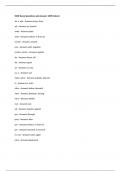
What are the core symptom clusters of PTSD according to DSM-5-
TR?—Ans: Intrusion Symptoms - Flashbacks, nightmares, distressing
memories
Avoidance - Avoiding trauma-related thoughts, places, people
© 2025 Assignment Expert
Negative Alterations in Cognition & Mood - Guilt, emotional
numbing, distorted blame
Alterations in Arousal & Reactivity - Hypervigilance, irritability,
Guru01 - Stuvia
startle response
What factors increase the risk of developing PTSD after trauma
exposure?—Ans: Pre-trauma: Childhood abuse, genetic
predisposition, pre-existing mental illness
Peri-trauma: Severity of trauma, perceived threat to life,
dissociation during trauma
Post-trauma: Lack of social support, additional life stress,
maladaptive coping
How do PTSD symptoms differ between children and adults?—Ans:
Children: More likely to experience nightmares without clear
trauma content, re-enact trauma in play, show new fears, and
have behavioral regression.
Adults: More verbal about distress, experience avoidance and
hyperarousal, and have higher risk of comorbid conditions like
substance use and depression.
What screening tools are commonly used for diagnosing PTSD?—
Ans: Primary Care PTSD Screen (PC-PTSD-5) - Short 5-item screener
PTSD Checklist for DSM-5 (PCL-5) - Self-report symptom measure
For Expert help and assignment solutions, +254707240657
NU 665C Regis Exam 2 Questions and
Answers (100% Correct Answers) Already
Graded A+
What are the core symptom clusters of PTSD according to DSM-5-
TR?—Ans: Intrusion Symptoms - Flashbacks, nightmares, distressing
memories
Avoidance - Avoiding trauma-related thoughts, places, people
© 2025 Assignment Expert
Negative Alterations in Cognition & Mood - Guilt, emotional
numbing, distorted blame
Alterations in Arousal & Reactivity - Hypervigilance, irritability,
Guru01 - Stuvia
startle response
What factors increase the risk of developing PTSD after trauma
exposure?—Ans: Pre-trauma: Childhood abuse, genetic
predisposition, pre-existing mental illness
Peri-trauma: Severity of trauma, perceived threat to life,
dissociation during trauma
Post-trauma: Lack of social support, additional life stress,
maladaptive coping
How do PTSD symptoms differ between children and adults?—Ans:
Children: More likely to experience nightmares without clear
trauma content, re-enact trauma in play, show new fears, and
have behavioral regression.
Adults: More verbal about distress, experience avoidance and
hyperarousal, and have higher risk of comorbid conditions like
substance use and depression.
What screening tools are commonly used for diagnosing PTSD?—
Ans: Primary Care PTSD Screen (PC-PTSD-5) - Short 5-item screener
PTSD Checklist for DSM-5 (PCL-5) - Self-report symptom measure