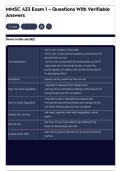
MMSC 433 Exam 1 – Questions With Verifiable
Answers
Save
Terms in this set (82)
-ferric iron is taken in from diet
-ferric iron is reduced by duodenal cytochrome B to
become ferrous iron
iron absorption -ferrous iron is absorbed into enterocytes by DMT 1
-absorbed iron is stored as ferritin, or sent into
portal hepatic circulation and carried by transferrin
to developing RBCs
transferrin plasma carrier protein for ferrous iron
-hepcidin is released from hepatocytes
high iron level regulation -ferroportin is inactivated, leading to decreased iron
being transported into circulation
-hepcidin is down regulated by hepatocytes
low iron level regulation -ferroportin becomes activated and transports iron
out of the enterocytes and into circulation
red meat, legumes, dark leafy vegetables, whole
dietary iron sources
grains
the form of iron that is able to be utilized in the
ferrous iron
body for developing red cells
stain that is used to identify iron in tissues and bone
prussian blue stain
marrow
, a chart that is used to compare
soluble transferrin receptors/
log ferritin to hemoglobin
concentration of reticulocytes
thomas plot
to identify the iron status of the
patient
-iron status is used to correlate
to certain diseases/ anemias
stage 1 iron deficiency -asymptomatic
(progressive loss of -RBCs develop normally
storage iron) -serum ferritin low
-subclinical symptoms
-hemoglobin in retics is decreased, hemogram
appears normal still
stage 2 iron deficiency
-iron deficiency erythropoiesis is occurring
(exhaustion of iron
-hepcidin decreased
storage pool)
-serum iron and ferritin decreased
-RDW, TIBC and sTRs increased
-prussian blue stain of BM is negative for iron
-patient exhibits fatigue, weakness, pallor, glossitis,
koilonychia and pica
stage 3 iron deficiency -H/H decreased
(frank anemia) -hypochromic/ microcytic anemia
-FEP, TIBC and sTR increased
-ferritin, hepcidin and serum iron decreased
-iron deposits in the mitochondria of erythroblast
cells in the bone marrow interfere with biosynthesis
of heme
-caused by genetic inheritance of drugs/ bone
sideroblastic anemia marrow toxins (lead, antibiotics, chemotherapeutics)
-ringed sideroblasts are highly indicative of the
disease
-basophillic stippling is common in lead poisoning
-normocytic normochromic cells
Answers
Save
Terms in this set (82)
-ferric iron is taken in from diet
-ferric iron is reduced by duodenal cytochrome B to
become ferrous iron
iron absorption -ferrous iron is absorbed into enterocytes by DMT 1
-absorbed iron is stored as ferritin, or sent into
portal hepatic circulation and carried by transferrin
to developing RBCs
transferrin plasma carrier protein for ferrous iron
-hepcidin is released from hepatocytes
high iron level regulation -ferroportin is inactivated, leading to decreased iron
being transported into circulation
-hepcidin is down regulated by hepatocytes
low iron level regulation -ferroportin becomes activated and transports iron
out of the enterocytes and into circulation
red meat, legumes, dark leafy vegetables, whole
dietary iron sources
grains
the form of iron that is able to be utilized in the
ferrous iron
body for developing red cells
stain that is used to identify iron in tissues and bone
prussian blue stain
marrow
, a chart that is used to compare
soluble transferrin receptors/
log ferritin to hemoglobin
concentration of reticulocytes
thomas plot
to identify the iron status of the
patient
-iron status is used to correlate
to certain diseases/ anemias
stage 1 iron deficiency -asymptomatic
(progressive loss of -RBCs develop normally
storage iron) -serum ferritin low
-subclinical symptoms
-hemoglobin in retics is decreased, hemogram
appears normal still
stage 2 iron deficiency
-iron deficiency erythropoiesis is occurring
(exhaustion of iron
-hepcidin decreased
storage pool)
-serum iron and ferritin decreased
-RDW, TIBC and sTRs increased
-prussian blue stain of BM is negative for iron
-patient exhibits fatigue, weakness, pallor, glossitis,
koilonychia and pica
stage 3 iron deficiency -H/H decreased
(frank anemia) -hypochromic/ microcytic anemia
-FEP, TIBC and sTR increased
-ferritin, hepcidin and serum iron decreased
-iron deposits in the mitochondria of erythroblast
cells in the bone marrow interfere with biosynthesis
of heme
-caused by genetic inheritance of drugs/ bone
sideroblastic anemia marrow toxins (lead, antibiotics, chemotherapeutics)
-ringed sideroblasts are highly indicative of the
disease
-basophillic stippling is common in lead poisoning
-normocytic normochromic cells