Chapter 13
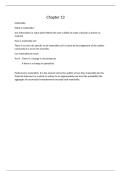
Materiality
What is materiality?
Any information or value which effects the user’s ability to make a decision is known as
material
How is materiality set:
There is no one rule specific to set materiality ad it is done by the judgement of the auditor
commonly it is set on 5% of profits.
Can materiality be reset:
Yes if: . There is a change in circumstances
. If there is a change in operations
Performance materiality: It is the amount set by the auditor at less than materiality for the
financial statement as a whole to reduce to an appropriately low level the probability the
aggregate of uncorrected misstatements exceeds total materiality.
, Fraud and error
Possible questions:
1. What is fraud?
2. Management fraud and employee fraud difference
3. 2 types of fraud
4. Responsibility of management in fraud and auditor in fraud
5. Obtaining written representation in fraud
6. Communication of fraud to those charged with governance
1. Fraud refers to an intentional act by one or more individuals, those charged with
governance, employees or third parties involving the use of deception to obtain an
unjust and an illegal advantage.
2. Management fraud: Fraud involving one or more members of the company or those
charged with governance is referred to as management fraud.
Employee fraud: Fraud only involving employees of the entity is known as employee
fraud.
3. Misappropriation of assets examples include:
Embezzling of receipts
Using entity’s assets for personal use
Causing an entity to pay for goods or services not received by making
payments to fictitious vendors or fictitious employees
Stealing physical assets or intellectual property
Fraudulent financial reporting which includes:
Misrepresentation or intentional omission from the financial statements of events,
transactions or any other significant information
Manipulation falsification or alteration of accounting records or supporting
documents
Intentional misapplication of accounting principles relating to the amounts,
classification manner of presentation or disclosure.
4. Management responsibility: The primary responsibility of fraud detection and
prevention lies with the management of the company. It is important that
management under the oversight of those charged with governance place a strong
emphasis on fraud prevention and detection which may reduce opportunities for
fraud to take place.
Auditor responsibility: The auditor’s responsibility relating to fraud in an audit of
financial statements is responsible for obtaining reasonable assurance that the
financial statements taken as a whole are free from any material misstatement
weather it is caused from fraud or any error
5. I.S.A 240 requires the auditor to obtain written representation from management
and those charged with governance that:
Materiality
What is materiality?
Any information or value which effects the user’s ability to make a decision is known as
material
How is materiality set:
There is no one rule specific to set materiality ad it is done by the judgement of the auditor
commonly it is set on 5% of profits.
Can materiality be reset:
Yes if: . There is a change in circumstances
. If there is a change in operations
Performance materiality: It is the amount set by the auditor at less than materiality for the
financial statement as a whole to reduce to an appropriately low level the probability the
aggregate of uncorrected misstatements exceeds total materiality.
, Fraud and error
Possible questions:
1. What is fraud?
2. Management fraud and employee fraud difference
3. 2 types of fraud
4. Responsibility of management in fraud and auditor in fraud
5. Obtaining written representation in fraud
6. Communication of fraud to those charged with governance
1. Fraud refers to an intentional act by one or more individuals, those charged with
governance, employees or third parties involving the use of deception to obtain an
unjust and an illegal advantage.
2. Management fraud: Fraud involving one or more members of the company or those
charged with governance is referred to as management fraud.
Employee fraud: Fraud only involving employees of the entity is known as employee
fraud.
3. Misappropriation of assets examples include:
Embezzling of receipts
Using entity’s assets for personal use
Causing an entity to pay for goods or services not received by making
payments to fictitious vendors or fictitious employees
Stealing physical assets or intellectual property
Fraudulent financial reporting which includes:
Misrepresentation or intentional omission from the financial statements of events,
transactions or any other significant information
Manipulation falsification or alteration of accounting records or supporting
documents
Intentional misapplication of accounting principles relating to the amounts,
classification manner of presentation or disclosure.
4. Management responsibility: The primary responsibility of fraud detection and
prevention lies with the management of the company. It is important that
management under the oversight of those charged with governance place a strong
emphasis on fraud prevention and detection which may reduce opportunities for
fraud to take place.
Auditor responsibility: The auditor’s responsibility relating to fraud in an audit of
financial statements is responsible for obtaining reasonable assurance that the
financial statements taken as a whole are free from any material misstatement
weather it is caused from fraud or any error
5. I.S.A 240 requires the auditor to obtain written representation from management
and those charged with governance that: