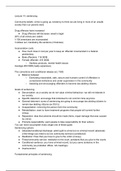
Lecture 14: sentencing
Community beliefs: crime is going up, tendency to think we are living in more of an unsafe
society than our parents were
Drug offences have increased
● Drug offences will decrease: weed is legal
20% of all crimes are violent
1/100 americans are incarcerated
3 strikes out; mandatory life sentence (3 felonies)
Incarceration costs
● How much does it cost per year to keep an offender incarcerated in a federal
penitentiary
● Male offenders: 116 000$
● Female offender: 216 000$
○ Sanitary products, mental health issues
Average 200 000$ (really expensive)
The corrections and conditional release act, 1992
● Balance between
○ Exercising reasonable, safe, secure and humane control of offenders in
correctional institutions and under supervision in the community
○ Assisting and encouraging offenders to become law-abiding citizens
Goals of sentencing
● Denunciation: as a society we do not value criminal behaviour; we will not tolerate in
our society
● Specific deterrent: encourage that individual to not commit crime anymore
● General deterrent: some of sentencing are going to encourage law abiding citizens to
remain law abiding citizens (ex DUI’s)
● Incapacitation: removing the person form the community
● Rehabilitation: want to have treatment programs that people will commit further
crimes
● Reparation: idea that amends should be made (fiens, repair damage that was caused
by crime)
● Promote responsibility: want people to take responsibility for their actions
You can never accomplish every single one of these goals
Sentencing options
● Absolute/conditional discharge: admit guilt to crime but no criminal record (absolute):
a few things you need to do (ex community service) (conditional)
● Restitution: fines that you have to give to the victim (money)
● Fines/community service: restitution to the court, pendants that you give to the courts
● Conditional sentence: you have criminal record, but you serve sentence in the
community (ex probation officer, AA meetings)
● Imprisonment
Fundamental principles of sentencing
Community beliefs: crime is going up, tendency to think we are living in more of an unsafe
society than our parents were
Drug offences have increased
● Drug offences will decrease: weed is legal
20% of all crimes are violent
1/100 americans are incarcerated
3 strikes out; mandatory life sentence (3 felonies)
Incarceration costs
● How much does it cost per year to keep an offender incarcerated in a federal
penitentiary
● Male offenders: 116 000$
● Female offender: 216 000$
○ Sanitary products, mental health issues
Average 200 000$ (really expensive)
The corrections and conditional release act, 1992
● Balance between
○ Exercising reasonable, safe, secure and humane control of offenders in
correctional institutions and under supervision in the community
○ Assisting and encouraging offenders to become law-abiding citizens
Goals of sentencing
● Denunciation: as a society we do not value criminal behaviour; we will not tolerate in
our society
● Specific deterrent: encourage that individual to not commit crime anymore
● General deterrent: some of sentencing are going to encourage law abiding citizens to
remain law abiding citizens (ex DUI’s)
● Incapacitation: removing the person form the community
● Rehabilitation: want to have treatment programs that people will commit further
crimes
● Reparation: idea that amends should be made (fiens, repair damage that was caused
by crime)
● Promote responsibility: want people to take responsibility for their actions
You can never accomplish every single one of these goals
Sentencing options
● Absolute/conditional discharge: admit guilt to crime but no criminal record (absolute):
a few things you need to do (ex community service) (conditional)
● Restitution: fines that you have to give to the victim (money)
● Fines/community service: restitution to the court, pendants that you give to the courts
● Conditional sentence: you have criminal record, but you serve sentence in the
community (ex probation officer, AA meetings)
● Imprisonment
Fundamental principles of sentencing