LECTURE 6 MOOD DISORDER LECTURE NOTES
Learning Goal 1
• Distinguish between the two most common depressive disorders,
major depressive disorder and persistent depressive disorder.
1. Major Depressive Disorder - intense sad or depressed mood, loss of
interest and pleasure, you lack any drive to do things you used to love
to do, sleep difficulties, lethargy/agitation, appetite problems, loss of
sexual desire, extreme fatigue, feelings of worthlessness and guilt,
difficulty of concentrating, current thoughts of deaths and suicide
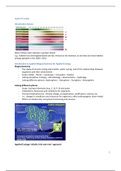
Example: Major depression - it goes up then goes
down abruptly
2. Chronic Depression/Persistent Depressive Disorder/Dysthymia
- low grade depression, average duration of 4-5 years,
intermittent normal moods
Example: Persistent depressive disorder - not
intensely low mood but chronic up and down
3. Double Depression
- frequent periods of major depressive disorder that are
superimposed on persistent depressive disorder
Example: Double depression - chronic up and down then it does
down abruptly then goes back to chronic up and down.
,LEARNING GOAL 2:
Differentiate between the cognitive, interpersonal, and biological theories
of depression.
Cognitive Theories of Depression - Beck’s Cognitive Theory,
Helplessness/Hopelessness Theories, Psychoanalytic Theory
1. Beck’s Cognitive Theory
Negative interpretations of situations/events < >
feelings of depression
Evidence
- people with depression lack positivity bias
- greater accessibility of negative content
Beck’s Negative Model
Depression: -Early experience
- Formation of dysfunctional beliefs
- Critical Incidents
-Beliefs activated
-Negative automatic thoughts
-Symptoms of depression:
behavioral, motivational, affective,
cognitive, somatic (relating to the
body especially distinct from the mind.
If we are looking at diathesis model, which one is
the diathesis (predisposition)?
Formation of dysfunctional beliefs because if you
had the early experience but did not form
dysfunctional beliefs, you don’t get depression
,2. Helplessness/Hopelessness Theories
Helplessness Theory - pessimistic attributional
style
Hopelessness Theory - pessimistic attributional
style and one or more negative life events
- Learned Helplessness is the lack of perceived control over life
events
- Depressive Attributional Styles:
Internal attributions - feeling responsible for
everything,
Table Attributions - future negative
outcomes will be one’s fault
Global Attribution - negative events disrupt
many life activities
- Explains high comorbidity between anxiety and depression:
Helplessness leads to anxiety, persistent helplessness leads to
depression
3. Psychoanalytic Theory
Depression - anger turned inward
But - consider biology (stress response)
Interpersonal
1. People who are depressed may act in ways — genuinely negative
effect on others, alienation from social support network
2. Poor social networks (all eggs in few baskets)
3. Few positive social behaviors
4. Elicit negative reactions from others
5. High marital discord
6. Insecurity in relationships (e.g. frequent reassurance-seeking)
, Biological
1. Brain Activity
Left prefrontal cortex- decrease activation in left prefrontal cortex
which regulates action, emotion regulation and turns off amygdala
alarm, less activation to approach things
2. Right prefrontal cortex- increase activity in right prefrontal cortex
which avoids and inhibits activity, negativity
3. Amygdala- hyper-reactive, fear fear fear
4. Anterior cingulate cortex (ACC)- error-related rewards and losses
5. Hippocampal- volume memory and learning, regulates ACTH, people
with depression has small hippocampus = less volume, less
functioning
6. Disruptions of the following: lack of sleep, circadian rhythm is off,
more exposure to sunlight is protective, inflammatory response
systeM
Attributions: Failed Math Test
INTERNAL EXTERNAL
Stable Unstable Stable Unstable
GLOBAL I am stupid I am exhausted These tests are all It’s an unlucky
- internal, stable - internal, unfair day (Friday the
(consistent, not unstable (not - external (about 13th)
gonna get gonna last the test, not the - external,
better), global forever, just right person), stable unstable
(the person will now), global (the (consistent, not (happens only on
be like this at any person will be gonna get Friday the 13th),
circumstances) like this at any better), global (all global: affecting
circumstances) tests are unfair) everyone
SPECIFIC I am no good at I fed up with The math tests My math test was
math math are unfair numbered 13
- internal, stable - internal, - external (about - external (if the
(consistent, not unstable (just the math test not math test is 14,
gonna get about math, not the person), student will have
better), specific to the person/a stable (consistent a higher score),
the person state a person is about math tests), unstable
in), specific to the specific (just (different
person math, not all number, different
subjects) result), specific to
the person
Learning Goal 1
• Distinguish between the two most common depressive disorders,
major depressive disorder and persistent depressive disorder.
1. Major Depressive Disorder - intense sad or depressed mood, loss of
interest and pleasure, you lack any drive to do things you used to love
to do, sleep difficulties, lethargy/agitation, appetite problems, loss of
sexual desire, extreme fatigue, feelings of worthlessness and guilt,
difficulty of concentrating, current thoughts of deaths and suicide
Example: Major depression - it goes up then goes
down abruptly
2. Chronic Depression/Persistent Depressive Disorder/Dysthymia
- low grade depression, average duration of 4-5 years,
intermittent normal moods
Example: Persistent depressive disorder - not
intensely low mood but chronic up and down
3. Double Depression
- frequent periods of major depressive disorder that are
superimposed on persistent depressive disorder
Example: Double depression - chronic up and down then it does
down abruptly then goes back to chronic up and down.
,LEARNING GOAL 2:
Differentiate between the cognitive, interpersonal, and biological theories
of depression.
Cognitive Theories of Depression - Beck’s Cognitive Theory,
Helplessness/Hopelessness Theories, Psychoanalytic Theory
1. Beck’s Cognitive Theory
Negative interpretations of situations/events < >
feelings of depression
Evidence
- people with depression lack positivity bias
- greater accessibility of negative content
Beck’s Negative Model
Depression: -Early experience
- Formation of dysfunctional beliefs
- Critical Incidents
-Beliefs activated
-Negative automatic thoughts
-Symptoms of depression:
behavioral, motivational, affective,
cognitive, somatic (relating to the
body especially distinct from the mind.
If we are looking at diathesis model, which one is
the diathesis (predisposition)?
Formation of dysfunctional beliefs because if you
had the early experience but did not form
dysfunctional beliefs, you don’t get depression
,2. Helplessness/Hopelessness Theories
Helplessness Theory - pessimistic attributional
style
Hopelessness Theory - pessimistic attributional
style and one or more negative life events
- Learned Helplessness is the lack of perceived control over life
events
- Depressive Attributional Styles:
Internal attributions - feeling responsible for
everything,
Table Attributions - future negative
outcomes will be one’s fault
Global Attribution - negative events disrupt
many life activities
- Explains high comorbidity between anxiety and depression:
Helplessness leads to anxiety, persistent helplessness leads to
depression
3. Psychoanalytic Theory
Depression - anger turned inward
But - consider biology (stress response)
Interpersonal
1. People who are depressed may act in ways — genuinely negative
effect on others, alienation from social support network
2. Poor social networks (all eggs in few baskets)
3. Few positive social behaviors
4. Elicit negative reactions from others
5. High marital discord
6. Insecurity in relationships (e.g. frequent reassurance-seeking)
, Biological
1. Brain Activity
Left prefrontal cortex- decrease activation in left prefrontal cortex
which regulates action, emotion regulation and turns off amygdala
alarm, less activation to approach things
2. Right prefrontal cortex- increase activity in right prefrontal cortex
which avoids and inhibits activity, negativity
3. Amygdala- hyper-reactive, fear fear fear
4. Anterior cingulate cortex (ACC)- error-related rewards and losses
5. Hippocampal- volume memory and learning, regulates ACTH, people
with depression has small hippocampus = less volume, less
functioning
6. Disruptions of the following: lack of sleep, circadian rhythm is off,
more exposure to sunlight is protective, inflammatory response
systeM
Attributions: Failed Math Test
INTERNAL EXTERNAL
Stable Unstable Stable Unstable
GLOBAL I am stupid I am exhausted These tests are all It’s an unlucky
- internal, stable - internal, unfair day (Friday the
(consistent, not unstable (not - external (about 13th)
gonna get gonna last the test, not the - external,
better), global forever, just right person), stable unstable
(the person will now), global (the (consistent, not (happens only on
be like this at any person will be gonna get Friday the 13th),
circumstances) like this at any better), global (all global: affecting
circumstances) tests are unfair) everyone
SPECIFIC I am no good at I fed up with The math tests My math test was
math math are unfair numbered 13
- internal, stable - internal, - external (about - external (if the
(consistent, not unstable (just the math test not math test is 14,
gonna get about math, not the person), student will have
better), specific to the person/a stable (consistent a higher score),
the person state a person is about math tests), unstable
in), specific to the specific (just (different
person math, not all number, different
subjects) result), specific to
the person