
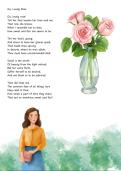
Go, Lovely Rose
Go, lovely rose!
Tell her that wastes her time and me,
That now she knows,
When I resemble her to thee,
How sweet and fair she seems to be.
Tell her that’s young,
And shuns to have her graces spied,
That hadst thou sprung
In deserts, where no men abide,
Thou must have uncommended died.
Small is the worth
Of beauty from the light retired;
Bid her come forth,
Suffer herself to be desired,
And not blush so to be admired.
Then die! that she
The common fate of all things rare
May read in thee;
How small a part of time they share
That are so wondrous sweet and fair!
, - The title is immediate, imperative, and deeply symbolic.
- The verb “Go” commands action, giving the rose agency as a
messenger, which personifies the flower and sets a tone of
urgency.
Go, Lovely Rose - “Lovely” emphasizes beauty, both physical and moral, framing the
rose as an emblem of fleeting charm.
- The word “Rose” carries rich connotations: love, romance,
fragility, and transience.
- In a single phrase, Waller encapsulates the poem’s central
themes—beauty, mortality, and the urgency to appreciate and
act upon fleeting pleasures before they vanish.
- This opening line is an imperative, directly addressing the rose as
if it can act independently.
- The speaker immediately personifies the flower, giving it the
agency to carry a message.
Go, lovelyrose! - The adjective “lovely” emphasizes both the rose’s beauty and its
symbolic value, suggesting the transience and delicacy of physical
attraction.
- By starting with a command, Waller establishes urgency,
signaling that the rose is a messenger of emotional or romantic
import.
- The reader senses the intertwining of natural beauty with human
sentiment.
- Here, the speaker instructs the rose to convey a rebuke to a
woman who neglects him.
- The phrase “wastes her time” implies that the woman squanders
Tell her thatwastes her opportunities, particularly the chance to respond to love or
time andme, admiration.
Simultaneously, “and me” emphasizes the speaker’s own emotional
-
cost, highlighting a personal sense of rejection or frustration.
Waller captures both the moral lesson of fleeting beauty and the
intimate hurt of unreciprocated affection.
The speaker’s voice balances tenderness with admonishment.
-
This line introduces a reflective tone, suggesting that the woman
-
has gained awareness.
The phrase implies revelation or understanding, perhaps about
-
her beauty, youth, or the effect she has on others.
The speaker’s focus shifts from merely issuing a command to
That nowshe knows, - contemplating the knowledge or realization the woman must
confront.
There’s an implication that her comprehension comes too late,
- adding a bittersweet sense to the poem’s argument.
Awareness is framed as inevitable, highlighting the consequences
- of wasted time.
The speaker draws a direct comparison between the woman and
- the rose, using the flower as a metaphor for her beauty.
By addressing the rose “thee”, he conveys the fragility and
When I resemble her to
- impermanence of such beauty.
thee,
Go, lovely rose!
Tell her that wastes her time and me,
That now she knows,
When I resemble her to thee,
How sweet and fair she seems to be.
Tell her that’s young,
And shuns to have her graces spied,
That hadst thou sprung
In deserts, where no men abide,
Thou must have uncommended died.
Small is the worth
Of beauty from the light retired;
Bid her come forth,
Suffer herself to be desired,
And not blush so to be admired.
Then die! that she
The common fate of all things rare
May read in thee;
How small a part of time they share
That are so wondrous sweet and fair!
, - The title is immediate, imperative, and deeply symbolic.
- The verb “Go” commands action, giving the rose agency as a
messenger, which personifies the flower and sets a tone of
urgency.
Go, Lovely Rose - “Lovely” emphasizes beauty, both physical and moral, framing the
rose as an emblem of fleeting charm.
- The word “Rose” carries rich connotations: love, romance,
fragility, and transience.
- In a single phrase, Waller encapsulates the poem’s central
themes—beauty, mortality, and the urgency to appreciate and
act upon fleeting pleasures before they vanish.
- This opening line is an imperative, directly addressing the rose as
if it can act independently.
- The speaker immediately personifies the flower, giving it the
agency to carry a message.
Go, lovelyrose! - The adjective “lovely” emphasizes both the rose’s beauty and its
symbolic value, suggesting the transience and delicacy of physical
attraction.
- By starting with a command, Waller establishes urgency,
signaling that the rose is a messenger of emotional or romantic
import.
- The reader senses the intertwining of natural beauty with human
sentiment.
- Here, the speaker instructs the rose to convey a rebuke to a
woman who neglects him.
- The phrase “wastes her time” implies that the woman squanders
Tell her thatwastes her opportunities, particularly the chance to respond to love or
time andme, admiration.
Simultaneously, “and me” emphasizes the speaker’s own emotional
-
cost, highlighting a personal sense of rejection or frustration.
Waller captures both the moral lesson of fleeting beauty and the
intimate hurt of unreciprocated affection.
The speaker’s voice balances tenderness with admonishment.
-
This line introduces a reflective tone, suggesting that the woman
-
has gained awareness.
The phrase implies revelation or understanding, perhaps about
-
her beauty, youth, or the effect she has on others.
The speaker’s focus shifts from merely issuing a command to
That nowshe knows, - contemplating the knowledge or realization the woman must
confront.
There’s an implication that her comprehension comes too late,
- adding a bittersweet sense to the poem’s argument.
Awareness is framed as inevitable, highlighting the consequences
- of wasted time.
The speaker draws a direct comparison between the woman and
- the rose, using the flower as a metaphor for her beauty.
By addressing the rose “thee”, he conveys the fragility and
When I resemble her to
- impermanence of such beauty.
thee,



