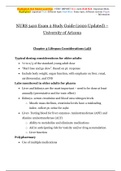
NURS 3410 Exam 2 Study Guide (2020 Updated) – University of Arizona | NURS3410 Exam 2 Study Guide (2020 Updated)
Highlighted Red Bolded underline- VERY IMPORT Red- meds Bold Red- Important Meds. Highlighted- important Teal- different topic Dark Blue- Same topic, different sections Purple - Information NURS 3410 Exam 2 Study Guide (2020 Updated) – University of Arizona Chapter 3 Lifespan Considerations (4Q) Typical dosing considerations for older adults • ½ to 2/3 of the standard young adult dose • “Start lose and go slow”. Based on pt. response • Include body weight, organ function, with emphasis on liver, renal, cardiovascular, and CNS Labs monitored in older adults for pharm • Liver and kidneys are the most important – need to be done at least annually (preventative and for toxic effect) • Kidneys- serum creatinine and blood urea nitrogen levels o Muscle mass declines, creatinine levels have a misleading index- collect pt. urine for 24hr. • Liver- Testing blood for liver enzymes- Aminotransferase (AST) and Alanine aminotransferase (ALT) o Ability to metabolize and eliminate medications - - - - - - - - - - - - - - - - - - - - - - - - - - - - - - - - - - • S5: lower potential for abuse than Iv and contain limited quantities of certain narcotics…can be a written prescription or OTC depending on states law • Recall • Class 1: most serious, reasonable problem of severe adverse effects or death • Class 2: may result in temporary or reversible health effects. • Class 3: less sever, not likely to result in any significant health programs Phases of clinical research • Drug Approval Process o Regulated by FDA and can take years to pass o Expedited drug approval or “fast track”- meds given in phase 1 & 2 that showed promise, if good process is shorten and approved quicker o Preclinical testing ▪ In vitro (cells or tissues) and animal testing o Clinical Testing/ Investigational new drugHighlighted Red Bolded underline- VERY IMPORT Red- meds Bold Red- Important Meds. Highlighted- important Teal- different topic Dark Blue- Same topic, different sections Purple - Information ▪ Inform consent- to start on human testing (known risk, benefits, purpose) ▪ Phase 1: small # of healthy individuals to determine optimal dosage range and pharmacokinetics ▪ Phase 2: small # of volunteers with targeted disease. Determine effectiveness, therapeutic dosage ranges are refined and any adverse effects. ▪ Phase 3: small # of pts. to find infrequent or rare adverse effects that might not have been seen in earlier phases. • Placebo-controlled study: Placed on a placebo to eliminate any bias. • Blinded: subject doesn’t know if they are receiving placebo or drug • Double Bind: both subject and researcher doesn’t know who is receiving placebo or drug o New Drug Application to FDA ▪ Phase 4: voluntary, post market to further substantiate claims. Examines safety and efficacy of drug compared to others in category • Approval of NDA gives pharm company to market new drug exclusively until patent for drug molecule expires (typ 17 years after discovery of the molecule and includes the 10-12 year period generally required to complete drug research. Geared to help recoup research costs Components of a cultural assessmentHighlighted Red Bolded underline- VERY IMPORT Red- meds Bold Red- Important Meds. Highlighted- important Teal- different topic Dark Blue- Same topic, different sections Purple - Information • Physical, Mental, and spiritual health in Maintaining health, Protecting health and Restoring health Examples of how culture can impact pharm • Ethnopharmacology: study of specific impact of cultural factors on patient drug response • Pharmacogenomics: certain genetic traits affect drug response • Drug polymorphism: effect of a patient’s age, gender, size, body composition, on pharmacokinetics. Influenced by environmental factors, cultural factors, genetic factors • Diets high in fat can decrease absorption of meds • Medical Errors o Institute Of Medicine “To Err is Human” o Focus on recognizing that reporting errors should not be punitive toward reporter to encourage reporting. o IOM raises idea that most errors are from breakdown in medication use system rather than individual o “Just culture”: competent professionals make mistakes and may develop unhealthy habits. Staff are held accountable for actions like habits, but if error is related to a system or process, staff is held blameless. o QSEN: competencies that support a shift in nursing education to promote understanding and continuous improvement of quality, safety, and reliably • Med Errors: Organizational Issues o Many begin at prescribing stage or administering stageHighlighted Red Bolded underline- VERY IMPORT Red- meds Bold Red- Important Meds. Highlighted- important Teal- different topic Dark Blue- Same topic, different sections Purple - Information o Interdisciplinary care with good working relationships with pharmacists o Encourage patient to “speak up” and ask questions o Bar-coding for all prescriptions and OTC meds by FDA shown to reduce errors o Obligation for double checking • When Med errors happen o Must be reported to patient, charge nurse and provider o Follow health care institutions’ policies & procedures o Assess patient and address safety issues o Obligation of institutions and health care providers to provide full disclosure to patients when errors have occurred o Report error to prescriber and nursing management o Possible follow up procedures or test o Document & incident report (Do not record in patient’s chart that incident report was completed) Examples of pt. variability that can affect pharm Chapter 6: Education (2Q) Selecting appropriate outcomes & implementation strategies for style of learning • Planning o Improves health outcomes and can be easily measuredHighlighted Red Bolded underline- VERY IMPORT Red- meds Bold Red- Important Meds. Highlighted- important Teal- different topic Dark Blue- Same topic, different sections Purple - Information o Address 3 domain of learning ▪ Cognitive: basic knowledge, learned and stored past experiences and perceptions ▪ Affective: conduct that expresses feelings, needs, beliefs ▪ Psychomotor: learning a new procedure demonstration (hands on) o Learning- change in behavior o Teaching- sharing of knowledge, Teaching sessions must accommodate priorities of the patient • Outcome should reflect appropriate cognitive, psychomotor or affective domain. o Needs to be realistic, based on pts. needs, stated in pts. terms and include behaviors that are measurable • Implementation o Match interventions to domain expressed in outcome. o Education Principles ▪ Use medical interpreter if needed ▪ Include clear, simple, concise written instructions, oral instructions, and other learning aids (pamphlets, videos etc) ▪ Allow sufficient time and repetition (education should begin upon admission and every time you give the medication) Use verbal and hands out ▪ Involve family members if appropriate (not when educating patient) ▪ Document when completeHighlighted Red Bolded underline- VERY IMPORT Red- meds Bold Red- Important Meds. Highlighted- important Teal- different topic Dark Blue- Same topic, different sections Purple - Information Education strategies for elderly • Cognitive and Memory Impairment o Limit content to one or two objectives o Use of illustrations o Allow time for feedback • Disturbed Sensory Perception Hearing Impairment o Speak directly and slowly o Face pt. o Sit on strong ear side o Do not shout. • Visual Impairment o Glasses are clean • Nonglare light, or contrast light o Teach to use touch to gauge depth • Touch and Vibration Impairment o Palpate prominent pulse sites (carotid, radial) o Increase time and number of times to teach psychomotor skills Chapter 8: Gene Nursing role in genetic testing • Most diseases continue to grow • General practice setting nurses will not have to perform in-depth genetic testing or counseling. o Just needs working knowledge of relevant genetic principlesHighlighted Red Bolded underline- VERY IMPORT Red- meds Bold Red- Important Meds. Highlighted- important Teal- different topic Dark Blue- Same topic, different sections Purple - Information • Area for specialization and certification will focus more on the genetic testing • Assessment o May uncover factors that point to a risk of genetic disorders o Personal and family history is most effective o Factors possibly indicating an increased risk for genetic disorders • Unusual reactions to a drug by patient or family members o May point to a difference in pts. ability to metabolize a drug • Education about genetic testing or counseling (and that this is an option to do them) o Informed decision- making and consent is carried out correctly • Confidentiality o Pt. is the one who includes or excludes any family members Chapter 7: OTC, Supplements, Herb (5Q) Risks assoc with OTC use • Misuse of the product • Inappropriate dosing • May create delay in pts. who need to see provider • Can have own toxicity profiles (Acetaminophen, NSAIDS) • Abuse (pseudoephederine) • Typically use for short term or minor illnesses Risks r/t garlic, valerian & kava & common drug-drug interactions • GarlicHighlighted Red Bolded underline- VERY IMPORT Red- meds Bold Red- Important Meds. Highlighted- important Teal- different topic Dark Blue- Same topic, different sections Purple - Information o Used for favorable effects on blood pressure and plasma lipids ▪ Risk: Potentiates hypoglycemia effects and anticoagulation ▪ DD interaction: Warfin, heparin, metformin, any drugs for diabetes • Valerian o Used to help with sleep ▪ Can increase CNS depression when used with other sedatives ▪ Regulations of supplements & herbs • Controversy of SUPP o Widely publicized & marketed, readily available o Leads public to assume they are safe o Dietary Supplement and Health Education Act (DSHEA) of 1994 ▪ Defines dietary supplements and provides a regulatory framework ▪ 2002 US Pharmacopeia, independent organization that is the government’s official standard-setting authority for dietary supplements and certifies products that it has independently tested ▪ Does not require proof of efficacy & no quality control (vs legend/prescription meds)Highlighted Red Bolded underline- VERY IMPORT Red- meds Bold Red- Important Meds. Highlighted- important Teal- different topic Dark Blue- Same topic, different sections Purple - Information o FDA in 2007 requires all manufacturers to provide data demonstrating product identity, composition, quality, purity and strength of active ingredients o • Safety of Dietary Supplements o Can cause allergic reaction, toxic reaction, adverse effects, mutagenic effects, and drug-on -drug interactions o Use may not be disclosed by pt. o FDA warnings ▪ Kava: liver toxicity (used to improve sleep, relieve anxiety); still available in the market ▪ Ephedra: CV and stroke risks (used for weight loss); banned from market o CV disease ▪ Increase bleeding risks with warfarin ▪ Potentiate digoxin toxicity ▪ Increase effects of anti-hypertensives ▪ Can cause dysrhythmias • Cranberry Juice o Prevents UTI; interfere w/ bacterial adhesion to urinary tract o Daily intake helps women in teens or 20s and in elderly, not in older adults or young girls o Decrease elimination of many drugs renally excreted ▪ May increase international normalized ration of warfarin patients • EcinaceaHighlighted Red Bolded underline- VERY IMPORT Red- meds Bold Red- Important Meds. Highlighted- important Teal- different topic Dark Blue- Same topic, different sections Purple - Information o Produces antiviral, anti-inflammatory and immunostimulant effects ▪ Widely taken, but effects are highly questionable ▪ DD interaction: immunosuppressant drugs and antivirals • Ginger Root o Treat vertigo, suppress nausea and vomiting caused by motion sickness, cancer chemotherapy ▪ DD interactions: cardiac, antidiabetic or anticoagulant meds • Gingko o Primarily used for purported memory properties ▪ DD interactions: Increase risk of bleeding with anticoagulants or antiplatelet meds • St. John’s Wart o Primarily used for anxiety and depression ▪ DD interactions: Can interact with antidepressants, antihistamines, digoxin, immunosuppressants, theophylline and warfarin • Grapefruit o 85 drugs reactions o 43 potentially fatal ▪ Decrease metabolism of ED meds, estrogens, and psychotherapeutic drugs ▪ Increases risk of toxicity for many others ▪ Increases effects of caffeineHighlighted Red Bolded underline- VERY IMPORT Red- meds Bold Red- Important Meds. Highlighted- important Teal- different topic Dark Blue- Same topic, different sections Purple - Information Chapter 53: Vitamins & Minerals (5Q) Vit D and Ca, Vit A, Thiamine deficiencies • Vitamin A Retinol o Exogenous ▪ Animal fats (dairy, eggs, meat, liver, fish liver oils) ▪ Carotenes (green and yellow vegetables and yellow fruits) o Beta Carotene is a compound that is metabolized to various forms of vit A o Essential to vision o Also helps with normal cell growth and differentiation (morphogenesis) o Growth and development of bones and teeth, reproduction, integrity of mucosal and epithelial surfaces, cholesterol and steroid synthesis o Deficiency: night blindness, xerophthalmia (dry wrinkled sclera), keratomalacia (softening of conea), hyperkeratosis of skin and sclera, retarded infant growth, generalized weakness, increased susceptibility of mucous membranes to infection o Can be used to treat skin conditions o Contraindications: allergies, hypervitaminosis and excessive supplementation o Adverse Effects: very few & occur after long term useHighlighted Red Bolded underline- VERY IMPORT Red- meds Bold Red- Important Meds. Highlighted- important Teal- different topic Dark Blue- Same topic, different sections Purple - Information o Toxicity: ingestion of excessive amounts (usually children). A few hours after ingestion, irritability, drowsiness, vertigo, delirium high ICP o Absorption decreased with use of lubricant laxatives and cholestyramine • Vitamin D o Sunshine vitamin o Endogenous and exogenous o Needed for proper utilization of Ca and Phos. Necessary for calcification of bone o Require biotransformation by liver to be activated into calcifediol when is then taken to kidney and converted to calcitriol-most physiologically active form of vit D o Supplement dietary intake or treat deficiency o Also used to address deficiencies of Ca and Phos o Recommended for breastfed infants o Deficiency can cause rickets, tetany, osteomalacia o Contraindications include allergy, hypercalcemia, renal dysfunction or stones, hyperphosphatemia o Acute adverse effects rare, chronic excessive ingestion typically GI or CNS symptoms o Toxicity (typically children): weakness, fatigue, HA, anorexia, dry mouth, metallic taste, N/V, abd cramps, ataxia and bone painHighlighted Red Bolded underline- VERY IMPORT Red- meds Bold Red- Important Meds. Highlighted- important Teal- different topic Dark Blue- Same topic, different sections Purple - Information o Absorption decreased with use of lubricant laxatives and cholestyramine Vit D2 (ergocalciferol) o Plant derived o Fish oils, salmon, sardines and herring, fortified milk, bread and cereals, animal livers, tuna fish eggs and butter o GI liver or biliary disease related to malabsorption o PO or IV Vit D3 (CHOLEcalciFEDIOL) o Produced in skin by UV irradiation Vit D3 (calciFEDIOL) o Typically ude in CKD with HD or hyperparathyroidism o PO Vit D3 (calciRIOL) o Typically used in CKD with HD, hyperparathyroidism, vit. D RICKETS, hypophosphatemia o PO or injectable • Calcium o Most abundant mineral in body o Mainly located in bones and teeth o Requires Vit D for absorption o Deficiencies causes hypocalcemia ▪ Infantile rickets ▪ Adult osetomalacia, osteoarthritis ▪ Muscle camps ▪ Renal dysfunctionHighlighted Red Bolded underline- VERY IMPORT Red- meds Bold Red- Important Meds. Highlighted- important Teal- different topic Dark Blue- Same topic, different sections Purple - Information o Deficiency caused by diet, lack of Vit. D, hypoparathyroidism, malabsorption o Also plays a role in cofactor in clotting reactions o Maintenance of nervous, muscular and skeletal systems o Higher demand in growing children, pregnancy, breastfeeding o Supplements can cause hypercalcemia o IM or Subq mild to severe local reactions o IV must be diluted or given via central line o Increase risk of stones o Interacts with tetracyclines and quionlones, use cautiously with digoxin • Thiamine o Used as a supplement for multiple metabolic disorders o Deficiencies cause Beriberi or Wernicke’s encephalopathy o Brain lesions, polyneuropathy of PNS, serous effusions and cardiac changes o Deficiencies from poor diet, extended fever, hyperthyroidism, liver disease, alcoholism, malabsorption, pregnancy and breast feeding Zinc • Trace element o Used for tissue growth and repair (wound healing) Vitamin KHighlighted Red Bolded underline- VERY IMPORT Red- meds Bold Red- Important Meds. Highlighted- important Teal- different topic Dark Blue- Same topic, different sections Purple - Information • 3 types • Synthesized by intestinal flora (endogenous) and small amounts stored • Synthesis of blood coagulation factors (II,-prothrombin VIIproconvertin, IX-Christsmas factor, X-Suart-Prower factor) • Deficiency causes hypoprothrombinemia and is corrected with supplemental vit K • Typically given to neonates upon arrival to nursery • Can be given as antidote to warfarin overdose o Pt. will be unresponsive to warfarin for approx. 1 week after administration • Contraindications: Allergy • Adverse effects limited, rarely hypersensitivity or anaphylaxis after IV administration • Toxicity typically only seen in newborn with hemolysis of RBC Vitamin K1 Phytonadione • Oral and Injectable • If given IV, diluted and given over 30-60 minutes • If used as antidote for warfarin-given IV or subq Vitamin K3 Menadione • Category X Chapter 44: Anti-inflam & gout (5Q) Anti-InflamHighlighted Red Bolded underline- VERY IMPORT Red- meds Bold Red- Important Meds. Highlighted- important Teal- different topic Dark Blue- Same topic, different sections Purple - Information 5 classes of NSAIDS: Salicylates, Acetic acid, Propionic Acid, COX2, Enolic Acid Key characteristics of NSAIDS • Large and chemically diverse group of drugs with the following properties: o Analgesic o Antiinflammatory o Antipyretic • In addition: Aspirin inhibits platelet aggregation o Protect against CV events • NSIADS have similar purposes as corticosteroids, but a more favorable adverse-effect profile • Has ceiling effect: increasing dosage will not increase amt. of relief Indications • NSAIDs are also used for the relief of: o Mild to moderate headaches o Myalgia o Neuralgia o Arthralgia o Alleviation of postoperative pain o The pain associated with arthritic disorders, such as rheumatoid arthritis (RA), juvenile arthritis, ankylosing spondylitis, and osteoarthritis (OA) ▪ -itis= inflammation NSAID o Treatment of gout and hyperuricemiaHighlighted Red Bolded underline- VERY IMPORT Red- meds Bold Red- Important Meds. Highlighted- important Teal- different topic Dark Blue- Same topic, different sections Purple - Information • Can be given adjunctively with opioids, Contraindications of NSAIDS • Contraindicated when o patients at increased risk for bleeding o ASA allergy o Not recommended for use in third trimester/lactation • Adverse effects o GI conditions (mild up to fatal GI bleeding) o Renal failure (esp. in patients who are dehydrated) o Black box warning re CV and GI risk ▪ CV risk: thrombotic events (MI & stroke), risk increases with longer use or higher dose ▪ GI risk: bleeding, ulcerations and perforations ▪ Sylicylates Acetylsalicylic acid/ Aspirin (ASA) • 81 mg (not actually baby aspirin, usually chewable for fast acting) or 325mg typically prophylactic dose • Full dosages 650 mg in adults typically used for pain, pain r/t inflammation, fever and antirheumatic effects (RA, SLE) Age considerations r/t ASA • Contraindicated in children with flulike symptoms • Never give children o Children with flulike symptoms who take ASA at risk for Reye’s syndrome, and acute life-threatening condition involving progressive neurologic deficits and liver damageHighlighted Red Bolded underline- VERY IMPORT Red- meds Bold Red- Important Meds. Highlighted- important Teal- different topic Dark Blue- Same topic, different sections Purple - Information ▪ Pepto- has aspirin Salicylate toxicity • Increased HR, hearing loss & tinnitus, vision changes, heart attack, dizziness, confusion, drowsiness, N/V, diarrhea, sweating, thirst, hyperventilation, glucose changes • Can be acute or chronic toxicity • To judge ACUTE toxicity: o - - - - - - - - - - - - - - - - - - - - - - - - -- x)Highlighted Red Bolded underline- VERY IMPORT Red- meds Bold Red- Important Meds. Highlighted- important Teal- different topic Dark Blue- Same topic, different sections Purple - Information • Severe, chronic, diarrhea-predominant IBS • Used for those who failed conventional therapy • Limited prescriptive power and black box warning • Need to notify immediately if having severe constipation, bloody stools/rectal bleeding or worsening abdominal pain • Improvement can take up to 4 weeks Linaclotide (Linzess) • IBS with constipation • Can cause diarrhea Chapter 50: Meds for Stomach Acid (5Q) Patho Stomach secretes • Hydrochloric acid (HCl)- digestion & infection barrier. Primarily produced by parietal cells & locale where most meds work • Bicarbonate- base to prevent hyperacidity • Pepsinogen- pepsin, protein digestion produced by Chief cells • Intrinsic factor- vitamin B 12 absorption • Mucus- protects stomach lining • Prostaglandins- anti-inflammatory & protective Antacids- Neutralizers • Basic compounds used to neutralize stomach acid- no more productionHighlighted Red Bolded underline- VERY IMPORT Red- meds Bold Red- Important Meds. Highlighted- important Teal- different topic Dark Blue- Same topic, different sections Purple - Information • Salts of aluminum, magnesium, calcium, and/or sodium • Many antacid preparations also contain the antiflatulent (antigas) drug simethicone. • Many aluminum- and calcium-based formulations also include magnesium, which not only contributes to the acid-neutralizing capacity but also counteracts the constipating effects of aluminum and calcium. o Calcium antacids may lead to the development of kidney stones and increased gastric acid secretion o Magnesium antacids should be avoided in pts. w/ renal failure o Sodium bicarbonate is highly soluble w/ quick onset but short duration of action • Mineral component means a lot of r/t nursing process considerations! Meds Magnesium Aluminum Calcium Sodium Magnesium hydroxide Aluminum Hydroxide Calcium Carbonate Sodium bicarbonate Milk of Magnesia Amphojel TUMS AlkaSeltzer Mech • NEUTRALIZE not decrease amount of acid • Promote gastric mucosal defense mechanisms by stimulating production of protective enzymesHighlighted Red Bolded underline- VERY IMPORT Red- meds Bold Red- Important Meds. Highlighted- important Teal- different topic Dark Blue- Same topic, different sections Purple - Information • Primarily used to reduce symptoms associated with acid related disorders Contra • Known allergy to a specific drug product • Severe renal failure or electrolyte disturbances: potential toxic accumulation of electrolytes in the antacids themselves • GI obstruction: antacids may stimulate GI motility when they are undesirable because of the presence of an obstructive process requiring surgical intervention AE Side/Adverse effects of antacids • Mag: known for diarrhea (Milk Of Magnesia), has laxative effect • Both Ca & Al: known for constipation • Ca: watch for kidney stones, also more gas causing (might need simethicone added), risk for rebound hyperacidity when wears off and milk-alkali syndrome (hypercalcemia, alkalosis, headache & nausea) …..If patient has history of kidney stone do not use Ca • Ca & Mg: Do not use in patient with any kidney disease • Sodium bicarb: higher risk of systemic alkalosis (high pH), electrolyte abnormalities & sodium content • Beware drug to drug interactions! o NEVER want to give an antacid with another drug usually have 2 hours apart • Only use Aluminum and Sodium for pts. with kidney diseases!!!!! I & EHighlighted Red Bolded underline- VERY IMPORT Red- meds Bold Red- Important Meds. Highlighted- important Teal- different topic Dark Blue- Same topic, different sections Purple - Information Implementation side effects (SE), & pt education for antacids • Focused GI assessment and full medication review & medical hx • Give with at least 8 oz water unless rapidly dissolving • Do not give with 1-2 hours of other meds • Watch for acid rebound (especially with Ca) • Don’t use for more than 2 weeks unless advised by HCP H2 antagonists - Acid reducers/Partial Blockers histamine “-tidine”- used after eating Mech • All four have same efficacy and available OTC • Decreased hydrogen secretion, increasing pH of stomach (more alkalotic) o Cimetidine (Tagamet)* o nizatidine (Axid) o Famotidine (Pepcid)* o ranitidine (Zantac) Contra • Know drug allergy • Liver and/or kidney dysfunction AE Side/Adverse effects of H2 receptors • Overall, very few adverse effects • Central nervous system adverse effects in elderly patients include confusion and disorientation. Interactions with cimetidine/H2 receptor blockers CimetidineHighlighted Red Bolded underline- VERY IMPORT Red- meds Bold Red- Important Meds. Highlighted- important Teal- different topic Dark Blue- Same topic, different sections Purple - Information • Impotence and gynecomastia. • Has most drug to drug interactions r/t most cytochrome P- 450 effects o Was first drug on the market but is not replaced Ranitidine and Famotidine • Thrombocytopenia. I & E • GI, medical hx, medication hx • Renal, liver and CNS (!) esp. in elderly assessment • Cimetidine give with meals • Famotidine with or without meals • If giving IV, must be diluted & can cause hypotension if given too rapidly • Smoking decreases effectiveness • Gynecomastia & impotence are reversible • Monitor for S/S of thrombocytopenia (bruising, tarry stools)- platelet level with CBC PPIs - Complete blockers “-prazole” Mech • Newest generation of drugs • Total blockage of hydrogen ions by biding to hydrogen-potassiumATPase • Proton pump responsible for over 90% of secretion of HCL-resulting in temporary achlorhydric environmentHighlighted Red Bolded underline- VERY IMPORT Red- meds Bold Red- Important Meds. Highlighted- important Teal- different topic Dark Blue- Same topic, different sections Purple - Information • Same indications as H2 Receptor blockers but first line agent for: o Erosive esophagitis o Active bleeding ulcers o Any acute problems Meds Omeprazole (Prilosec) * Lansoprazole (Prevacid) Esomeprazole (Nexium) Rabeprazole (AcipHex) Pantaprazole (Protonix) Dexlansoprazole (Dexilant) Zegerid (omeprazole/sodium bicarbonate) AE Side/Adverse effects of PPI • PPIs are generally well tolerated. • Achlorhydria • Possible predisposition to GI tract infections: Clostridium difficile • (FDA warning in 2010) o Osteoporosis and risk of wrist, hip, and spine fractures in longterm users o Pneumonia o Depletion of magnesium DD Interc.Highlighted Red Bolded underline- VERY IMPORT Red- meds Bold Red- Important Meds. Highlighted- important Teal- different topic Dark Blue- Same topic, different sections Purple - Information • Increase serum levels of diazepam and phenytoin • Warfarin: increased chance of bleeding • Interference with absorption of ketoconazole, ampicillin, iron salts, and digoxin • Given w/ Clopidogrel (conflicting evidence r/t increased risk in Acute Coronary Syndrome) • Sucralfate: may delay the absorption of PPIs • Food may decrease absorption of the PPIs- take on empty stomach I & E Implementation side effects (SE), & pt education for PPI • GI, medical hx, medication hx, • Watch for GI infection hx (C.diff concern can come back again), early signs of osteoporosis (it will be exacerbated w/ PPI would gave a H2 instead) • Typically capsules-Assess swallowing o Lansoprazole ok to open, not ok with omeprazole • Take before meals on empty stomach • May be given IV, pantoprazole may be continuous infusion for GI bleed Miscellaneous Sucralfate (Carafate) • Mucosal protectant for active ulcerations and chronic Peptic Ulcer Disease. • Acts locally vs systemically • Breaks into aluminum hydroxide and sulfate anions • Aluminum hydroxideHighlighted Red Bolded underline- VERY IMPORT Red- meds Bold Red- Important Meds. Highlighted- important Teal- different topic Dark Blue- Same topic, different sections Purple - Information o Stimulates mucus & bicarb & prostaglandin • Sulfate anions bind to ulcers o Liquid bandage o Limits contact with pepsin o Binds and Concentrates epidermal growth factor to promote healing I & E • GI, medical hx, medication hx, • Watch for drug to drug interactions • Given 1 hour before meals and at bedtime o Stomach acids increase when eating so meds need to have time to work before meals • Avoid giving simultaneously with antacids Misoprostol (Cytotec) • Prostaglandin E analogue • Help prevent gastric ulcers in those taking chronic NSAIDS • AVOID in pregnancy!! o Drug used for abortions • Given with food Simethicone (Mylicon) • Gas reducer/Anti-flatulence • Alters elasticity of mucus coated gas bubbles, breaking them into smaller bubbles • Oral, no adverse effectsHighlighted Red Bolded underline- VERY IMPORT Red- meds Bold Red- Important Meds. Highlighted- important Teal- different topic Dark Blue- Same topic, different sections Purple - Information o Chew or shake if suspended liquid o Take after meals • Encourage diet changes to reduce gas Chapter 52: Antiemetics (dealing with nausea) (3Q) Antiemetics Pt education, side effects r/t most antiemetics Anticholinergics – Name, AE, I & E Scopolamine • Block nausea signals from traveling to CTZ (Chemoreceptor trigger zone) • Commonly used for motion sickness • AE: Dry up GI secretions & relax smooth muscle (antiparasympathetic rxns) • Transdermal patch applied behind ear x 72 hours • Contraindicated in glaucoma • May cause mental grogginess and worsen motor skills Antihistamine (*H1 receptor blockers*)– Name, AE, I & E Meclizine (Antivert), Dimenhydrinate (Dramamine) or Diphenhydramine (Benadryl) • Work in same area as anticholinergics and contains anticholinergic properties • Motion Sickness prophylaxis • Contraindicated in shock and lactation and glaucomaHighlighted Red Bolded underline- VERY IMPORT Red- meds Bold Red- Important Meds. Highlighted- important Teal- different topic Dark Blue- Same topic, different sections Purple - Information • Children might have paradoxical reaction; elderly might get confused/psychosis o Cautious use in elderly, pediatrics. No hx of glaucoma • IV diphenhydramine( Benadryl) is slow (25 mg/min), IM sites must be rotated • Monitor BP in those with meclizine • Monitor for safety r/t sedation • Dry mouth can be treated with hard candy Antidopaminergics – Name, AE, I & E Promethazine (Phenergan) • More commonly used for antipsychotic effects • Block receptors in CTZ, may have some overlapping anticholergics • Promethazine (preferred routes oral or IM, but can be given IV) o Ig given IV be sure not to use artery, dilute in >10 mL saline, in running port furthest from body & large bore vein) • Contraindicated in children less than 2 years old • Main side effect is sedation (avoid other sedative drugs/alcohol) • Assess for dehydration & electrolytes to minimize orthostatic hypotension Neurokinin Blockers – Name, AE, I & E Aprepitant (Emend) • Used in conjunction with serotonin blockers and glucocorticoids • Chemotherapy induced emesis • Need to check INR before each cycle for those on warfarin • Give in caution with other drugs that use cytochrome P-450 • Dosage higher on first day and then decreased following daysHighlighted Red Bolded underline- VERY IMPORT Red- meds Bold Red- Important Meds. Highlighted- important Teal- different topic Dark Blue- Same topic, different sections Purple - Information o Used before getting sick Prokinetic – Name, AE, I & E Metoclopramide (Reglan) • Block dopamine receptors in CTZ & promotes peristalsis • Can cause EPS effects & tardive dyskinesia • More commonly used for GI motility issues, but can be used for chemo or radiation therapy Indications for Prokinetics • Used for delayed gastric emptying, gastroesophageal reflux and N/V • Decreased effects with anticholinergics & opiates • Contraindicated in seizures, GI obstructions • Give 30 min before meals & at bedtime Serotonin – Name, AE, I & E “-steron” Ondansteron (Zofran) • Block serotonin receptors (5-HT3) in GI tract, VC & CTZ • Very few adverse reactions or drug interactions • Commonly used, but most often in chemo, radiation and post op nausea and vomiting Specific side effects of serotonin blockers • AE: headache, diarrhea, rash, dehydration & electrolyte disturbances • Risk for cardiac dysrhythmias • Give 30 min before end of surgery or 30-60 min before chemo • Watch for other CNS depressantsHighlighted Red Bolded underline- VERY IMPORT Red- meds Bold Red- Important Meds. Highlighted- important Teal- different topic Dark Blue- Same topic, different sections Purple - Information • Headache can be treated with acetaminophen, not aspirin (ASA) THC – Name, AE, I & E • Synthetic derivative of THC Dronabinol • Used for cancer, AIDS • Can also stimulate appetite, help with malnutrition, vomiting and nausea • Assess for dehydration, electrolytes and CNS • Administer 1-3 hours before chemo • Change positions slowly due to orthostatic hypotension & avoid activities needing mental clarity Chapter 36 & 37: Respiratory Meds Part 1 (10Q) OTC Products • US FDA o OTC cough and cold not used in children < 2 y/o ▪ Medication have CNS depressions- can go into a coma or not wake up ▪ Educate parents o Risk of oversedation, seizures, tachycardia, death o Meds might not be effective • OTC meds for symptom relief, not curativeHighlighted Red Bolded underline- VERY IMPORT Red- meds Bold Red- Important Meds. Highlighted- important Teal- different topic Dark Blue- Same topic, different sections Purple - Information • Viruses & bacteria not typically identified, so empiric therapy might be used o Viruse- let the body fight it o Bacteria – antibiotic ▪ How long it has been going on (usually waits 10 days), fever, mucus level and characteristic's • Echniacea & Vit C o Herbs to help with colds OVERVIEW Used in Upper Respiratory infections (URI) Viruses in Nose, Pharynx and Larynx Antihistamines-block histamine Nasal decongestants- take swelling away Antitussives- anticough meds Expectorants- heal cough irritating mucous up Antihistamines Histamine ▪ Histamine effects include CNS nerve impulse transmission, dilation of capillaries, contraction of smooth muscle, stimulation of gastric acid secretion and acceleration of heart rate ▪ H1: smooth muscle contraction and dilation of capillaries ▪ H2: acceleration of heart rate and gastric acid secretion ▪ Too much histamine ▪ Anaphylaxis and sever allergy symptoms ▪ Over reactive response and swelling in upper airway tissuesHighlighted Red Bolded underline- VERY IMPORT Red- meds Bold Red- Important Meds. Highlighted- important Teal- different topic Dark Blue- Same topic, different sections Purple - Information ▪ Aspirin, Sulfa, Penicillin, nuts, bees ▪ Smooth muscle constriction (stomach & lungs) ▪ Increase in body secretions ▪ Stomach acid ▪ Vasodilation and increased capillary permeability Antihistamine • Histamine antagonsists o H2 blockers (GERD agents) o H1 blockers: antihistamines • Varying degrees of antihistaminic, anticholinergic & sedating properties • Treatment of allergies (nasal seasonal, perennital), urticarial, S/S of common cold, vertigo, motion sickness, insomnia & cough. And ITCHING for histamine • Antihistamines block histamine from binding to receptors on mast and basal cells o Not blocking histamine from being release, it stops the domino effect of releasing more and more histamine after it has already been binded to receptors o Antihistamines can’t knock off histamine from a receptor once it’s binded, so it’s important to start an antihistamine early in the reaction before all the histamine starts to bind ▪ Better to get on antihistamine sooner than later • Not to used as sole agent in asthma attack o Lower airway contractions • Used for AnaphylaxisHighlighted Red Bolded underline- VERY IMPORT Red- meds Bold Red- Important Meds. Highlighted- important Teal- different topic Dark Blue- Same topic, different sections Purple - Information • May also be contraindicated in narrow angle glaucoma, cardiac disease, kidney disease, hypertension, bronchial asthma, COPD, Peptic Ulcer Disease (rather use H2 blocker), seizure disorders, BPH and pregnancy • Main adverse effect is drowsiness. Other Side Effects are anticholinergic including dry mouth, changes in vision, difficulty urinating and constipation o Sympathetic block • 4 different chemical classes (no need to focus on these) • Need to be discontinued 4 days prior to allergy testing MEDS- Name, AE, I & E Non- Sedating Traditional Loratadine (Claritin)- slower working, daily dosing, used for long term allergies (seasonal Diphenhydramine (Benadryl)-has a CNS effect (used as a sleep aide), works quickly but does not last long- used for anaphylaxis reaction because it works fast Take daily PO 10mg PO/IM,IV or topical 25- 50 ml/4-6hr Allergic rhinitis & Urticaria Allergic disorders, motion sickness, insomniaHighlighted Red Bolded underline- VERY IMPORT Red- meds Bold Red- Important Meds. Highlighted- important Teal- different topic Dark Blue- Same topic, different sections Purple - Information Limited anticholinergic & sedating properties Use with epinephrine to treat anaphylaxis & acute dystonia Possible decrease dosages for renal and elderly pts. No children < 2y/o Used with caution in nursing mothers, neonates or lower respiratory symptoms ▪ Other Info to know about DIPHENHYDRAMINE: ▪ Can dry up secretions, dry mouth, so it needs to be used cautiously in acute asthma attack, lower resp. disease or pt at risk for pneumonia ▪ Increasing viscosity can occlude airways- not usually used in lower airway contractions because it will thicken the secretions, unable to cough up ▪ Use humidifier to help with dry secretions ▪ Beware of paradoxical rxn in older adults- confusion, sedation, hypotension, ittitability ▪ Best taken with food to minimize GI side effects ▪ Use hard candy, gum, frequent oral care for dry mouth ▪ Beware of other OTC cold meds (drug-drug interactions & OD) ▪ Usually has diphenhydramine already in them ▪ Monitor BP ▪ Hypertension, blocking sympatric NS ▪ Avoid motor activities or those requiring mental clarity ▪ Avoid alcohol and other CNS depressantsHighlighted Red Bolded underline- VERY IMPORT Red- meds Bold Red- Important Meds. Highlighted- important Teal- different topic Dark Blue- Same topic, different sections Purple - Information Nasal decongestants 3 types ▪ Adrenergic (sympathomimetics) ▪ Mimics Sympathetic NS- by stimulation ▪ Constrict small arterioles, allowing nasal secretions to drain externally or back into blood and lymph ▪ Anticholinergics (parasympathetic) ▪ Blocks Sympathetic NS ▪ Corticosteroids. “-sone” ▪ Anti-inflammatory properties, turning off immune cells to not produce histamine anymore ▪ Should not be used with pt. with nasal mucosal infections (immune suppressed) Adv/Disadvantages of po vs nasal decongestants Oral ▪ Prolonged effects, less potent and delayed onset ▪ Do not have to watch for rebound congestion Inhaled & topically to the nose ▪ Quick onset ▪ Rebound congestion (ONLY adrenergics, not with steroids or anticholinergics) ▪ As soon as the drug starts to wear off ▪ Not to use it for more than 3 days – it can stop actually working for you ▪ Makes allergies way worst after stopping usage Meds- Name, AE, I & EHighlighted Red Bolded underline- VERY IMPORT Red- meds Bold Red- Important Meds. Highlighted- important Teal- different topic Dark Blue- Same topic, different sections Purple - Information Adrenergic Nasal Steroids- OTC Ephedrine Nasacort AQ (trimcionolone acetonide) Naphazoline (Privine) Flonase (fluticasone proprionate) Oxymetazoline ▪ Can increase BP and HR so watch VS ▪ Common ingredient in OTC meds, so watch for OD ▪ Avoid in narrow angle glaucoma, uncontrolled CV disease, hypertension, DM, prostatitis ▪ Avoid use with AOI ▪ Increase fluid intake to liquefy secretions ▪ Watch for rebound congestion Antitussives ▪ Cough reflex triggered by receptors in bronchi, alveoli and pleura are stretched (local action). Stretching causes message sent to cough enter in medulla of brain (CNS action) ▪ Given when cough is not getting better ▪ CNS S +S ▪ Coughing typically beneficial except after surgical procedures or nonproductive coughs Mech Mech of action of different classes of antitussives ▪ Two main categories ▪ Opioid- Analgesic properties and CNS depression ▪ Not to be used for kidsHighlighted Red Bolded underline- VERY IMPORT Red- meds Bold Red- Important Meds. Highlighted- important Teal- different topic Dark Blue- Same topic, different sections Purple - Information ▪ Codine, hydrocodone (all prescription) ▪ Work in the brain, direct action – promotes downiness- used at night or postoperative r/t increase pressure ▪ Nonopiod ▪ Dose not have analgesic properties, nor causes CNS depression Opioid Nonopioid Codeine, Hydrocodone: Works directly on couch center, works as an analgesia and drying effects (increase viscosity of secretions that reduces runny nose and postnasal drip) Dextromethorphan: works in brain but on different receptors and no analgesia effects Benzonatate: works on numbing stretch receptors cells in resp. system Opioids ▪ Contraindicated if opioid dependency or high risk for resp. depression, ETOH, anoxia, hypercapnia increase CO2), renal, liver dis, BPH, COPD ▪ Side Effects= sedation, N/V, light headedness, constipation Benzonatate: use cautiously with productive cough ▪ SE =dizziness, Headaches, sedation, nausea, constipation, nasal congestion, pruritisHighlighted Red Bolded underline- VERY IMPORT Red- meds Bold Red- Important Meds. Highlighted- important Teal- different topic Dark Blue- Same topic, different sections Purple - Information Dextromethorphan ▪ contraindicated if hyperthyroid, advanced cardiac and vessel disease, hypertension, glaucoma, MAOI with 2 w ▪ SE =dizziness, drowsiness, nausea I & E • Watch for sedation, drowsiness and dizziness (safety) • Monitor respiratory system • Watch for other CNS depressants • Watch for dextromethorphan abuse Expectorants Purpose/name of expectorant Mech ▪ Aid in expectorating excessive mucous (coughing up secretions) ▪ Break down and thin secretions ▪ Drug irritates GI tract, triggering loosening and thinning of resp tract secretions. Also directly stimulates secretory glands in resp tract ▪ Minimal adverse effects: N/V, gastric irritation Meds Guaifenesin (Mucinex) available OTC ▪ Non-pharm options: Encourage fluids, avoid ETOH, use a humidifier I & E ▪ Do not use > 1 week Chapter 36 & 37: Respiratory Meds Part 2 (10Q) OVERVIEWHighlighted Red Bolded underline- VERY IMPORT Red- meds Bold Red- Important Meds. Highlighted- important Teal- different topic Dark Blue- Same topic, different sections Purple - Information Lower Respiratory Tract Disorders (LRT) Asthma ▪ Bronchial asthma- recurrent and reversible SOB that occurs when bronchi & bronchioles are narrowed due to bronchospasm, inflammation and edema, and the prod of viscous mucous ▪ Asthma attack- sudden abrupt onset; should be short lived ▪ Status asthmaticus- a prolonged attack that does not resolve with meds. ▪ Tx to asthma begins with identifying triggers to avoid, but unavoidable or unfeasible, drugs started COPD ▪ Emphysema- air spaces enlarge due to destruction of alveolar walls due to proteolytic enzymes being released by leukocytes in response to alveolar inflammation ▪ Chronic Bronchitis- continuous inflammation and low grade infection of bronchi. Excessive secretion of mucous, associated with chronic exposure to irritants (smoking) Treatment Considerations • Ability to perform Meter Dose Inhaler (possible spacer- face mask or tube to be able to take a couple breath) or possible dry micronized powder inhalers o Hard for children or elderly to use inhaler • Wait 1-2 min between each puff. (one push, one breath) • Wait 2-5 min before each med (steroid last)Highlighted Red Bolded underline- VERY IMPORT Red- meds Bold Red- Important Meds. Highlighted- important Teal- different topic Dark Blue- Same topic, different sections Purple - Information • Nebulizers might take longer to deliver drug but more effective for some patients • Encourage increased fluid intake for thick secretions • Peak flow meters are handheld devices that can be used to monitor airflow/degree of constriction o Used at home for COPD and chronic asthma Bronchodilators ▪ Relax smooth muscle, thus dilating bronchi and bronchioles ▪ Three Classes ▪ Beta-Adrenergic Agonists (NEED TO REALLY KNOW) ▪ Anticholinergics ▪ Create sympathetic response ▪ Xanthine Derivates ▪ Less commonly used Beta-Adrenergic Agonists ▪ Beta-Adrenergic Agonists ▪ Used during acute phase to quickly reduce constriction ▪ Imitate effects of norepinephrine on beta receptors ▪ Classified as short acting or long acting (not for acute treatment) ▪ SABA/LABA- Short acting beta2 agonist, Long acting beta 2 agonist ▪ Nonselective adrenergic drugs (beta, beta1 (in the heart) beta2 (in the lungs)): epinephrine (not avail inhal) ▪ Nonselective beta-adrenergic drugs (beta1 & beta2) ▪ Selective beta- adrenergic drugs (beta2)Highlighted Red Bolded underline- VERY IMPORT Red- meds Bold Red- Important Meds. Highlighted- important Teal- different topic Dark Blue- Same topic, different sections Purple - Information ▪ Activation of beta2 receptors activates cyclic adenosine monophosphate (cAMP), which relaxes smooth muscle in the airway and results in bronchial dilation and increased airflow. ▪ Used for bronchospasms, treatment and prevention of att- - - - - - - - - - - - - - - - - - - - - - - - Information ▪ Prevent coughing and excess mucous from worsening and decrease COPD exacerbations ▪ Not for acute bronchospasm ▪ SE=Nausea, diarrhea, HA, insomnia, dizziness, weight loss and psychiatric symptoms ▪ Monitor for psych changes Monoclonal antibody anti-asthmatic Onalizumab (Xolair) ▪ Monoclonal antibody that binds to IgE limiting allergy mediators ▪ Available via injection but may cause anaphylaxis! ▪ Increased risk if pt also has malignancies
Written for
- Institution
-
The University Of Arizona
- Course
-
Nursing (NURS3410)
Document information
- Uploaded on
- January 9, 2021
- Number of pages
- 56
- Written in
- 2020/2021
- Type
- Exam (elaborations)
- Contains
- Questions & answers
Subjects
-
nurs 3410 exam 2 study guide 2020 updated – university of arizona
-
nurs 3410 exam 2 study guide 2020 updated
-
exam 2 study guide 2020 updated – university of arizona
-
nurs 3410 exam 2 study guide

Also available in package deal