Chapter 12: Respiration
12.1 Glycolysis
- Aerobic respiration requires O2 to produce CO2, H2O and ATP
- Anaerobic respiration takes place in the absence of O2 and produces lactate and little ATP
Aerobic respiration happens in 4 stages:
1. Glycolysis
2. Link reaction
3. Krebs cycle
4. Oxidative phosphorylation
Process of glycolysis:
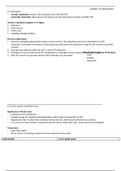
1. Glucose is phosphorylated which makes it more reactive. The phosphate come from hydrolysis of 2 ATP
molecules. It provides the energy to activate glucose and lowers the activation energy for the enzyme controlled
reaction.
2. Each glucose molecule splits into two 3 carbon TP molecules
3. Hydrogen is removed from both TPs and passed to a hydrogen carrier molecule Overall
NAD to yield
form (1 glucose molecules):
NADH
4. Each TP converts to pyruvate and two ATP molecules are generated - 4 ATP
- 2 NADH
- 2 pyruvate
12.2 Link reaction and Krebs Cycle
Significance of Krebs cycle:
- Hydrolyses macromolecules
- Provide energy for oxidative phosphorylation, which leads to production of ATP
- Regenerates the 4 carbon that combines with acetyl CoA, which would otherwise accumulate
- It’s a source of intermediate compounds used by cells to make fatty acids, amino acids and chlorophyll
Coenzymes:
- NAD, FAD, NADP
- Act as carriers of hydrogen atoms from one molecule to the other
Link reaction (Hans) Krebs cycles
12.1 Glycolysis
- Aerobic respiration requires O2 to produce CO2, H2O and ATP
- Anaerobic respiration takes place in the absence of O2 and produces lactate and little ATP
Aerobic respiration happens in 4 stages:
1. Glycolysis
2. Link reaction
3. Krebs cycle
4. Oxidative phosphorylation
Process of glycolysis:
1. Glucose is phosphorylated which makes it more reactive. The phosphate come from hydrolysis of 2 ATP
molecules. It provides the energy to activate glucose and lowers the activation energy for the enzyme controlled
reaction.
2. Each glucose molecule splits into two 3 carbon TP molecules
3. Hydrogen is removed from both TPs and passed to a hydrogen carrier molecule Overall
NAD to yield
form (1 glucose molecules):
NADH
4. Each TP converts to pyruvate and two ATP molecules are generated - 4 ATP
- 2 NADH
- 2 pyruvate
12.2 Link reaction and Krebs Cycle
Significance of Krebs cycle:
- Hydrolyses macromolecules
- Provide energy for oxidative phosphorylation, which leads to production of ATP
- Regenerates the 4 carbon that combines with acetyl CoA, which would otherwise accumulate
- It’s a source of intermediate compounds used by cells to make fatty acids, amino acids and chlorophyll
Coenzymes:
- NAD, FAD, NADP
- Act as carriers of hydrogen atoms from one molecule to the other
Link reaction (Hans) Krebs cycles