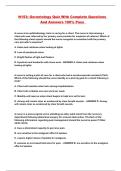
N153: Gerontology Quiz With Complete Questions
And Answers 100% Pass
A nurse at an ophthalmology clinic is caring for a client. The nurse is interviewing a
client who was referred by her primary care provider for suspicion of cataract. Which of
the following client reports should the nurse recognize is consistent with the primary
care provider's suspicion?
A. Halos and rainbows when looking at lights
B. Loss of peripheral vision
C. Bright flashes of light and floaters
D. Eyestrain and headache with close work - ANSWER A. Halos and rainbows when
looking at lights
A nurse is writing a plan of care for a client who had a cerebrovascular accident (CVA).
Which of the following should the nurse identify as a priority goal for a client following a
CVA?
A. Client will maintain intact skin during hospitalization.
B. Client will verbalize one new word per week.
C. Mobility will improve when client begins to help turn self in bed.
D. Airway will remain clear as evidenced by clear breath sounds. - ANSWER D. Airway
will remain clear as evidenced by clear breath sounds.
A nurse in a post-surgical unit is admitting an older adult client from the recovery
department following abdominal surgery for a bowel obstruction. Of which of the
following information regarding pain management should the nurse be aware? Older
adult clients
A. have a diminished capacity to perceive pain.
B. are sensitive to the analgesic effect of opiates.
C. require higher doses of opiates for analgesia.
D. possess an increased tolerance for pain. - ANSWER B. are sensitive to the analgesic
effect of opiates.
, A nurse is admitting an older adult client who fell at home and was unable to get up. The
client was not discovered until 3 days later by a family member. The client is admitted
with a fractured hip, malnutrition, and dehydration. Which of the following lab values,
noted on admission, should indicate to the nurse that the malnutrition is a long standing
problem?
A. Increased sodium
B. Decreased albumin
C. Increased blood urea nitrogen
D. Decreased blood sugar - ANSWER B. Decreased albumin
A visiting nurse is asked to make a home visit to an older adult client who has anemia
and was recently discharged from the hospital. The nurse should suggest that the client
eat which of the following to optimize the client's diet for the creation of new red blood
cells?
A. Yogurt for bedtime snack
B. Bran muffin with breakfast
C. Peanut butter sandwich for lunch
D. Green, leafy salad with dinner - ANSWER D. Green, leafy salad with dinner
A nurse at an assisted living center is conducting an orientation session for newly hired
assistive personnel (AP). Because several of the older adult residents are hearing
impaired, the nurse includes instruction for promoting communication. Which of the
following instructions should the nurse include?
A. Maintain eye contact with the clients and speak slowly.
B. Stand to one side of the clients and speak into their good ears.
C. Stand close to the clients and speak loudly with exaggerated enunciation.
D. Maintain a position in front of the clients and ask only questions with yes or no
answers. - ANSWER A. Maintain eye contact with the clients and speak slowly.
A nurse volunteering at a health fair is approached by an older adult client who states, "I
am always forgetting things. I cannot even remember where I parked my car! Do you
And Answers 100% Pass
A nurse at an ophthalmology clinic is caring for a client. The nurse is interviewing a
client who was referred by her primary care provider for suspicion of cataract. Which of
the following client reports should the nurse recognize is consistent with the primary
care provider's suspicion?
A. Halos and rainbows when looking at lights
B. Loss of peripheral vision
C. Bright flashes of light and floaters
D. Eyestrain and headache with close work - ANSWER A. Halos and rainbows when
looking at lights
A nurse is writing a plan of care for a client who had a cerebrovascular accident (CVA).
Which of the following should the nurse identify as a priority goal for a client following a
CVA?
A. Client will maintain intact skin during hospitalization.
B. Client will verbalize one new word per week.
C. Mobility will improve when client begins to help turn self in bed.
D. Airway will remain clear as evidenced by clear breath sounds. - ANSWER D. Airway
will remain clear as evidenced by clear breath sounds.
A nurse in a post-surgical unit is admitting an older adult client from the recovery
department following abdominal surgery for a bowel obstruction. Of which of the
following information regarding pain management should the nurse be aware? Older
adult clients
A. have a diminished capacity to perceive pain.
B. are sensitive to the analgesic effect of opiates.
C. require higher doses of opiates for analgesia.
D. possess an increased tolerance for pain. - ANSWER B. are sensitive to the analgesic
effect of opiates.
, A nurse is admitting an older adult client who fell at home and was unable to get up. The
client was not discovered until 3 days later by a family member. The client is admitted
with a fractured hip, malnutrition, and dehydration. Which of the following lab values,
noted on admission, should indicate to the nurse that the malnutrition is a long standing
problem?
A. Increased sodium
B. Decreased albumin
C. Increased blood urea nitrogen
D. Decreased blood sugar - ANSWER B. Decreased albumin
A visiting nurse is asked to make a home visit to an older adult client who has anemia
and was recently discharged from the hospital. The nurse should suggest that the client
eat which of the following to optimize the client's diet for the creation of new red blood
cells?
A. Yogurt for bedtime snack
B. Bran muffin with breakfast
C. Peanut butter sandwich for lunch
D. Green, leafy salad with dinner - ANSWER D. Green, leafy salad with dinner
A nurse at an assisted living center is conducting an orientation session for newly hired
assistive personnel (AP). Because several of the older adult residents are hearing
impaired, the nurse includes instruction for promoting communication. Which of the
following instructions should the nurse include?
A. Maintain eye contact with the clients and speak slowly.
B. Stand to one side of the clients and speak into their good ears.
C. Stand close to the clients and speak loudly with exaggerated enunciation.
D. Maintain a position in front of the clients and ask only questions with yes or no
answers. - ANSWER A. Maintain eye contact with the clients and speak slowly.
A nurse volunteering at a health fair is approached by an older adult client who states, "I
am always forgetting things. I cannot even remember where I parked my car! Do you