Science Medicine
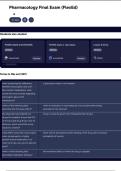
Pharmacology Final Exam Review
Leave the first rating
Save
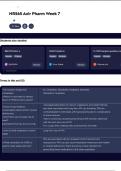
Students also studied
Pharm Exam 1 Neurotransmitters, Receptors, and P... ANS drugs
19 terms 82 terms 162 terms
katiepergeson Preview Chris_Landry6 Preview borgernc
Terms in this set (101)
The nurse is assessing a patient who -"Take the dose only in the morning."
has been prescribed
hydrochlorothiazide. Which Hydrochlorothiazide is a thiazide diuretic that is used in the treatment
information would the nurse give of various types of edema. They are to be taken in the morning as they
the patient about the medication can cause urination at night (nocturia) and subsequent loss of sleep
regimen? when taken late in the afternoon or at night. That is why the patient
-"Take iron supplements every day." should be instructed to take only in the morning to avoid side effects
-"Take the dose only in the of the drug.
morning."
-"You should limit your intake of
oats."
-"You should not eat melons or
grapes."
,Which side effects would the nurse -Anorexia
ask the patient to be watchful of -Vascular headache
when administering mixed -Cardiac stimulations
alpha/beta agonists? Select all that
apply. Mixed alpha/beta agonists produce the most adverse effects because
-Anorexia they are nonselective in action. Anorexia, vascular headache, and
-Drowsiness cardiac stimulation are side effects of mixed alpha/beta agonists.
-Hypoglycemia
-Vascular headache
-Cardiac stimulation
A patient with gout asks the nurse -"They decrease the serum uric acid level."
about the mechanism of action of
antigout drugs. Which statement In gout, a patient's uric acid level increases, and crystal formation takes
would the nurse make to the place in the joints. Antigout drugs decrease serum uric acid levels and
patient? prevent the formation of crystals in the joints.
-"They increase the red blood
cells."
-"They decrease the fatty acid
level."
-"They decrease the blood oxygen
level."
-"They decrease the serum uric acid
level."
Which instruction would the nurse -"Restrict activities that require mental alertness."
give to a patient who is prescribed
dextromethorphan for treatment of Dextromethorphan is a nonopioid antitussive drug that may also cause
a cough? sedation, drowsiness, or dizziness. The nurse would advise the patient
-"Use a humidifier while sleeping." to avoid activities that require mental alertness to help prevent injury to
-"Elevate your bed while sleeping." the patient.
-"Increase your fluid intake to 3000
mL per day."
-"Restrict activities that require
mental alertness."
A patient receiving warfarin has an -Administer vitamin K1 (phytonadione) IV.
international normalized ratio (INR)
of 6. Which action would the nurse The nurse would administer vitamin K1 (phytonadione) to the patient
take? who is taking warfarin and has an extremely elevated INR. This
-Stop the intravenous (IV) drip. medication will block the vitamin K-dependent clotting factors.
-Wait for the INR to decrease. Increasing vitamin K can hasten the return to normal coagulation.
-Administer protamine sulfate IV. Warfarin is given orally, not IV. An elevated INR can lead to excessive
-Administer vitamin K1 bleeding resulting in hypovolemia and decreased perfusion, which can
(phytonadione) IV. be life threatening.
, Which anticholingeric drug is -Scopolamine
commonly used to prevent motion Scopolamine blocks the binding of acetylcholine with cholingeric
sickness? receptors in the inner ear, an imbalance of which is a common cause of
-Droperidol motion sickness.
-Scopolamine
-Prochlorperazine Droperidol and prochlorperazine are antidopaminergics.
-Metaclopramide Metoclopramide is a prokinetic drug.
A nurse is providing care to a -"I've been on prolonged bed rest."
patient who is at risk for deep vein
thrombosis (DVT). The health care A patient who is on prolonged bed rest would benefit from aspirin to
provider prescribes aspirin therapy. prevent the formation of deep vein thrombosis (DVT).
Which statement from the patient
supports this prescription?
-"I've been on prolonged bed rest."
-"I avoid tight-fitting stockings or
leggings."
-"I never sit with my legs crossed at
the knees."
-"I get up and walk around at least
once an hour."
After administering bethanechol to -Gastrointestinal
a patient after surgery, which
system would the nurse assess to Bethanechol increases the tone of the detrusor muscle and causes the
determine a therapeutic effect? patient to void. It is used to initiate voiding.
-Urinary
-Neurologic
-Musculoskeletal
-Gastrointestinal
-Nausea/vomiting
Which symptom would the nurse
report to the health care provider People taking potassium-sparing diuretics are at risk for hyperkalemia.
for a patient taking spironolactone? Signs and symptoms of this include nausea, vomiting, and diarrhea.
-Lethargy People with toxic levels of potassium may suffer from cardiac rhythm
-Hypotension abnormalities.
-Mental confusion
-Nausea/vomiting Lethargy, hypotension, and mental confusion are symptoms of
hypokalemia--not hyperkalemia.
Pharmacology Final Exam Review
Leave the first rating
Save
Students also studied
Pharm Exam 1 Neurotransmitters, Receptors, and P... ANS drugs
19 terms 82 terms 162 terms
katiepergeson Preview Chris_Landry6 Preview borgernc
Terms in this set (101)
The nurse is assessing a patient who -"Take the dose only in the morning."
has been prescribed
hydrochlorothiazide. Which Hydrochlorothiazide is a thiazide diuretic that is used in the treatment
information would the nurse give of various types of edema. They are to be taken in the morning as they
the patient about the medication can cause urination at night (nocturia) and subsequent loss of sleep
regimen? when taken late in the afternoon or at night. That is why the patient
-"Take iron supplements every day." should be instructed to take only in the morning to avoid side effects
-"Take the dose only in the of the drug.
morning."
-"You should limit your intake of
oats."
-"You should not eat melons or
grapes."
,Which side effects would the nurse -Anorexia
ask the patient to be watchful of -Vascular headache
when administering mixed -Cardiac stimulations
alpha/beta agonists? Select all that
apply. Mixed alpha/beta agonists produce the most adverse effects because
-Anorexia they are nonselective in action. Anorexia, vascular headache, and
-Drowsiness cardiac stimulation are side effects of mixed alpha/beta agonists.
-Hypoglycemia
-Vascular headache
-Cardiac stimulation
A patient with gout asks the nurse -"They decrease the serum uric acid level."
about the mechanism of action of
antigout drugs. Which statement In gout, a patient's uric acid level increases, and crystal formation takes
would the nurse make to the place in the joints. Antigout drugs decrease serum uric acid levels and
patient? prevent the formation of crystals in the joints.
-"They increase the red blood
cells."
-"They decrease the fatty acid
level."
-"They decrease the blood oxygen
level."
-"They decrease the serum uric acid
level."
Which instruction would the nurse -"Restrict activities that require mental alertness."
give to a patient who is prescribed
dextromethorphan for treatment of Dextromethorphan is a nonopioid antitussive drug that may also cause
a cough? sedation, drowsiness, or dizziness. The nurse would advise the patient
-"Use a humidifier while sleeping." to avoid activities that require mental alertness to help prevent injury to
-"Elevate your bed while sleeping." the patient.
-"Increase your fluid intake to 3000
mL per day."
-"Restrict activities that require
mental alertness."
A patient receiving warfarin has an -Administer vitamin K1 (phytonadione) IV.
international normalized ratio (INR)
of 6. Which action would the nurse The nurse would administer vitamin K1 (phytonadione) to the patient
take? who is taking warfarin and has an extremely elevated INR. This
-Stop the intravenous (IV) drip. medication will block the vitamin K-dependent clotting factors.
-Wait for the INR to decrease. Increasing vitamin K can hasten the return to normal coagulation.
-Administer protamine sulfate IV. Warfarin is given orally, not IV. An elevated INR can lead to excessive
-Administer vitamin K1 bleeding resulting in hypovolemia and decreased perfusion, which can
(phytonadione) IV. be life threatening.
, Which anticholingeric drug is -Scopolamine
commonly used to prevent motion Scopolamine blocks the binding of acetylcholine with cholingeric
sickness? receptors in the inner ear, an imbalance of which is a common cause of
-Droperidol motion sickness.
-Scopolamine
-Prochlorperazine Droperidol and prochlorperazine are antidopaminergics.
-Metaclopramide Metoclopramide is a prokinetic drug.
A nurse is providing care to a -"I've been on prolonged bed rest."
patient who is at risk for deep vein
thrombosis (DVT). The health care A patient who is on prolonged bed rest would benefit from aspirin to
provider prescribes aspirin therapy. prevent the formation of deep vein thrombosis (DVT).
Which statement from the patient
supports this prescription?
-"I've been on prolonged bed rest."
-"I avoid tight-fitting stockings or
leggings."
-"I never sit with my legs crossed at
the knees."
-"I get up and walk around at least
once an hour."
After administering bethanechol to -Gastrointestinal
a patient after surgery, which
system would the nurse assess to Bethanechol increases the tone of the detrusor muscle and causes the
determine a therapeutic effect? patient to void. It is used to initiate voiding.
-Urinary
-Neurologic
-Musculoskeletal
-Gastrointestinal
-Nausea/vomiting
Which symptom would the nurse
report to the health care provider People taking potassium-sparing diuretics are at risk for hyperkalemia.
for a patient taking spironolactone? Signs and symptoms of this include nausea, vomiting, and diarrhea.
-Lethargy People with toxic levels of potassium may suffer from cardiac rhythm
-Hypotension abnormalities.
-Mental confusion
-Nausea/vomiting Lethargy, hypotension, and mental confusion are symptoms of
hypokalemia--not hyperkalemia.