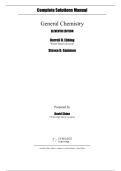
Complete Solutions Manual
General Chemistry
ELEVENTH EDITION
Darrell D. Ebbing
Wayne State University
Steven D. Gammon
Prepared by
David Shinn
US Merchant Marine Academy
Australia • Brazil • Mexico • Singapore • United Kingdom • United States
, Contents
Chapter 1
Chemistry and Measurements ..........................................................................................................1
Chapter 2
Atoms, Molecules, and Ions ...........................................................................................................34
Chapter 3
Calculations with Chemical Formulas and Equations ..................................................................65
Chapter 4
Chemical Reactions .....................................................................................................................113
Chapter 5
The Gaseous State ........................................................................................................................158
Chapter 6
Thermochemistry..........................................................................................................................200
Chapter 7
Quantum Theory of the Atom .......................................................................................................242
Chapter 8
Electron Configurations and Periodicity .....................................................................................271
Chapter 9
Ionic and Covalent Bonding ........................................................................................................290
Chapter 10
Molecular Geometry and Chemical Bonding Theory ..................................................................338
Chapter 11
States of Matter; Liquids and Solids ............................................................................................376
Chapter 12
Solutions.......................................................................................................................................413
Chapter 13
Rates of Reaction .........................................................................................................................452
Chapter 14
Chemical Equilibrium ..................................................................................................................494
ii
© 2017 Cengage Learning. All Rights Reserved. May not be scanned, copied or duplicated, or posted to a publicly accessible website, in whole or in part.
, Chapter 15
Acids and Bases ...........................................................................................................................544
Chapter 16
Acid−Base Equilibria ..................................................................................................................572
Chapter 17
Solubility and Complex-Ion Equilibria ........................................................................................657
Chapter 18
Thermodynamics and Equilibrium...............................................................................................710
Chapter 19
Electrochemistry ..........................................................................................................................755
Chapter 20
Nuclear Chemistry .......................................................................................................................817
Chapter 21
Chemistry of the Main-Group Elements ......................................................................................852
Chapter 22
The Transition Elements and Coordination Compounds ............................................................889
Chapter 23
Organic Chemistry .......................................................................................................................912
Chapter 24
Polymer Materials: Synthetic and Biological ..............................................................................940
iii
© 2017 Cengage Learning. All Rights Reserved. May not be scanned, copied or duplicated, or posted to a publicly accessible website, in whole or in part.
, CHAPTER 1
Chemistry and Measurement
■ SOLUTIONS TO EXERCISES
Note on significant figures: If the final answer to a solution needs to be rounded off, it is given first with
one nonsignificant figure, and the last significant figure is underlined. The final answer is then rounded to
the correct number of significant figures. In multistep problems, intermediate answers are given with at
least one nonsignificant figure; however, only the final answer has been rounded off.
1.1. From the law of conservation of mass,
Mass of wood + mass of air = mass of ash + mass of gases
Substituting, you obtain
1.85 grams + 9.45 grams = 0.28 grams + mass of gases
or,
Mass of gases = (1.85 + 9.45 − 0.28) grams = 11.02 grams
Thus, the mass of gases in the vessel at the end of the experiment is 11.02 grams.
1.2. Physical properties: soft, silvery-colored metal; melts at 64°C.
Chemical properties: reacts vigorously with water, with oxygen, and with chlorine.
1.3. a. The factor 9.1 has the fewest significant figures, so the answer should be reported to two
significant figures.
5.61 7.891
= 4.86 = 4.9
9.1
b. The number with the least number of decimal places is 8.91. Therefore, round the answer to
two decimal places.
8.91 − 6.435 = 2.475 = 2.48
c. The number with the least number of decimal places is 6.81. Therefore, round the answer to
two decimal places.
6.81 − 6.730 = 0.080 = 0.08
d. You first do the subtraction within parentheses. In this step, the number with the least
number of decimal places is 6.81, so the result of the subtraction has two decimal places.
The least significant figure for this step is underlined.
38.91 (6.81 − 6.730) = 38.91 0.080
Next, perform the multiplication. In this step, the factor 0.080 has the fewest significant
figures, so round the answer to one significant figure.
38.91 0.080 = 3.11 = 3
1
© 2017 Cengage Learning. All Rights Reserved. May not be scanned, copied or duplicated, or posted to a publicly accessible website, in whole or in part.
General Chemistry
ELEVENTH EDITION
Darrell D. Ebbing
Wayne State University
Steven D. Gammon
Prepared by
David Shinn
US Merchant Marine Academy
Australia • Brazil • Mexico • Singapore • United Kingdom • United States
, Contents
Chapter 1
Chemistry and Measurements ..........................................................................................................1
Chapter 2
Atoms, Molecules, and Ions ...........................................................................................................34
Chapter 3
Calculations with Chemical Formulas and Equations ..................................................................65
Chapter 4
Chemical Reactions .....................................................................................................................113
Chapter 5
The Gaseous State ........................................................................................................................158
Chapter 6
Thermochemistry..........................................................................................................................200
Chapter 7
Quantum Theory of the Atom .......................................................................................................242
Chapter 8
Electron Configurations and Periodicity .....................................................................................271
Chapter 9
Ionic and Covalent Bonding ........................................................................................................290
Chapter 10
Molecular Geometry and Chemical Bonding Theory ..................................................................338
Chapter 11
States of Matter; Liquids and Solids ............................................................................................376
Chapter 12
Solutions.......................................................................................................................................413
Chapter 13
Rates of Reaction .........................................................................................................................452
Chapter 14
Chemical Equilibrium ..................................................................................................................494
ii
© 2017 Cengage Learning. All Rights Reserved. May not be scanned, copied or duplicated, or posted to a publicly accessible website, in whole or in part.
, Chapter 15
Acids and Bases ...........................................................................................................................544
Chapter 16
Acid−Base Equilibria ..................................................................................................................572
Chapter 17
Solubility and Complex-Ion Equilibria ........................................................................................657
Chapter 18
Thermodynamics and Equilibrium...............................................................................................710
Chapter 19
Electrochemistry ..........................................................................................................................755
Chapter 20
Nuclear Chemistry .......................................................................................................................817
Chapter 21
Chemistry of the Main-Group Elements ......................................................................................852
Chapter 22
The Transition Elements and Coordination Compounds ............................................................889
Chapter 23
Organic Chemistry .......................................................................................................................912
Chapter 24
Polymer Materials: Synthetic and Biological ..............................................................................940
iii
© 2017 Cengage Learning. All Rights Reserved. May not be scanned, copied or duplicated, or posted to a publicly accessible website, in whole or in part.
, CHAPTER 1
Chemistry and Measurement
■ SOLUTIONS TO EXERCISES
Note on significant figures: If the final answer to a solution needs to be rounded off, it is given first with
one nonsignificant figure, and the last significant figure is underlined. The final answer is then rounded to
the correct number of significant figures. In multistep problems, intermediate answers are given with at
least one nonsignificant figure; however, only the final answer has been rounded off.
1.1. From the law of conservation of mass,
Mass of wood + mass of air = mass of ash + mass of gases
Substituting, you obtain
1.85 grams + 9.45 grams = 0.28 grams + mass of gases
or,
Mass of gases = (1.85 + 9.45 − 0.28) grams = 11.02 grams
Thus, the mass of gases in the vessel at the end of the experiment is 11.02 grams.
1.2. Physical properties: soft, silvery-colored metal; melts at 64°C.
Chemical properties: reacts vigorously with water, with oxygen, and with chlorine.
1.3. a. The factor 9.1 has the fewest significant figures, so the answer should be reported to two
significant figures.
5.61 7.891
= 4.86 = 4.9
9.1
b. The number with the least number of decimal places is 8.91. Therefore, round the answer to
two decimal places.
8.91 − 6.435 = 2.475 = 2.48
c. The number with the least number of decimal places is 6.81. Therefore, round the answer to
two decimal places.
6.81 − 6.730 = 0.080 = 0.08
d. You first do the subtraction within parentheses. In this step, the number with the least
number of decimal places is 6.81, so the result of the subtraction has two decimal places.
The least significant figure for this step is underlined.
38.91 (6.81 − 6.730) = 38.91 0.080
Next, perform the multiplication. In this step, the factor 0.080 has the fewest significant
figures, so round the answer to one significant figure.
38.91 0.080 = 3.11 = 3
1
© 2017 Cengage Learning. All Rights Reserved. May not be scanned, copied or duplicated, or posted to a publicly accessible website, in whole or in part.