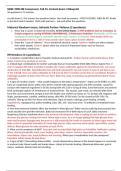
NRSE 3900 OB Component, Fall 24, Content Exam 2 Blueprint
50 questions in 75 minutes
As with Exam 1, first answer the questions below, then look up answers – FIRST IN SLIDES, THEN IN ATI, finally
in the Ricci book if needed. Work with partners – ask each other the questions.
Maternal Newborn Issues, Intimate Partner Violence (2 questions):
1. Know top 3 causes of maternal mortality. In the United States: 1) HTN problems such as eclampsia. 2)
Ectopic pregnancy causing INTERNAL HEMORRHAGE. 3) Pulmonary Embolism. Worldwide: 1) HTN aka
eclampsia 2) hemorrhage ie, post birth, abortion and C-section. 3) Infection. Most deaths (60%) are
preventable in the U.S. Half of rural counties don’t have a place to birth children.
2. Know the “cycle of violence”. Abuse-emotional, physical, sexual. Isolation- victims are often isolated
from other people. Control- abuser often has control of important factors such as finances,
socialization, medical ect.
HR Newborn (11 questions):
1. 2 newborn complications due to shoulder dystocia during birth - broken clavicle and brachial plexus (Erbs
palsy). Facial nerve paralysis on one sie.
2. 2 blood type combinations for mother and baby that are incompatible (think ABO, Rhesus types) First, If
mom is negative RH factor and baby is positive she creates antibodies against the fetal blood cells. Can cause
destruction of fetal RBC, hyperbilirubinemia and fetal hydrops(HF). Second, If mom is Type O and baby is any
of the A/B/AB, mom can make antibodies to A/B (can do direct Coombs) can be done on cord blood. Results in
pathologic jaundice of baby when they are born. Baby may need a transfusion to get blood that doesn’t have
antibodies.
3. 4 signs of newborn sepsis – what usually happens to the baby’s temperature? Sepsis can be EARLY or LATE:
Early (or congenital) shows within 24 to 48 hrs of birth with rapid progession and 50% mortality, caused by
contact with maternal organisms in GI/GU during birth of E.Coli or Group B strep. Early Rsk factors are preterm
birth, prolonged rupture of membranes or maternal fever. The second, Late onset, are infected after birth
from the care environment and got it from the health care workers an shows at 7 to 30 days old. Happens with
Staph, pseudomonas, candida, umbilical stump, skin MM, GI/GU track: Can be caused by RSV, HSV, flu,
varicella. They go to NICU for these viral infections. Signs of sepsis: Lethargy, poor feeding, irritable,
hypothermia, hypoglycemia, pallor/mottling. Labs: CBC, CSF, stool and urine. Tx antibiotics immediate breast
feeding.
4. How does maternal diabetes affect the newborn’s blood glucose? Baby may be really big (macrosomia) but
could actually have growth restriction. Baby has increased risk of birth injury d/t LGA. Baby may have
Respiratory Distress Syndrome due to late surfactant development. Baby is making his own insulin in womb to
decrease the glucose coming from mom. When baby is born, he is no longer getting that high glucose from
mom and becomes hypoglycemic because he is still producing the insulin in response to blood sugar mom had.
Baby at risk of congenital anomalies d/t mom high glucose. Baby may have anencephaly, spina bifida, cardiac
defects. Blood glucose for baby should be at least 40-45.
5. What are the symptoms of NAS? Excessive and uncontrollable high pitch cry/irritability, ineffective sucking,
jittery, diarrhea/projectile vomit, poor feeding, poor sleep, seizure, tremors, hypertonic muscles, skin
excoriations, diaper rash, nasal stuffiness and sneezing. What type of medications treat the symptoms?
Morphine sulfate slowly titrated down.
6. 3 signs of NEC? (Necrotizing Enterocolitis) – Acute inflammatory disease of the bowel happens in commonly
in preterm baby. Bowel swells and breaks down. Linked to formula feeding. Abdominal distension, gastric
mucus residuals, bloody stool and vomiting.
, 7. What are the causes of SGA/IUGR and LGA, and 2 common complications of each? AGA is between 10 and
90 percentile is appropriate, LGA too big is greater than 90th. SGA is less than 10th percentile. SGA happens
often in IUGR in types of Symmetrical(congenital happening at conception) or Asymmetrical (happens late in
pregnancy and something happened to stunt growth). With IUGR it could happen with perinatal asphyxia,
meconium aspiration, hypoglycemia, poor temp control or polycythemia. The biggest complication of IUGR is
STILLBIRTH DURING ASPHYXIA OR DISTRESS OF LABOR!! 4 Risk factors of IUGR are bad vascular of mom,
infection, baby anomaly, mom drug use. The only advantage of these babies is increased red blood cells and
body will make stress corticosteroids which will cause them to make surfactant early for lung maturity.
8. Weeks of gestation for preterm less that 37 wks, most organ systems are immature. Big head to small body,
translucent skin, lanugo present.
late preterm 34 and 36 6/7 have problems with thermoregulation, hypoglycemia, hyperbilirubinemia, sepsis,
respiratory distress syndrome happens because surfactant is missing and alveolar aren’t stable. They will have
surfactant treatment then o2 supplement but care not to over supplement. Cpap maybe used and oscillators
which are special ventilators. Full term baby, and post-term babies and concerns for each.
9. Name 5 TORCH infections and risk factors for each: Toxoplasmosis (cat litter or raw meat). Other (HepB,
HIV, Parvo, Syphillis). Rubella (check immunity-pregnant health care workers avoid). Cytomegalovirus (Must
avoid if pregnant health care worker). Herpes simplex virus (high fatality, antiviral prophylaxis).
10. List 5 common congenital anomalies and main nursing concern for each (use your ATI book). 2 to 3 percent
of births. Cleft lip/palate (aspiration/feed risk), down syndrome, Spina bifida, omphalocele (herniating out of
umbilical area/keep wet and clean), clubfoot, anencephaly ( not much brain, only lives a few hours), extra
fingers or toes, atresia of trach/esoph (aspiration risk/don’t feed), diaphragmatic hernia, metabolic disorder.
HR Postpartum (8 questions):
1. Signs of TED (thromboembolic disease), prevention, and complications. Will see pain/tenderness,
warmth, swelling, hard vein, unilateral leg vein, Homan signs. PE causes dyspnea, tachpnea,
tachycardia, chest pain, cough and syncope. Decrease blood stasis by getting pt up early, use TED
stockings, educate about smoking and crossing legs increasing risk of clots. DVT need Heparin IV then
warfarin for 3 months. PE needs clot buster. Heparin (protamine antidote). Warfarin (crosses placenta
so use birth control/antidote VitK) Enoxaporin (antidote protamine)
2. Know the 4 meds used to treat postpartum hemorrhage, and side effects/contraindications.
3. Differentiate between postpartum “blues”, postpartum depression, and postpartum psychosis. 80% of
women experience baby blues or depression. These symptoms usually resolve within 10 days without
medical treatment. More serious Postpartum Depression is experienced in 8-20%, risk if mom
experiences hx of anxiety or depression. Paternal depression also occurs in 8-25% of dads. More
common if mom has it too. Signs are fatigue, frustration, anger, irritability, indecisiveness, withdrawal,
alcohol/drugs, aches and pains, domestic abuse. Comparing blues with depression- blues last up to 10
days. Depression is persistent and last more than 2 weeks with intense emotions with severe mood
swings and irritability. Can last up to 6 months. Tx with anitdepressants, mood stabilizers and
psychotherapy. Postpartum Psychosis – Rare in 0.1 to 0,2%. Presents about 2 weeks postpartum. Signs
are depression, delusions, hallucinations and considers harm to herself or baby. May need psychiatric
hospitalization. Don’t leave alone. Associated with Bipolar.
4. Describe management of early and late postpartum hemorrhage. Early hemorrhage before 24 hours.
Late after 24 hrs. Check and massage uterus until it is FIRM. Express clots, empty bladder/indwelling
cath, Oxytocin IV/IM, meds as methylergonivine, misoprotol, carboprost. If uterus is firm look for other
reason of bleed. Give volume replacement with IV or Blood!! Gove o2 and prepare for pt shock. If
50 questions in 75 minutes
As with Exam 1, first answer the questions below, then look up answers – FIRST IN SLIDES, THEN IN ATI, finally
in the Ricci book if needed. Work with partners – ask each other the questions.
Maternal Newborn Issues, Intimate Partner Violence (2 questions):
1. Know top 3 causes of maternal mortality. In the United States: 1) HTN problems such as eclampsia. 2)
Ectopic pregnancy causing INTERNAL HEMORRHAGE. 3) Pulmonary Embolism. Worldwide: 1) HTN aka
eclampsia 2) hemorrhage ie, post birth, abortion and C-section. 3) Infection. Most deaths (60%) are
preventable in the U.S. Half of rural counties don’t have a place to birth children.
2. Know the “cycle of violence”. Abuse-emotional, physical, sexual. Isolation- victims are often isolated
from other people. Control- abuser often has control of important factors such as finances,
socialization, medical ect.
HR Newborn (11 questions):
1. 2 newborn complications due to shoulder dystocia during birth - broken clavicle and brachial plexus (Erbs
palsy). Facial nerve paralysis on one sie.
2. 2 blood type combinations for mother and baby that are incompatible (think ABO, Rhesus types) First, If
mom is negative RH factor and baby is positive she creates antibodies against the fetal blood cells. Can cause
destruction of fetal RBC, hyperbilirubinemia and fetal hydrops(HF). Second, If mom is Type O and baby is any
of the A/B/AB, mom can make antibodies to A/B (can do direct Coombs) can be done on cord blood. Results in
pathologic jaundice of baby when they are born. Baby may need a transfusion to get blood that doesn’t have
antibodies.
3. 4 signs of newborn sepsis – what usually happens to the baby’s temperature? Sepsis can be EARLY or LATE:
Early (or congenital) shows within 24 to 48 hrs of birth with rapid progession and 50% mortality, caused by
contact with maternal organisms in GI/GU during birth of E.Coli or Group B strep. Early Rsk factors are preterm
birth, prolonged rupture of membranes or maternal fever. The second, Late onset, are infected after birth
from the care environment and got it from the health care workers an shows at 7 to 30 days old. Happens with
Staph, pseudomonas, candida, umbilical stump, skin MM, GI/GU track: Can be caused by RSV, HSV, flu,
varicella. They go to NICU for these viral infections. Signs of sepsis: Lethargy, poor feeding, irritable,
hypothermia, hypoglycemia, pallor/mottling. Labs: CBC, CSF, stool and urine. Tx antibiotics immediate breast
feeding.
4. How does maternal diabetes affect the newborn’s blood glucose? Baby may be really big (macrosomia) but
could actually have growth restriction. Baby has increased risk of birth injury d/t LGA. Baby may have
Respiratory Distress Syndrome due to late surfactant development. Baby is making his own insulin in womb to
decrease the glucose coming from mom. When baby is born, he is no longer getting that high glucose from
mom and becomes hypoglycemic because he is still producing the insulin in response to blood sugar mom had.
Baby at risk of congenital anomalies d/t mom high glucose. Baby may have anencephaly, spina bifida, cardiac
defects. Blood glucose for baby should be at least 40-45.
5. What are the symptoms of NAS? Excessive and uncontrollable high pitch cry/irritability, ineffective sucking,
jittery, diarrhea/projectile vomit, poor feeding, poor sleep, seizure, tremors, hypertonic muscles, skin
excoriations, diaper rash, nasal stuffiness and sneezing. What type of medications treat the symptoms?
Morphine sulfate slowly titrated down.
6. 3 signs of NEC? (Necrotizing Enterocolitis) – Acute inflammatory disease of the bowel happens in commonly
in preterm baby. Bowel swells and breaks down. Linked to formula feeding. Abdominal distension, gastric
mucus residuals, bloody stool and vomiting.
, 7. What are the causes of SGA/IUGR and LGA, and 2 common complications of each? AGA is between 10 and
90 percentile is appropriate, LGA too big is greater than 90th. SGA is less than 10th percentile. SGA happens
often in IUGR in types of Symmetrical(congenital happening at conception) or Asymmetrical (happens late in
pregnancy and something happened to stunt growth). With IUGR it could happen with perinatal asphyxia,
meconium aspiration, hypoglycemia, poor temp control or polycythemia. The biggest complication of IUGR is
STILLBIRTH DURING ASPHYXIA OR DISTRESS OF LABOR!! 4 Risk factors of IUGR are bad vascular of mom,
infection, baby anomaly, mom drug use. The only advantage of these babies is increased red blood cells and
body will make stress corticosteroids which will cause them to make surfactant early for lung maturity.
8. Weeks of gestation for preterm less that 37 wks, most organ systems are immature. Big head to small body,
translucent skin, lanugo present.
late preterm 34 and 36 6/7 have problems with thermoregulation, hypoglycemia, hyperbilirubinemia, sepsis,
respiratory distress syndrome happens because surfactant is missing and alveolar aren’t stable. They will have
surfactant treatment then o2 supplement but care not to over supplement. Cpap maybe used and oscillators
which are special ventilators. Full term baby, and post-term babies and concerns for each.
9. Name 5 TORCH infections and risk factors for each: Toxoplasmosis (cat litter or raw meat). Other (HepB,
HIV, Parvo, Syphillis). Rubella (check immunity-pregnant health care workers avoid). Cytomegalovirus (Must
avoid if pregnant health care worker). Herpes simplex virus (high fatality, antiviral prophylaxis).
10. List 5 common congenital anomalies and main nursing concern for each (use your ATI book). 2 to 3 percent
of births. Cleft lip/palate (aspiration/feed risk), down syndrome, Spina bifida, omphalocele (herniating out of
umbilical area/keep wet and clean), clubfoot, anencephaly ( not much brain, only lives a few hours), extra
fingers or toes, atresia of trach/esoph (aspiration risk/don’t feed), diaphragmatic hernia, metabolic disorder.
HR Postpartum (8 questions):
1. Signs of TED (thromboembolic disease), prevention, and complications. Will see pain/tenderness,
warmth, swelling, hard vein, unilateral leg vein, Homan signs. PE causes dyspnea, tachpnea,
tachycardia, chest pain, cough and syncope. Decrease blood stasis by getting pt up early, use TED
stockings, educate about smoking and crossing legs increasing risk of clots. DVT need Heparin IV then
warfarin for 3 months. PE needs clot buster. Heparin (protamine antidote). Warfarin (crosses placenta
so use birth control/antidote VitK) Enoxaporin (antidote protamine)
2. Know the 4 meds used to treat postpartum hemorrhage, and side effects/contraindications.
3. Differentiate between postpartum “blues”, postpartum depression, and postpartum psychosis. 80% of
women experience baby blues or depression. These symptoms usually resolve within 10 days without
medical treatment. More serious Postpartum Depression is experienced in 8-20%, risk if mom
experiences hx of anxiety or depression. Paternal depression also occurs in 8-25% of dads. More
common if mom has it too. Signs are fatigue, frustration, anger, irritability, indecisiveness, withdrawal,
alcohol/drugs, aches and pains, domestic abuse. Comparing blues with depression- blues last up to 10
days. Depression is persistent and last more than 2 weeks with intense emotions with severe mood
swings and irritability. Can last up to 6 months. Tx with anitdepressants, mood stabilizers and
psychotherapy. Postpartum Psychosis – Rare in 0.1 to 0,2%. Presents about 2 weeks postpartum. Signs
are depression, delusions, hallucinations and considers harm to herself or baby. May need psychiatric
hospitalization. Don’t leave alone. Associated with Bipolar.
4. Describe management of early and late postpartum hemorrhage. Early hemorrhage before 24 hours.
Late after 24 hrs. Check and massage uterus until it is FIRM. Express clots, empty bladder/indwelling
cath, Oxytocin IV/IM, meds as methylergonivine, misoprotol, carboprost. If uterus is firm look for other
reason of bleed. Give volume replacement with IV or Blood!! Gove o2 and prepare for pt shock. If