N
O
TI
LU
O
STS
TE
, KJHGFDS
Contents
To the Instructor 4
Syllabi 5
TE
Chapter 1: Evolution of Policing and Investigation 12
Chapter 2: Rules of Evidence and Arrest 17
Chapter 3: The Crime Scene 24
Chapter 4: Physical Evidence 30
Chapter 5: laboratory and Technical Services 33
Chapter 6: Basic Investigative Leads and Informants 37
S
Chapter 7: Interviewing and Interrogation 43
Chapter 8: Crimes of Violence 50
Chapter 9: Sexual Assaults 56
TS
Chapter 10: Missing and Exploited Persons 61
Chapter 11: Robbery 64
Chapter 12: Arson, Bombing, and Hate Crimes 69
Chapter 13: Property Crimes 74
Chapter 14: CyberCrime 80
Chapter 15: Dangerous Drugs 84
Chapter 16: Special Investigations 90
O
Chapter 17: Terrorism 95
Chapter 18: the Investigator as a Witness and Ethical Awareness 101
Testbank 104
LU
TI
O
N
KJHGFD
, KJHGFDS
To the Instructor
This instructor’s manual is designed to accompany and to complement the
textbook. It provides the instructor with a comprehensive overview and
summary of the textbook to make teaching easier and more effective.
TE
The chapters of this manual directly correspond to those in the textbook.
Each chapter contains the following information:
1. Chapter Overview: This section outlines the key points in the chapter.
S
2. Chapter Objectives: These are the chapter objectives from the main text,
presented again in the instructor’s manual for your convenience.
TS
3. Lecture Outline: This is a detailed outline of the material provided in the
chapter and is intended to be used as a lecture guide. Each outline includes
suggestions regarding the use of relevant material from the Prentice Hall
Video Library (ISBN 0135134978).
O
4. List of Changes/Transition Guide: This lists the main changes that have
been made to the chapter for the 7th edition.
LU
5. Additional Assignments and Class Activities: This section contains
Additional Lecture Topics and Student Activities. Additional Lecture Topics
include ideas for topics that are not contained in the textbook but which
closely complement the material in each chapter. They may be used to
expand upon the chapter and provide additional lecture material.
TI
O
N
KJHGFD
, KJHGFDS
Syllabi
Sample Syllabus
Introduction to Criminal Investigation
10-Week Course
Professor: Class Meeting Room:
TE
Office: Class Meeting Time:
Telephone: Office Hours:
Email:
REQUIRED TEXT
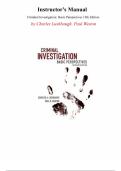
Lushbaugh, Charles A., and Paul B. Weston (2016) Criminal Investigation-Basic
Perspectives 13th edition. Pearson ISBN 13-978-0-13-351440-7
S
COURSE DESCRIPTION
This course is designed to introduce students to criminal investigation. It will provide an
TS
overview of the evolution of policing and investigation, rules of evidence and arrest, the
crime scene, physical evidence, laboratory and technical services, development of basic
investigative leads, use of informants, interviewing and interrogation, investigating major
crime categories, and ethical awareness.
COURSE OBJECTIVES
O
Students who successfully complete this course will be able to understand:
• The evolution of policing stemming from England and how the United States
modeled, reformed, and advanced policing and investigation.
• The rules of evidence and arrest through the use of search warrants and
LU
warrantless searches.
• The process of controlling, investigating, and recording a crime scene.
• The different types of evidence and the equipment and processing techniques used
to collect and evaluate this evidence.
• The various types of investigative leads and use of informants and the importance
of them in the processing of a criminal investigation.
TI
• The difference, importance, and techniques involved in interviewing and
interrogation.
• The investigation of major crime categories to include: crimes of violence, sexual
assaults, missing and exploited persons, robbery, arson, bombings, hate crimes,
O
property crimes, cybercrime, drugs, special investigations and terrorism.
• The importance of an investigator as a witness and the ethical awareness within
law enforcement departments.
N
COURSE ASSIGNMENTS
Exams: There will be a cumulative mid-term and final exam that will encompass
multiple choice, true/false, and essay questions. Each exam will be worth 50 points and
will include material from the textbook and lecture.
KJHGFD
O
TI
LU
O
STS
TE
, KJHGFDS
Contents
To the Instructor 4
Syllabi 5
TE
Chapter 1: Evolution of Policing and Investigation 12
Chapter 2: Rules of Evidence and Arrest 17
Chapter 3: The Crime Scene 24
Chapter 4: Physical Evidence 30
Chapter 5: laboratory and Technical Services 33
Chapter 6: Basic Investigative Leads and Informants 37
S
Chapter 7: Interviewing and Interrogation 43
Chapter 8: Crimes of Violence 50
Chapter 9: Sexual Assaults 56
TS
Chapter 10: Missing and Exploited Persons 61
Chapter 11: Robbery 64
Chapter 12: Arson, Bombing, and Hate Crimes 69
Chapter 13: Property Crimes 74
Chapter 14: CyberCrime 80
Chapter 15: Dangerous Drugs 84
Chapter 16: Special Investigations 90
O
Chapter 17: Terrorism 95
Chapter 18: the Investigator as a Witness and Ethical Awareness 101
Testbank 104
LU
TI
O
N
KJHGFD
, KJHGFDS
To the Instructor
This instructor’s manual is designed to accompany and to complement the
textbook. It provides the instructor with a comprehensive overview and
summary of the textbook to make teaching easier and more effective.
TE
The chapters of this manual directly correspond to those in the textbook.
Each chapter contains the following information:
1. Chapter Overview: This section outlines the key points in the chapter.
S
2. Chapter Objectives: These are the chapter objectives from the main text,
presented again in the instructor’s manual for your convenience.
TS
3. Lecture Outline: This is a detailed outline of the material provided in the
chapter and is intended to be used as a lecture guide. Each outline includes
suggestions regarding the use of relevant material from the Prentice Hall
Video Library (ISBN 0135134978).
O
4. List of Changes/Transition Guide: This lists the main changes that have
been made to the chapter for the 7th edition.
LU
5. Additional Assignments and Class Activities: This section contains
Additional Lecture Topics and Student Activities. Additional Lecture Topics
include ideas for topics that are not contained in the textbook but which
closely complement the material in each chapter. They may be used to
expand upon the chapter and provide additional lecture material.
TI
O
N
KJHGFD
, KJHGFDS
Syllabi
Sample Syllabus
Introduction to Criminal Investigation
10-Week Course
Professor: Class Meeting Room:
TE
Office: Class Meeting Time:
Telephone: Office Hours:
Email:
REQUIRED TEXT
Lushbaugh, Charles A., and Paul B. Weston (2016) Criminal Investigation-Basic
Perspectives 13th edition. Pearson ISBN 13-978-0-13-351440-7
S
COURSE DESCRIPTION
This course is designed to introduce students to criminal investigation. It will provide an
TS
overview of the evolution of policing and investigation, rules of evidence and arrest, the
crime scene, physical evidence, laboratory and technical services, development of basic
investigative leads, use of informants, interviewing and interrogation, investigating major
crime categories, and ethical awareness.
COURSE OBJECTIVES
O
Students who successfully complete this course will be able to understand:
• The evolution of policing stemming from England and how the United States
modeled, reformed, and advanced policing and investigation.
• The rules of evidence and arrest through the use of search warrants and
LU
warrantless searches.
• The process of controlling, investigating, and recording a crime scene.
• The different types of evidence and the equipment and processing techniques used
to collect and evaluate this evidence.
• The various types of investigative leads and use of informants and the importance
of them in the processing of a criminal investigation.
TI
• The difference, importance, and techniques involved in interviewing and
interrogation.
• The investigation of major crime categories to include: crimes of violence, sexual
assaults, missing and exploited persons, robbery, arson, bombings, hate crimes,
O
property crimes, cybercrime, drugs, special investigations and terrorism.
• The importance of an investigator as a witness and the ethical awareness within
law enforcement departments.
N
COURSE ASSIGNMENTS
Exams: There will be a cumulative mid-term and final exam that will encompass
multiple choice, true/false, and essay questions. Each exam will be worth 50 points and
will include material from the textbook and lecture.
KJHGFD