

TEST BANK
b
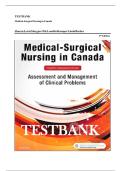
Medical-Surgical Nursing in Canada
b b b
Sharon Lewis Margaret McLean HeitkemperLinda Bucher
b b b b b b
4th Edition
b
TESTBANK b
,Tableofcontent b b
l Introduction to Medical-Surgical Nursing Practice in Canada
b b b b b b b
2 Cultural Competence and Health Equity in Nursing Care
b b b b b b b
3 Health History and Physical Examination b b b b
4 Patient and Caregiver Teaching b b b
5 Chronic Illness b
6 Community-Based Nursing and Home Care b b b b
7 Older Adults b
8 Stress and Stress Management b b b
9 Sleep and Sleep Disorders b b b
I0 Pain
b b
11 Substance Use b
12 Complementary and Alternative Therapies b b b
13 Palliative Care at the End of Life b b b b b b
14 Inflammation and Wound Healing b b b
15 Genetics
16 Altered Immune Response and Transplantation b b b b
17 Infection and Human Immunodeficiency Virus Infection b b b b b
18 Cancer
19 Fluid, Electrolyte, and Acid-Base Imbalances
b b b b
20: Nursing Management: Preoperative Care
b b b b
21: Nursing Management: Intraoperative Care
b b b b b
22: Nursing Management: Postoperative Care
b b b b b
23: Nursing Assessment: Visual and Auditory Systems
b b b b b b
24: Nursing Management: Visual and Auditory Problems
b b b b b b b
b25: Nursing Assessment: Integumentary System
b b b b
26: Nursing Management: Integumentary Problems
b b b b
27: Nursing Management: Burns
b b b
28: Nursing Assessment: Respiratory System
b b b b
29: Nursing Management: Upper Respiratory Problems
b b b b b
30: Nursing Management: Lower Respiratory Problems
b b b b b
31: Nursing Management: Obstructive Pulmonary Diseases
b b b b b
32: Nursing Assessment: Hematological System
b b b b
33: Nursing Management: Hematological Problems
b b b b
34: Nursing Assessment: Cardiovascular System 35:
b b b b b b
Nursing Management: Hypertension
b b b
36: Nursing Management: Coronary Artery Disease and Acute Coronary
b b b b b b b b
Syndrome
b
37: Nursing Management: Heart Failure
b b b b
38: Nursing Management: Dysrhythmias
b b b
39: Nursing Management: Inflammatory and Structural Heart Disorders
b b b b b b b
40: Nursing Management: Vascular Disorders
b b b b
41: Nursing Assessment: Gastro-intestinal System
b b b b
42: Nursing Management: Nutritional Problems 43:
b b b b b b
Nursing Management: Obesity
b b b
44: Nursing Management: Upper Gastro-intestinal Problems
b b b b b
45: Nursing Management: Lower Gastro-intestinal Problems
b b b b b
46: Nursing Management: Liver, Pancreas, and Biliary Tract Problems
b b b b b b b b
47: Nursing Management: Urinary System
b b b b
,48: Nursing Management: Renal and Urological Problems
b b b b b b
49: Nursing Management: Acute Kidney Injury and Chronic Kidney
b b b b b b b b
bDisease
50: Nursing Assessment: Endocrine System
b b b b
51: Nursing Management: Endocrine Problems
b b b b
52: Nursing Management: Diabetes Mellitus
b b b b b
53: Nursing Assessment: Reproductive System
b b b b b
54: Nursing Management: Breast Disorders
b b b b b
55: Nursing Management: Sexually Transmitted Infections
b b b b b
56: Nursing Management: Female Reproductive Problems
b b b b b b
57: Nursing Management: Male Reproductive Problems
b b b b b b
58: Nursing Assessment: Nervous System
b b b b b
59: Nursing Management: Acute Intracranial Problems
b b b b b
b60: Nursing Management: Stroke
b b b
61: Nursing Management: Chronic Neurological Problems
b b b b b
62: Nursing Management: Delirium, Alzheimer's Disease, and Other Dementias
b b b b b b b b
63: Nursing Management: Peripheral Nerve and Spinal Cord Problems
b b b b b b b b
64: Nursing Assessment: Musculo-skeletal System
b b b b
65: Nursing Management: Musculo-skeletal Trauma and Orthopedic
b b b b b b
bSurgery
66: Nursing Management: Musculo-Skeletal Problems
b b b b
67: Nursing Management: Arthritis and Connective Tissue Diseases 68:
b b b b b b b b
bNursing Management: Critical Care Environment
b b b b
69: Nursing Management: Shock, Systemic Inflammatory Response Syndrome,
b b b b b b b
band Multiple-Organ Dysfunction Syndrome
b b b
70: Nursing Management: Respiratory Failure and Acute Respiratory
b b b b b b b
Distress Syndrome b
71: Nursing Management: Emergency Care Situations 72:
b b b b b b
bEmergency Management and Disaster Planning
b b b b
, Chapter 01: Introduction to Medical-Surgical Nursing Practice in Canada Lewis:
b b b b b b b b b
Medical-Surgical Nursing in Canada, 4th Canadian Edition
b b b b b b b
MULTIPLE CHOICE b
1. When caring for clients using evidence-informed practice, which of the following does the
b b b b b b b b b b b b
nurse use?
b b
a. Clinical judgement based on experience b b b b
b. Evidence from a clinical research study b b b b b
c. The best available evidence to guide clinical expertise
b b b b b b b
d. Evaluation of data showing that the client outcomes are met b b b b b b b b b
ANS: C b
Evidence-informed nursing practice is a continuous interactive process involving the explicit, b b b b b b b b b b
conscientious, and judicious consideration of the best available evidence to provide care. Four
b b b b b b b b b b b b b
primary elements are: (a) clinical state, setting, and circumstances; (b) client preferences and
b b b b b b b b b b b b b
actions; (c) best research evidence; and (d) health care resources. Clinical judgement based on the
b b b b b b b b b b b b b b b
nurse’s clinical experience is part of EIP, but clinical decision making also should incorporate
b b b b b b b b b b b b b b
current research and research-based guidelines. Evidence from one clinical research study does
b b b b b b b b b b b b
not provide an adequate substantiation for interventions. Evaluation of client outcomes is
b b b b b b b b b b b b
important, but interventions should be based on research from randomized control studies with a
b b b b b b b b b b b b b b
large number of subjects.
b b b b
DIF: Cognitive Level: Comprehension b b TOP: Nursing Process: Planning b b b
2. Which of the following best e xpl ai ns t he nu rs e s ’ pri mary use of the nursing process when
N R I G B .C M
b b b b b b b b b b b
providing care to clients? USNT O b b b
b b b
a. To explain nursing interventions to other health care professionals
b b b b b b b b
b. As a problem-solving tool to identify and treat clients’ health care needs
b b b b b b b b b b b
c. As a scientific-based process of diagnosing the client’s health care problems
b b b b b b b b b b
d. To establish nursing theory that incorporates the biopsychosocial nature of humans
b b b b b b b b b b
ANS: B b
The nursing process is an assertive problem-solving approach to the identification and treatment
b b b b b b b b b b b b
of clients’ problems. Diagnosis is only one phase of the nursing process. The primary use of the
b b b b b b b b b b b b b b b b b
nursing process is in client care, not to establish nursing theory or explain nursing interventions to
b b b b b b b b b b b b b b b b
other health care professionals.
b b b b
DIF: Cognitive Level: Comprehension b b TOP: Nursing Process: Implementation b b b
3. The nurse is caring for a critically ill client in the intensive care unit and plans an every 2-hour
b b b b b b b b b b b b b b b b b b
turning schedule to prevent skin breakdown. Which type of nursing function is demonstrated with
b b b b b b b b b b b b b b
this turning schedule?
b b b
a. Dependent
b. Cooperative
c. Independent
d. Collaborative
ANS: D b
b
Medical-Surgical Nursing in Canada
b b b
Sharon Lewis Margaret McLean HeitkemperLinda Bucher
b b b b b b
4th Edition
b
TESTBANK b
,Tableofcontent b b
l Introduction to Medical-Surgical Nursing Practice in Canada
b b b b b b b
2 Cultural Competence and Health Equity in Nursing Care
b b b b b b b
3 Health History and Physical Examination b b b b
4 Patient and Caregiver Teaching b b b
5 Chronic Illness b
6 Community-Based Nursing and Home Care b b b b
7 Older Adults b
8 Stress and Stress Management b b b
9 Sleep and Sleep Disorders b b b
I0 Pain
b b
11 Substance Use b
12 Complementary and Alternative Therapies b b b
13 Palliative Care at the End of Life b b b b b b
14 Inflammation and Wound Healing b b b
15 Genetics
16 Altered Immune Response and Transplantation b b b b
17 Infection and Human Immunodeficiency Virus Infection b b b b b
18 Cancer
19 Fluid, Electrolyte, and Acid-Base Imbalances
b b b b
20: Nursing Management: Preoperative Care
b b b b
21: Nursing Management: Intraoperative Care
b b b b b
22: Nursing Management: Postoperative Care
b b b b b
23: Nursing Assessment: Visual and Auditory Systems
b b b b b b
24: Nursing Management: Visual and Auditory Problems
b b b b b b b
b25: Nursing Assessment: Integumentary System
b b b b
26: Nursing Management: Integumentary Problems
b b b b
27: Nursing Management: Burns
b b b
28: Nursing Assessment: Respiratory System
b b b b
29: Nursing Management: Upper Respiratory Problems
b b b b b
30: Nursing Management: Lower Respiratory Problems
b b b b b
31: Nursing Management: Obstructive Pulmonary Diseases
b b b b b
32: Nursing Assessment: Hematological System
b b b b
33: Nursing Management: Hematological Problems
b b b b
34: Nursing Assessment: Cardiovascular System 35:
b b b b b b
Nursing Management: Hypertension
b b b
36: Nursing Management: Coronary Artery Disease and Acute Coronary
b b b b b b b b
Syndrome
b
37: Nursing Management: Heart Failure
b b b b
38: Nursing Management: Dysrhythmias
b b b
39: Nursing Management: Inflammatory and Structural Heart Disorders
b b b b b b b
40: Nursing Management: Vascular Disorders
b b b b
41: Nursing Assessment: Gastro-intestinal System
b b b b
42: Nursing Management: Nutritional Problems 43:
b b b b b b
Nursing Management: Obesity
b b b
44: Nursing Management: Upper Gastro-intestinal Problems
b b b b b
45: Nursing Management: Lower Gastro-intestinal Problems
b b b b b
46: Nursing Management: Liver, Pancreas, and Biliary Tract Problems
b b b b b b b b
47: Nursing Management: Urinary System
b b b b
,48: Nursing Management: Renal and Urological Problems
b b b b b b
49: Nursing Management: Acute Kidney Injury and Chronic Kidney
b b b b b b b b
bDisease
50: Nursing Assessment: Endocrine System
b b b b
51: Nursing Management: Endocrine Problems
b b b b
52: Nursing Management: Diabetes Mellitus
b b b b b
53: Nursing Assessment: Reproductive System
b b b b b
54: Nursing Management: Breast Disorders
b b b b b
55: Nursing Management: Sexually Transmitted Infections
b b b b b
56: Nursing Management: Female Reproductive Problems
b b b b b b
57: Nursing Management: Male Reproductive Problems
b b b b b b
58: Nursing Assessment: Nervous System
b b b b b
59: Nursing Management: Acute Intracranial Problems
b b b b b
b60: Nursing Management: Stroke
b b b
61: Nursing Management: Chronic Neurological Problems
b b b b b
62: Nursing Management: Delirium, Alzheimer's Disease, and Other Dementias
b b b b b b b b
63: Nursing Management: Peripheral Nerve and Spinal Cord Problems
b b b b b b b b
64: Nursing Assessment: Musculo-skeletal System
b b b b
65: Nursing Management: Musculo-skeletal Trauma and Orthopedic
b b b b b b
bSurgery
66: Nursing Management: Musculo-Skeletal Problems
b b b b
67: Nursing Management: Arthritis and Connective Tissue Diseases 68:
b b b b b b b b
bNursing Management: Critical Care Environment
b b b b
69: Nursing Management: Shock, Systemic Inflammatory Response Syndrome,
b b b b b b b
band Multiple-Organ Dysfunction Syndrome
b b b
70: Nursing Management: Respiratory Failure and Acute Respiratory
b b b b b b b
Distress Syndrome b
71: Nursing Management: Emergency Care Situations 72:
b b b b b b
bEmergency Management and Disaster Planning
b b b b
, Chapter 01: Introduction to Medical-Surgical Nursing Practice in Canada Lewis:
b b b b b b b b b
Medical-Surgical Nursing in Canada, 4th Canadian Edition
b b b b b b b
MULTIPLE CHOICE b
1. When caring for clients using evidence-informed practice, which of the following does the
b b b b b b b b b b b b
nurse use?
b b
a. Clinical judgement based on experience b b b b
b. Evidence from a clinical research study b b b b b
c. The best available evidence to guide clinical expertise
b b b b b b b
d. Evaluation of data showing that the client outcomes are met b b b b b b b b b
ANS: C b
Evidence-informed nursing practice is a continuous interactive process involving the explicit, b b b b b b b b b b
conscientious, and judicious consideration of the best available evidence to provide care. Four
b b b b b b b b b b b b b
primary elements are: (a) clinical state, setting, and circumstances; (b) client preferences and
b b b b b b b b b b b b b
actions; (c) best research evidence; and (d) health care resources. Clinical judgement based on the
b b b b b b b b b b b b b b b
nurse’s clinical experience is part of EIP, but clinical decision making also should incorporate
b b b b b b b b b b b b b b
current research and research-based guidelines. Evidence from one clinical research study does
b b b b b b b b b b b b
not provide an adequate substantiation for interventions. Evaluation of client outcomes is
b b b b b b b b b b b b
important, but interventions should be based on research from randomized control studies with a
b b b b b b b b b b b b b b
large number of subjects.
b b b b
DIF: Cognitive Level: Comprehension b b TOP: Nursing Process: Planning b b b
2. Which of the following best e xpl ai ns t he nu rs e s ’ pri mary use of the nursing process when
N R I G B .C M
b b b b b b b b b b b
providing care to clients? USNT O b b b
b b b
a. To explain nursing interventions to other health care professionals
b b b b b b b b
b. As a problem-solving tool to identify and treat clients’ health care needs
b b b b b b b b b b b
c. As a scientific-based process of diagnosing the client’s health care problems
b b b b b b b b b b
d. To establish nursing theory that incorporates the biopsychosocial nature of humans
b b b b b b b b b b
ANS: B b
The nursing process is an assertive problem-solving approach to the identification and treatment
b b b b b b b b b b b b
of clients’ problems. Diagnosis is only one phase of the nursing process. The primary use of the
b b b b b b b b b b b b b b b b b
nursing process is in client care, not to establish nursing theory or explain nursing interventions to
b b b b b b b b b b b b b b b b
other health care professionals.
b b b b
DIF: Cognitive Level: Comprehension b b TOP: Nursing Process: Implementation b b b
3. The nurse is caring for a critically ill client in the intensive care unit and plans an every 2-hour
b b b b b b b b b b b b b b b b b b
turning schedule to prevent skin breakdown. Which type of nursing function is demonstrated with
b b b b b b b b b b b b b b
this turning schedule?
b b b
a. Dependent
b. Cooperative
c. Independent
d. Collaborative
ANS: D b


