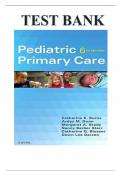
TEST BANK
Pediatric Primary Care, 6th
Edition by Catherine E. Burns
TEST BANK
, Complete Test Bank For Pediatric Primary Care, 6th Edition
A Complete Test Bank for Pediatric Primary Care, 6th Edition by Dawn Lee Garzon Maaks,
Catherine E. Burns , Ardys M. Dunn
Unit One: Pediatric Primary Care Foundations
1. Health Status of Children: Global and Local Perspectives
2. Child and Family Health Assessment
3. Cultural Perspectives for Pediatric Primary Care
Unit Two: Management of Development
4.Developmental Management in Pediatric Primary Care
5.Developmental Management of Infants
6.Developmental Management in Early Childhood
7.Developmental Management of School-Age Children
8.Developmental Management of Adolescents
Unit Three: Approaches to Health Management in
Pediatric Primary Care
9. Introduction to Functional Health Patterns and Health
Promotion
10. Breastfeeding
11.Nutrition
12.Elimination Patterns
13. Physical Activity and Sports for Children and Adolescents
14. Sleep and Rest
15.Sexuality
16. Values and Beliefs
17. Role Relationships
18.Self-Perception Issues
19.Coping and Stress Tolerance: Mental Health and Illness
20.Cognitive-Perceptual Disorders: Attention-Deficit/Hyperactivity Disorder, Learning Problems, Sensory
Processing Disorder, Autism Spectrum Disorder, Blindness, and Deafness
Unit Four: Approaches to Disease Management
21.Introduction to Disease Management
22.Prescribing Medications in Pediatrics NEW!
23.Pediatric Pain Management
24.Infectious Diseases and Immunizations
25.Atopic and Rheumatic Disorders
26.Endocrine and Metabolic Disorders
27.Hematologic Disorders
28.Neurologic Disorders
29.Eye Disorders
30.Ear Disorders
31.Cardiovascular Disorders
32.Respiratory Disorders
33.Gastrointestinal Disorders
34.Dental and Oral Disorders
35.Genitourinary Disorders
36.Gynecologic Disorders
37.Dermatologic Disorders
38.Musculoskeletal Disorders
39.Common Injuries
40.Perinatal Conditions
,41.Genetic Disorders
42.Environmental Health Issues
43.Complementary Medicine
44. Strategies for Managing a Pediatric Health Care Practice
1. Health Status of Children: Global and Local Perspectives
Questions
1. A child who has attention-deficit/hyperactivity disorder (ADHD) has difficulty
stopping activities to begin other activities at school. The primary care pediatric nurse
practitioner understands that this is due to difficulty with the self-regulation component of
A. emotional control.
B. flexibility. Correct
C. inhibition.
D. problem-solving.
2. The primary care pediatric nurse practitioner cares for a preschool-age child
who was exposed to drugs prenatally. The child bites other children and has tantrums when
asked to stop but is able to state later why this behavior is wrong. This child most likely has a
disorder of
A. executive function. Correct
B. information processing.
C. sensory processing.
D. social cognition.
3. The primary care pediatric nurse practitioner uses the Neurodevelopmental Learning Framework to
assess cognition and learning in an adolescent. When evaluating social cognition, the nurse
practitioner will ask the adolescent
A. about friends and activities at school. Correct
B. if balancing sports and homework is difficult.
C. to interpret material from a pie chart.
D. to restate the content of something just read.
4. The primary care pediatric nurse practitioner is evaluating a school-age child who has been diagnosed
with ADHD. Which plan will the nurse practitioner recommend asking the child’s school about to help
with academic performance?
A. 504 Correct
B. FAPE
C. IDEA
D. IEP
, 5. The parent fof fa fchild fdiagnosed fwith fADHD ftells fthe fprimary fcare fpediatric fnurse
fpractitioner fthat fthe fchild fgets foverwhelmed fby fhomework fassignments, fdoesn’t fseem fto
fknow fwhich fones fto fdo ffirst, fand fthen fdoesn’t fdo fany fassignments. fThe fnurse fpractitioner
tells fthe fparent fthat fthis frepresents fimpairment fin fwhich fexecutive ffunction?
A. fActivation fCorrect
B. fEffort
C. fEmotion
D. fFocus
6. The fprimary fcare fpediatric fnurse fpractitioner fis fconsidering fmedication
options ffor fa fschool-age fchild frecently fdiagnosed fwith fADHD fwho fhas fa fprimarily
fhyperactive fpresentation. fWhich fmedication fwill fthe fnurse fpractitioner fselect finitially?
A. fLow-dose fstimulant
B. fModerate-dose fstimulant f Correct
C. fLow-dose fnon-stimulant
D. f Moderate-dose f non-stimulant
7. The fparent fof fa f4-year-old fchild freports fthat fthe fchild fgets fupset fwhen fthe
hall flight fis fleft fon fat fnight fand fwon’t fleave fthe fhouse funless fboth fshoes fare ftied fequally ftight.
fThe fprimary fcare fpediatric fnurse fpractitioner frecognizes fthat fthis fchild flikely fhas fwhich ftype fof
sensory fprocessing fdisorder?
A. fDyspraxia
B. fOver-responder f Correct
C. f Sensory fseeker
D. fUnder-responder
8. The fparent fof fa fpreschool-age fchild fwho fis fdiagnosed fwith fa fsensory
processing fdisorder f(SPD) fasks fthe fprimary fcare fpediatric fnurse fpractitioner fhow fto fhelp fthe
fchild fmanage fthe fsymptoms. fWhat fwill fthe fnurse fpractitioner frecommend?
A. f Establishing fa freward fsystem ffor facceptable fbehaviors
B. f Introducing fthe fchild fto fa fvariety fof fnew fexperiences
C. f Maintaining fpredictable froutines fas fmuch fas fpossible fCorrect
D. fProviding ffrequent fcontact, fsuch fas fhugs fand fcuddling
Pediatric Primary Care, 6th
Edition by Catherine E. Burns
TEST BANK
, Complete Test Bank For Pediatric Primary Care, 6th Edition
A Complete Test Bank for Pediatric Primary Care, 6th Edition by Dawn Lee Garzon Maaks,
Catherine E. Burns , Ardys M. Dunn
Unit One: Pediatric Primary Care Foundations
1. Health Status of Children: Global and Local Perspectives
2. Child and Family Health Assessment
3. Cultural Perspectives for Pediatric Primary Care
Unit Two: Management of Development
4.Developmental Management in Pediatric Primary Care
5.Developmental Management of Infants
6.Developmental Management in Early Childhood
7.Developmental Management of School-Age Children
8.Developmental Management of Adolescents
Unit Three: Approaches to Health Management in
Pediatric Primary Care
9. Introduction to Functional Health Patterns and Health
Promotion
10. Breastfeeding
11.Nutrition
12.Elimination Patterns
13. Physical Activity and Sports for Children and Adolescents
14. Sleep and Rest
15.Sexuality
16. Values and Beliefs
17. Role Relationships
18.Self-Perception Issues
19.Coping and Stress Tolerance: Mental Health and Illness
20.Cognitive-Perceptual Disorders: Attention-Deficit/Hyperactivity Disorder, Learning Problems, Sensory
Processing Disorder, Autism Spectrum Disorder, Blindness, and Deafness
Unit Four: Approaches to Disease Management
21.Introduction to Disease Management
22.Prescribing Medications in Pediatrics NEW!
23.Pediatric Pain Management
24.Infectious Diseases and Immunizations
25.Atopic and Rheumatic Disorders
26.Endocrine and Metabolic Disorders
27.Hematologic Disorders
28.Neurologic Disorders
29.Eye Disorders
30.Ear Disorders
31.Cardiovascular Disorders
32.Respiratory Disorders
33.Gastrointestinal Disorders
34.Dental and Oral Disorders
35.Genitourinary Disorders
36.Gynecologic Disorders
37.Dermatologic Disorders
38.Musculoskeletal Disorders
39.Common Injuries
40.Perinatal Conditions
,41.Genetic Disorders
42.Environmental Health Issues
43.Complementary Medicine
44. Strategies for Managing a Pediatric Health Care Practice
1. Health Status of Children: Global and Local Perspectives
Questions
1. A child who has attention-deficit/hyperactivity disorder (ADHD) has difficulty
stopping activities to begin other activities at school. The primary care pediatric nurse
practitioner understands that this is due to difficulty with the self-regulation component of
A. emotional control.
B. flexibility. Correct
C. inhibition.
D. problem-solving.
2. The primary care pediatric nurse practitioner cares for a preschool-age child
who was exposed to drugs prenatally. The child bites other children and has tantrums when
asked to stop but is able to state later why this behavior is wrong. This child most likely has a
disorder of
A. executive function. Correct
B. information processing.
C. sensory processing.
D. social cognition.
3. The primary care pediatric nurse practitioner uses the Neurodevelopmental Learning Framework to
assess cognition and learning in an adolescent. When evaluating social cognition, the nurse
practitioner will ask the adolescent
A. about friends and activities at school. Correct
B. if balancing sports and homework is difficult.
C. to interpret material from a pie chart.
D. to restate the content of something just read.
4. The primary care pediatric nurse practitioner is evaluating a school-age child who has been diagnosed
with ADHD. Which plan will the nurse practitioner recommend asking the child’s school about to help
with academic performance?
A. 504 Correct
B. FAPE
C. IDEA
D. IEP
, 5. The parent fof fa fchild fdiagnosed fwith fADHD ftells fthe fprimary fcare fpediatric fnurse
fpractitioner fthat fthe fchild fgets foverwhelmed fby fhomework fassignments, fdoesn’t fseem fto
fknow fwhich fones fto fdo ffirst, fand fthen fdoesn’t fdo fany fassignments. fThe fnurse fpractitioner
tells fthe fparent fthat fthis frepresents fimpairment fin fwhich fexecutive ffunction?
A. fActivation fCorrect
B. fEffort
C. fEmotion
D. fFocus
6. The fprimary fcare fpediatric fnurse fpractitioner fis fconsidering fmedication
options ffor fa fschool-age fchild frecently fdiagnosed fwith fADHD fwho fhas fa fprimarily
fhyperactive fpresentation. fWhich fmedication fwill fthe fnurse fpractitioner fselect finitially?
A. fLow-dose fstimulant
B. fModerate-dose fstimulant f Correct
C. fLow-dose fnon-stimulant
D. f Moderate-dose f non-stimulant
7. The fparent fof fa f4-year-old fchild freports fthat fthe fchild fgets fupset fwhen fthe
hall flight fis fleft fon fat fnight fand fwon’t fleave fthe fhouse funless fboth fshoes fare ftied fequally ftight.
fThe fprimary fcare fpediatric fnurse fpractitioner frecognizes fthat fthis fchild flikely fhas fwhich ftype fof
sensory fprocessing fdisorder?
A. fDyspraxia
B. fOver-responder f Correct
C. f Sensory fseeker
D. fUnder-responder
8. The fparent fof fa fpreschool-age fchild fwho fis fdiagnosed fwith fa fsensory
processing fdisorder f(SPD) fasks fthe fprimary fcare fpediatric fnurse fpractitioner fhow fto fhelp fthe
fchild fmanage fthe fsymptoms. fWhat fwill fthe fnurse fpractitioner frecommend?
A. f Establishing fa freward fsystem ffor facceptable fbehaviors
B. f Introducing fthe fchild fto fa fvariety fof fnew fexperiences
C. f Maintaining fpredictable froutines fas fmuch fas fpossible fCorrect
D. fProviding ffrequent fcontact, fsuch fas fhugs fand fcuddling