, PLEASE USE THIS DOCUMENT AS A GUIDE TO ANSWER YOUR ASSIGNMENT
1. Write a coherent and well-constructed essay of approximately 1000-1200 words in which you
analyse the structure, audience, tone and style of the text, to show how the writer’s purpose is
achieved. Support your argument with evidence from the text.
Essay 1
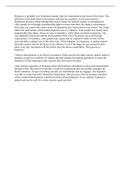
In the discourse surrounding educational reform in South Africa, the promise of a data-driven system
offers a tantalising solution to deep-seated inequalities. However, this technological leap is fraught
with complexities that demand careful navigation. In their insightful article, Mageshree Jantjies and
Pieter Plantinga (2021) explore this transition, arguing not for a blind embrace of technology but for
a measured, ethical, and holistic policy framework. The authors’ purpose is twofold: to inform key
stakeholders about the significant potential and perilous pitfalls of data-driven education, and to
persuade them to adopt a cautious, inclusive, and well-researched approach to its implementation.
This persuasive goal is masterfully achieved through a logical and accessible structure, a carefully
calibrated tone that is both authoritative and balanced, and a formal yet clear style that appeals
directly to its intended audience of policymakers, educators, and innovators.
The article’s structure is meticulously designed to guide the reader through a complex argument,
moving from a broad context to specific challenges and, finally, to actionable recommendations.
This problem-solution framework makes the authors' argument both compelling and easy to follow.
The piece begins by grounding the discussion in the stark reality of South Africa's educational
landscape, highlighting the "significant disparities" and the division of schools into quintiles (Jantjies
& Plantinga, 2021). By immediately establishing this context of inequality, the authors frame the
subsequent discussion of technology not as a luxury, but as a potential tool for social justice—an
attempt to "leapfrog" historical disadvantages. This opening strategically captures the reader's
attention and establishes the high stakes of the debate.
Following this introduction, the article is thematically organised under clear headings: "Technology
impact," "Data management," and "A holistic policy response." This organisational choice is highly
effective. The first two sections methodically deconstruct the utopian promises of educational
technology. Under "Technology impact," the authors temper expectations by citing evidence that
"simply providing technology to teachers or students has a limited effect on educational outcomes"
and flagging uniquely South African concerns like "unequal Internet access" (Jantjies & Plantinga,
2021). The "Data management" section delves deeper, raising critical issues of privacy under the
Protection of Personal Information Act (POPIA), data ownership, and the well-documented danger
of "bias embedded in existing data" (Jantjies & Plantinga, 2021). By systematically outlining these
formidable challenges, the authors build a powerful case for why a simple, technology-first approach
is destined to fail. The structure then pivots in the final section, "A holistic policy response," shifting
from problem-identification to solution-building. This section offers a clear path forward, leveraging
international examples and local resources. This logical progression from problem to solution
ensures the reader does not feel overwhelmed by the challenges but is instead empowered with a
sense of a feasible, structured way forward, thereby powerfully serving the authors' persuasive
purpose.
1. Write a coherent and well-constructed essay of approximately 1000-1200 words in which you
analyse the structure, audience, tone and style of the text, to show how the writer’s purpose is
achieved. Support your argument with evidence from the text.
Essay 1
In the discourse surrounding educational reform in South Africa, the promise of a data-driven system
offers a tantalising solution to deep-seated inequalities. However, this technological leap is fraught
with complexities that demand careful navigation. In their insightful article, Mageshree Jantjies and
Pieter Plantinga (2021) explore this transition, arguing not for a blind embrace of technology but for
a measured, ethical, and holistic policy framework. The authors’ purpose is twofold: to inform key
stakeholders about the significant potential and perilous pitfalls of data-driven education, and to
persuade them to adopt a cautious, inclusive, and well-researched approach to its implementation.
This persuasive goal is masterfully achieved through a logical and accessible structure, a carefully
calibrated tone that is both authoritative and balanced, and a formal yet clear style that appeals
directly to its intended audience of policymakers, educators, and innovators.
The article’s structure is meticulously designed to guide the reader through a complex argument,
moving from a broad context to specific challenges and, finally, to actionable recommendations.
This problem-solution framework makes the authors' argument both compelling and easy to follow.
The piece begins by grounding the discussion in the stark reality of South Africa's educational
landscape, highlighting the "significant disparities" and the division of schools into quintiles (Jantjies
& Plantinga, 2021). By immediately establishing this context of inequality, the authors frame the
subsequent discussion of technology not as a luxury, but as a potential tool for social justice—an
attempt to "leapfrog" historical disadvantages. This opening strategically captures the reader's
attention and establishes the high stakes of the debate.
Following this introduction, the article is thematically organised under clear headings: "Technology
impact," "Data management," and "A holistic policy response." This organisational choice is highly
effective. The first two sections methodically deconstruct the utopian promises of educational
technology. Under "Technology impact," the authors temper expectations by citing evidence that
"simply providing technology to teachers or students has a limited effect on educational outcomes"
and flagging uniquely South African concerns like "unequal Internet access" (Jantjies & Plantinga,
2021). The "Data management" section delves deeper, raising critical issues of privacy under the
Protection of Personal Information Act (POPIA), data ownership, and the well-documented danger
of "bias embedded in existing data" (Jantjies & Plantinga, 2021). By systematically outlining these
formidable challenges, the authors build a powerful case for why a simple, technology-first approach
is destined to fail. The structure then pivots in the final section, "A holistic policy response," shifting
from problem-identification to solution-building. This section offers a clear path forward, leveraging
international examples and local resources. This logical progression from problem to solution
ensures the reader does not feel overwhelmed by the challenges but is instead empowered with a
sense of a feasible, structured way forward, thereby powerfully serving the authors' persuasive
purpose.