lOMoARcPSD|
w
th
Test Bank: Physical Examination & Health Assessment 7
w w w w w w w 1
Edition
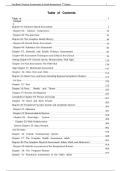
Table of Contents w w
Table of w 1
Content
w
s
Chapter 01: Evidence-Based Assessment
w w w 2
w Chapter 02: Cultural Competence
w 15
Chapter 03: The Interview
w w w w 31
Chapter 04: The Complete Health History
w w w w w 49
w Chapter 05: Mental Status Assessment
w w w w 64
w Chapter 06: Substance Use Assessment
w w w w
81
Chapter 07: Domestic and Family Violence Assessments
w w w w w w
87
w Chapter 08: Assessment Techniques and Safety in the Clinical
w w w w w w w w
93
w Setting Chapter 09: General Survey, Measurement, Vital Signs
w w w w w w w
112
w Chapter 10: Pain Assessment: The Fifth Vital
w w w w w w
134
Sign Chapter 11: Nutritional Assessment
w w w w
142
w Chapter 12: Skin, Hair, and Nails
w w w w w
156
Chapter 13: Head, Face, and Neck, Including Regional Lymphatics Chapter
w w w w w w w w w
177
w 14: Eyes w
195
Chapter 15: Ears
212
w w
Chapter 16: Nose, Mouth, and Throat
229
w w
Chapter 17: Breasts and Regional
247
w w w w w
Lymphatics Chapter 18: Thorax and Lungs
267
w w w w w w
w Chapter 19: Heart and Neck Vessels
w w w w w
285
Chapter 20: Peripheral Vascular System and Lymphatic System
w w w w w w w
304
w Chapter 21: Abdomen w w
321
Chapter 22: Musculoskeletal System
w w w
338
w Chapter 23: Neurologic w System
359
Chapter 24: Male Genitourinary
w w w w
384
w System Chapter 25: Anus, Rectum,
w w w w
402
and Prostate w
416
Chapter 26: Female Genitourinary System
w w w w
438
Chapter 27: The Complete Health Assessment: Adult
w w w w w w
451
Chapter 28: The Complete Physical Assessment: Infant, Child, and Adolescent
w w w w w w w w w
454
w Chapter 29: Bedside Assessment of the Hospitalized Patient
w w w w w w w
460
Chapter 30: The Pregnant Woman
w w w w
473
Chapter 31: Functional Assessment of the Older Adult
w w w w w w w
, lOMoARcPSD|
w
th
Test Bank: Physical Examination & Health Assessment 7
w w w w w w w 2
Edition
Chapter 01: Evidence-Based Assessment w w w
MULTIPLE CHOICE w
1. After completing an initial assessment of a patient, the nurse has charted that his respirations are
w w w w w w w w w w w w w w w
weupneic and his pulse is 58 beats per
w minute. These types of data would be:
w w w w w w w w w w w w w w
a. Objective.
b. Reflective.
c. Subjective.
d. Introspective.
ANS: A w
Objective data are what the health professional observes by inspecting, percussing, palpating, and
w w w w w w w w w w w w
auscultating during the physical examination. Subjective data is what the person says about him or herself
w w w w w w w w w w w w w w w w
during history taking.
w The terms
w reflective and introspective
w are not used to describe
w w w w w w w w w w w w w w w w
w data.
w
DIF: Cognitive Level: Understanding (Comprehension) REF:
w w w w w w p. 2w
MSC: Client Needs: Safe and Effective Care Environment: Management
w w w w w w w w w of Care w
2. A patient tells the nurse that he is very nervous, is nauseated, and feels hot. These types of
w w w w w w w w w w w w w w w w w
data would be:
w w w
a. Objective.
b. Reflective.
c. Subjective.
d. Introspective.
ANS: C w
Subjective data are what the person says about him or herself during history taking. Objective data
w w w w w w w w w w w w w w w
are what the health professional observes by inspecting, percussing, palpating, and
w w w w w w w w w w w w w w w w w w w
auscultating during the physical examination. The terms reflective and introspective
w w w w w w w w w w w w w w w w
are not used to describe
w w w w w w w w
data.
DIF: Cognitive Level: Understanding (Comprehension) REF:
w w w w w w p. 2w
MSC: Client Needs: Safe and Effective Care Environment: Management
w w w w w w w w w of Care w
3. The patients record, laboratory studies, objective data, and subjective
w w w w w w w w w data combine to form the:
w w w w
a. Data base. w
b. Admitting data. w
, lOMoARcPSD|
w
th
Test Bank: Physical Examination & Health Assessment 7
w w w w w w w 3
Edition
c. Financial statement. w
d. Discharge summary. w
ANS: A w
Together with the patients record and laboratory studies, the objective and subjective data form the
w w w w w w w w w w w w w w
data base. The other items are not part of the patients record, laboratory
w w w w w w w w w w w w w w w
wstudies, or data. w w
DIF: Cognitive
w w Level: Remembering (Knowledge) REF: p. 2
w w w w w
MSC: Client Needs: Safe and Effective Care Environment: Management
w w w w w w w w w of Care w
4. When listening to a patients breath sounds, the nurse is unsure of a sound that is heard.
w w w w w w w w w w w w w w w w
wThe nurses next action should be to:
w w w w w w
a. Immediately notify the patients physician. w w w w
b. Document the sound exactly as it was heard. w w w w w w w
c. Validate the data by asking a coworker to listen to the breath sounds.
w w w w w w w w w w w w
d. Assess again in 20 minutes to note whether the sound is still present.
w w w w w w w w w w w w
ANS: C w
When unsure of a sound heard while listening to a patients breath sounds, the nurse validates
w w w w w w w w w w w w w w w
the data to ensure accuracy. If the nurse has less experience in an area, then he
w w w w w w w w w w w w w w w w
wor she asks an expert to listen.
w w w w w w
DIF: Cognitive Level: Analyzing (Analysis) REF: p. 2
w w w w w w w
MSC: Client Needs: Safe and Effective Care Environment: Management
w w w w w w w w w of Care w
5. The nurse is conducting a class for new graduate nurses. During the teaching session,
w w w w w w w w w w w w w
w the nurse should keep in mind that novice nurses, without a background of skills and
w w w w w w w w w w w w w w
wexperience from which to draw, are more likely to make their decisions using:
w w w w w w w w w w w w
a. Intuition.
b. A set of rules.
w w w
c. Articles in journals. w w
d. Advice from supervisors. w w
ANS: B w
Novice nurses operate from a set of defined, structured rules. The expert practitioner uses intuitive
w w w w w w w w w w w w w w
w links. DIF: w w w Cognitive w w Level: w w Understanding w w (Comprehension) w w REF: w w p. w w 3
, lOMoARcPSD|
w
th
Test Bank: Physical Examination & Health Assessment 7
w w w w w w w 4
Edition
MSC: Client Needs: General
w w w
6. Expert nurses learn to attend to a pattern of assessment data and act without consciously
w w w w w w w w w w w w w w
labeling it. These responses are referred to as:
w w w w w w w w
a. Intuition.
b. The nursing process.w w
c. Clinical knowledge. w
d. Diagnostic reasoning. w
ANS: A w
Intuition is characterized by pattern recognitionexpert nurses learn to attend to a pattern of assessment
w w w w w w w w w w w w w w
wdata and act without consciously labeling
w w it. The other options
w are not correct.
w w w w w w w w w w w w w w w w w
DIF: Cognitive Level: Understanding (Comprehension) REF:
w w w w w
w p. 4 MSC: Client Needs: General
w w w w w
7. The nurse is reviewing information about evidence-based practice (EBP). Which statement
w w w w w w w w w w
best reflects EBP?
w w w
a. EBP relies on tradition for support of best practices.
w w w w w w w w
b. EBP is simply the use of best practice techniques for the treatment of patients.
w w w w w w w w w w w w w
c. EBP emphasizes the use of best evidence with the clinicians experience.
w w w w w w w w w w
d. The patients own preferences are not important with EBP.
w w w w w w w w
ANS: w C
EBP is a systematic approach to practice that emphasizes the use of best evidence in combination
w w w w w w w w w w w w w w w
with the clinicians experience, as well as patient preferences and values, when
w w w w w w w w w w w w w
wmaking decisions about care and treatment. EBP is more than simply using the
w w w w w w w w w w w w w
wbest practice techniques to treat patients, and questioning tradition is important
w w w w w w w w w w w w w w
when no compelling and supportive research evidence exists.
w w w w w w w w w w w
DIF: Cognitive Level: Applying (Application) REF: p. 5
w w w w w w w
MSC: Client Needs: Safe and Effective Care Environment: Management
w w w w w w w w w of Care w
8. The nurse is conducting a class on priority setting for a group of new graduate nurses.
w w w w w w w w w w w w w w w
wWhich is an example of a first-level priority problem?
w w w w w w w w
a. Patient with postoperative pain w w w
b. Newly diagnosed patient with diabetes who needs diabetic teaching
w w w w w w w w
w
th
Test Bank: Physical Examination & Health Assessment 7
w w w w w w w 1
Edition
Table of Contents w w
Table of w 1
Content
w
s
Chapter 01: Evidence-Based Assessment
w w w 2
w Chapter 02: Cultural Competence
w 15
Chapter 03: The Interview
w w w w 31
Chapter 04: The Complete Health History
w w w w w 49
w Chapter 05: Mental Status Assessment
w w w w 64
w Chapter 06: Substance Use Assessment
w w w w
81
Chapter 07: Domestic and Family Violence Assessments
w w w w w w
87
w Chapter 08: Assessment Techniques and Safety in the Clinical
w w w w w w w w
93
w Setting Chapter 09: General Survey, Measurement, Vital Signs
w w w w w w w
112
w Chapter 10: Pain Assessment: The Fifth Vital
w w w w w w
134
Sign Chapter 11: Nutritional Assessment
w w w w
142
w Chapter 12: Skin, Hair, and Nails
w w w w w
156
Chapter 13: Head, Face, and Neck, Including Regional Lymphatics Chapter
w w w w w w w w w
177
w 14: Eyes w
195
Chapter 15: Ears
212
w w
Chapter 16: Nose, Mouth, and Throat
229
w w
Chapter 17: Breasts and Regional
247
w w w w w
Lymphatics Chapter 18: Thorax and Lungs
267
w w w w w w
w Chapter 19: Heart and Neck Vessels
w w w w w
285
Chapter 20: Peripheral Vascular System and Lymphatic System
w w w w w w w
304
w Chapter 21: Abdomen w w
321
Chapter 22: Musculoskeletal System
w w w
338
w Chapter 23: Neurologic w System
359
Chapter 24: Male Genitourinary
w w w w
384
w System Chapter 25: Anus, Rectum,
w w w w
402
and Prostate w
416
Chapter 26: Female Genitourinary System
w w w w
438
Chapter 27: The Complete Health Assessment: Adult
w w w w w w
451
Chapter 28: The Complete Physical Assessment: Infant, Child, and Adolescent
w w w w w w w w w
454
w Chapter 29: Bedside Assessment of the Hospitalized Patient
w w w w w w w
460
Chapter 30: The Pregnant Woman
w w w w
473
Chapter 31: Functional Assessment of the Older Adult
w w w w w w w
, lOMoARcPSD|
w
th
Test Bank: Physical Examination & Health Assessment 7
w w w w w w w 2
Edition
Chapter 01: Evidence-Based Assessment w w w
MULTIPLE CHOICE w
1. After completing an initial assessment of a patient, the nurse has charted that his respirations are
w w w w w w w w w w w w w w w
weupneic and his pulse is 58 beats per
w minute. These types of data would be:
w w w w w w w w w w w w w w
a. Objective.
b. Reflective.
c. Subjective.
d. Introspective.
ANS: A w
Objective data are what the health professional observes by inspecting, percussing, palpating, and
w w w w w w w w w w w w
auscultating during the physical examination. Subjective data is what the person says about him or herself
w w w w w w w w w w w w w w w w
during history taking.
w The terms
w reflective and introspective
w are not used to describe
w w w w w w w w w w w w w w w w
w data.
w
DIF: Cognitive Level: Understanding (Comprehension) REF:
w w w w w w p. 2w
MSC: Client Needs: Safe and Effective Care Environment: Management
w w w w w w w w w of Care w
2. A patient tells the nurse that he is very nervous, is nauseated, and feels hot. These types of
w w w w w w w w w w w w w w w w w
data would be:
w w w
a. Objective.
b. Reflective.
c. Subjective.
d. Introspective.
ANS: C w
Subjective data are what the person says about him or herself during history taking. Objective data
w w w w w w w w w w w w w w w
are what the health professional observes by inspecting, percussing, palpating, and
w w w w w w w w w w w w w w w w w w w
auscultating during the physical examination. The terms reflective and introspective
w w w w w w w w w w w w w w w w
are not used to describe
w w w w w w w w
data.
DIF: Cognitive Level: Understanding (Comprehension) REF:
w w w w w w p. 2w
MSC: Client Needs: Safe and Effective Care Environment: Management
w w w w w w w w w of Care w
3. The patients record, laboratory studies, objective data, and subjective
w w w w w w w w w data combine to form the:
w w w w
a. Data base. w
b. Admitting data. w
, lOMoARcPSD|
w
th
Test Bank: Physical Examination & Health Assessment 7
w w w w w w w 3
Edition
c. Financial statement. w
d. Discharge summary. w
ANS: A w
Together with the patients record and laboratory studies, the objective and subjective data form the
w w w w w w w w w w w w w w
data base. The other items are not part of the patients record, laboratory
w w w w w w w w w w w w w w w
wstudies, or data. w w
DIF: Cognitive
w w Level: Remembering (Knowledge) REF: p. 2
w w w w w
MSC: Client Needs: Safe and Effective Care Environment: Management
w w w w w w w w w of Care w
4. When listening to a patients breath sounds, the nurse is unsure of a sound that is heard.
w w w w w w w w w w w w w w w w
wThe nurses next action should be to:
w w w w w w
a. Immediately notify the patients physician. w w w w
b. Document the sound exactly as it was heard. w w w w w w w
c. Validate the data by asking a coworker to listen to the breath sounds.
w w w w w w w w w w w w
d. Assess again in 20 minutes to note whether the sound is still present.
w w w w w w w w w w w w
ANS: C w
When unsure of a sound heard while listening to a patients breath sounds, the nurse validates
w w w w w w w w w w w w w w w
the data to ensure accuracy. If the nurse has less experience in an area, then he
w w w w w w w w w w w w w w w w
wor she asks an expert to listen.
w w w w w w
DIF: Cognitive Level: Analyzing (Analysis) REF: p. 2
w w w w w w w
MSC: Client Needs: Safe and Effective Care Environment: Management
w w w w w w w w w of Care w
5. The nurse is conducting a class for new graduate nurses. During the teaching session,
w w w w w w w w w w w w w
w the nurse should keep in mind that novice nurses, without a background of skills and
w w w w w w w w w w w w w w
wexperience from which to draw, are more likely to make their decisions using:
w w w w w w w w w w w w
a. Intuition.
b. A set of rules.
w w w
c. Articles in journals. w w
d. Advice from supervisors. w w
ANS: B w
Novice nurses operate from a set of defined, structured rules. The expert practitioner uses intuitive
w w w w w w w w w w w w w w
w links. DIF: w w w Cognitive w w Level: w w Understanding w w (Comprehension) w w REF: w w p. w w 3
, lOMoARcPSD|
w
th
Test Bank: Physical Examination & Health Assessment 7
w w w w w w w 4
Edition
MSC: Client Needs: General
w w w
6. Expert nurses learn to attend to a pattern of assessment data and act without consciously
w w w w w w w w w w w w w w
labeling it. These responses are referred to as:
w w w w w w w w
a. Intuition.
b. The nursing process.w w
c. Clinical knowledge. w
d. Diagnostic reasoning. w
ANS: A w
Intuition is characterized by pattern recognitionexpert nurses learn to attend to a pattern of assessment
w w w w w w w w w w w w w w
wdata and act without consciously labeling
w w it. The other options
w are not correct.
w w w w w w w w w w w w w w w w w
DIF: Cognitive Level: Understanding (Comprehension) REF:
w w w w w
w p. 4 MSC: Client Needs: General
w w w w w
7. The nurse is reviewing information about evidence-based practice (EBP). Which statement
w w w w w w w w w w
best reflects EBP?
w w w
a. EBP relies on tradition for support of best practices.
w w w w w w w w
b. EBP is simply the use of best practice techniques for the treatment of patients.
w w w w w w w w w w w w w
c. EBP emphasizes the use of best evidence with the clinicians experience.
w w w w w w w w w w
d. The patients own preferences are not important with EBP.
w w w w w w w w
ANS: w C
EBP is a systematic approach to practice that emphasizes the use of best evidence in combination
w w w w w w w w w w w w w w w
with the clinicians experience, as well as patient preferences and values, when
w w w w w w w w w w w w w
wmaking decisions about care and treatment. EBP is more than simply using the
w w w w w w w w w w w w w
wbest practice techniques to treat patients, and questioning tradition is important
w w w w w w w w w w w w w w
when no compelling and supportive research evidence exists.
w w w w w w w w w w w
DIF: Cognitive Level: Applying (Application) REF: p. 5
w w w w w w w
MSC: Client Needs: Safe and Effective Care Environment: Management
w w w w w w w w w of Care w
8. The nurse is conducting a class on priority setting for a group of new graduate nurses.
w w w w w w w w w w w w w w w
wWhich is an example of a first-level priority problem?
w w w w w w w w
a. Patient with postoperative pain w w w
b. Newly diagnosed patient with diabetes who needs diabetic teaching
w w w w w w w w