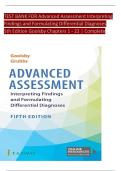
TESTBANKFORAdvancedAssessmentInterpreting
b b b b b
FindingsandFormulatingDifferentialDiagnoses
mb b b b b
4thEditionGoolsbyChapters1-22|Complete
mb b b b b b b b b
, TABLEOFCONTENTS
➢ Chapter1.AssessmentandClinicalDecisionMaking:AnOverview
m b b b b
➢ Chapter2.GenomicAssessment:InterpretingFindingsandFormulating DifferentialDiagnoses
m m m m m bm m
➢ Chapter 3.Skin
m
➢ Chapters4.Head,Face,andNeck b
➢ Chapter5.TheEye
m
➢ Chapters6.Ear,Nose,Mouth,andThroat b
➢ Chapter 7.CardiacandPeripheralVascularsSystems
m
➢ Chapter8.RespiratorySystem
m m
➢ Chapter9.Breasts
m m
➢ Chapter10.Abdomen
➢ Chapter 11.GenitourinarySystem
m m m
➢ Chapter 12.MaleReproductiveSystem
m m
➢ Chapter13.FemaleReproductiveSystem
m m m
➢ Chapter14.MusculoskeletalSystem
➢ Chapter 15.NeurologicalSystem
m m m
➢ Chapter16.NonspecificComplaints
m m
➢ Chapter17.PsychiatricMentalHealth
m m m
➢ Chapter18.PediatricPatients
➢ Chapter19.PregnantPatients
m m
➢ Chapters20.AssessmentoftheTransgenderorGenderDiverseAdult
b b b
➢ Chapter 21.OlderPatients
m
➢ Chapters22.PersonsWithDisabilities
b b
, ➢ Chapter1.AssessmentandClinicalDecisionMaking:AnOverview b b
MultipleChoice
m
Identifythe choicethat bestcompletesthe statementoranswers thequestion.
m m m m m m
1. Whichtypeofclinicaldecision-making ismostreliable?
b b m b
A. Intuitive
B. Analytical
C. Experiential
D. Augenblick
2. Whichofthefollowingisfalse?Too btainadequatehistory,health-careprovidersmustbe:
b b b b b b
A. Methodicalandsystematic b b
B. Attentivetothepatient‘sverbal andsnonverbal language m m b
C. Abletoaccurately interpretthespatient‘sresponses m m
D. Adeptatreadingintosthepatient‘sstatements
m m
3. Essential partsofa healthhistory include all of thefollowing except: b bm m m m m m
A. Chief complaint m
B. Historyofthepresentillness
C. Currentvitalsigns
D. Alloftheabove areessentialhistorycomponents
b b m
4. Whichofthefollowingisfalse?Whileperformingthesphysical examination,the examinermustbeableto:
b b b b m b
A. Differentiatebetweennormalandabnormalfindings b
B. Recallknowledgeofasrange of conditionsand their associated signsandsymptoms m m b m m m m m
C. Recognizehowcertainconditionsaffecttheresponsetoothersconditions b b
D. Foreseeunpredictable findings m
5. Thefollowing istheleastreliablesourceofinformationfordiagnosticstatistics:
b m b
A. Evidence-based investigations b m
B. Primaryreportssof research m
C. Estimationbasedonaprovider‘sexperience b b b b b
D. Publishedsmeta-analyses
6. Thefollowing canbeusedtoassistinsound clinicaldecision-making:
b m b b b b
A. Algorithmpublishedinapeer-reviewedjournalarticle b b b b
B. Clinicalpracticeguidelines
C. Evidence-based research b m
D. Allof theabove
m
7. Ifa diagnosticstudyhashighsensitivity,thisindicatesa:
b m m b
A. Highpercentageofpersons withthegiven condition willhaveanabnormalresult
b b m b b b
B. Lowpercentageof personswiththegivenconditionwillhaveanabnormalresult m b b b b b
C. Lowlikelihoodofnormalresultinpersonswithoutagivencondition b b b b
D. Noneof theabove m b
8. Ifadiagnosticstudyhashighsspecificity,thisindicatesa:
b b b m
A. Lowpercentageofhealthyindividualswillshowanormalresult b b
B. Highpercentageof healthy individualswillshowanormalresult
b m m b b
C. High percentageofindividuals withadisorderwillshowa normalresult
m b b b b m
D. Lowpercentage ofindividualswithadisorder willshowanabnormalresult m b b m
9. Alikelihoodratioabove1indicatesthatasdiagnostictestshowinga: b b b b
A. Positiveresultisstronglysassociated withsthedisease
m m m
B. Negative resultisstrongly associatedwithabsenceof thedisease
m m m m m m m m
C. Positiveresultisweaklyassociatedwiththedisease
b b b
D. Negativesresultisweaklyassociated withabsence ofthedisease m m m m b
, 10. Whichofthefollowingclinicalreasoningtoolsisdefinedasevidence-basedresourcebasedonmathematicalmodelingto
b b b b b b b b b m
expressthe likelihoodofaconditionin select situations,settings,and/or patients?
m m b m m
b b b b b
FindingsandFormulatingDifferentialDiagnoses
mb b b b b
4thEditionGoolsbyChapters1-22|Complete
mb b b b b b b b b
, TABLEOFCONTENTS
➢ Chapter1.AssessmentandClinicalDecisionMaking:AnOverview
m b b b b
➢ Chapter2.GenomicAssessment:InterpretingFindingsandFormulating DifferentialDiagnoses
m m m m m bm m
➢ Chapter 3.Skin
m
➢ Chapters4.Head,Face,andNeck b
➢ Chapter5.TheEye
m
➢ Chapters6.Ear,Nose,Mouth,andThroat b
➢ Chapter 7.CardiacandPeripheralVascularsSystems
m
➢ Chapter8.RespiratorySystem
m m
➢ Chapter9.Breasts
m m
➢ Chapter10.Abdomen
➢ Chapter 11.GenitourinarySystem
m m m
➢ Chapter 12.MaleReproductiveSystem
m m
➢ Chapter13.FemaleReproductiveSystem
m m m
➢ Chapter14.MusculoskeletalSystem
➢ Chapter 15.NeurologicalSystem
m m m
➢ Chapter16.NonspecificComplaints
m m
➢ Chapter17.PsychiatricMentalHealth
m m m
➢ Chapter18.PediatricPatients
➢ Chapter19.PregnantPatients
m m
➢ Chapters20.AssessmentoftheTransgenderorGenderDiverseAdult
b b b
➢ Chapter 21.OlderPatients
m
➢ Chapters22.PersonsWithDisabilities
b b
, ➢ Chapter1.AssessmentandClinicalDecisionMaking:AnOverview b b
MultipleChoice
m
Identifythe choicethat bestcompletesthe statementoranswers thequestion.
m m m m m m
1. Whichtypeofclinicaldecision-making ismostreliable?
b b m b
A. Intuitive
B. Analytical
C. Experiential
D. Augenblick
2. Whichofthefollowingisfalse?Too btainadequatehistory,health-careprovidersmustbe:
b b b b b b
A. Methodicalandsystematic b b
B. Attentivetothepatient‘sverbal andsnonverbal language m m b
C. Abletoaccurately interpretthespatient‘sresponses m m
D. Adeptatreadingintosthepatient‘sstatements
m m
3. Essential partsofa healthhistory include all of thefollowing except: b bm m m m m m
A. Chief complaint m
B. Historyofthepresentillness
C. Currentvitalsigns
D. Alloftheabove areessentialhistorycomponents
b b m
4. Whichofthefollowingisfalse?Whileperformingthesphysical examination,the examinermustbeableto:
b b b b m b
A. Differentiatebetweennormalandabnormalfindings b
B. Recallknowledgeofasrange of conditionsand their associated signsandsymptoms m m b m m m m m
C. Recognizehowcertainconditionsaffecttheresponsetoothersconditions b b
D. Foreseeunpredictable findings m
5. Thefollowing istheleastreliablesourceofinformationfordiagnosticstatistics:
b m b
A. Evidence-based investigations b m
B. Primaryreportssof research m
C. Estimationbasedonaprovider‘sexperience b b b b b
D. Publishedsmeta-analyses
6. Thefollowing canbeusedtoassistinsound clinicaldecision-making:
b m b b b b
A. Algorithmpublishedinapeer-reviewedjournalarticle b b b b
B. Clinicalpracticeguidelines
C. Evidence-based research b m
D. Allof theabove
m
7. Ifa diagnosticstudyhashighsensitivity,thisindicatesa:
b m m b
A. Highpercentageofpersons withthegiven condition willhaveanabnormalresult
b b m b b b
B. Lowpercentageof personswiththegivenconditionwillhaveanabnormalresult m b b b b b
C. Lowlikelihoodofnormalresultinpersonswithoutagivencondition b b b b
D. Noneof theabove m b
8. Ifadiagnosticstudyhashighsspecificity,thisindicatesa:
b b b m
A. Lowpercentageofhealthyindividualswillshowanormalresult b b
B. Highpercentageof healthy individualswillshowanormalresult
b m m b b
C. High percentageofindividuals withadisorderwillshowa normalresult
m b b b b m
D. Lowpercentage ofindividualswithadisorder willshowanabnormalresult m b b m
9. Alikelihoodratioabove1indicatesthatasdiagnostictestshowinga: b b b b
A. Positiveresultisstronglysassociated withsthedisease
m m m
B. Negative resultisstrongly associatedwithabsenceof thedisease
m m m m m m m m
C. Positiveresultisweaklyassociatedwiththedisease
b b b
D. Negativesresultisweaklyassociated withabsence ofthedisease m m m m b
, 10. Whichofthefollowingclinicalreasoningtoolsisdefinedasevidence-basedresourcebasedonmathematicalmodelingto
b b b b b b b b b m
expressthe likelihoodofaconditionin select situations,settings,and/or patients?
m m b m m