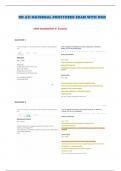
TEST BANK for Organic Chemistry 6th Edition
Smith / All Chapters 1 - 29 / Full Complete
Page 1
,Chapter 1 Structure and Bonding
Chapter 2 Acids and Bases
Chapter 3 Introduction to Organic Molecules and Functional Groups
Chapter 4 Alkanes
Chapter 5 Stereochemistry
Chapter 6 Understanding Organic Reactions
Chapter 7 Alkyl Halides and Nucleophilic Substitution
Chapter 8 Alkyl Halides and Elimination Reactions
Chapter 9 Alcohols, Ethers, and Related Compounds
Chapter 10 Alkenes and Addition Reactions
Chapter 11 Alkynes and Synthesis
Chapter 12 Oxidation and Reduction
Spectroscopy A Mass Spectrometry
Spectroscopy B Infrared Spectroscopy
Spectroscopy C Nuclear Magnetic Resonance Spectroscopy
Chapter 13 Radical Reactions
Chapter 14 Conjugation, Resonance, and Dienes
Chapter 15 Benzene and Aromatic Compounds
Chapter 16 Reactions of Aromatic Compounds
Chapter 17 Introduction to Carbonyl Chemistry: Organometallic Reagents;
Oxidation and Reduction
Chapter 18 Aldehydes and Ketones—Nucleophilic Addition
Chapter 19 Carboxylic Acids and Nitriles
Chapter 20 Carboxylic Acids and Their Derivatives- Nucleophilic Acyl
Substitution
Chapter 21 Substitution Reactions of Carbonyl Compounds at the α-Carbon
Chapter 22 Carbonyl Condensation Reactions
Chapter 23 Amines
Chapter 24 Carbon-Carbon Bond-Forming Reactions in Organic Synthesis
Chapter 25 Pericyclic Reactions
Chapter 26 Carbohydrates
Chapter 27 Amino Acids and Proteins
Chapter 28 Synthetic Polymers
Chapter 29 Lipids (Available online)
Page 2
, Chapter 1: Structure and Bonding
1. What is the ground-state electronic configuration of a carbon atom?
A) 1s2, 2s2, 2p5 B) 1s2, 2s2, 2p2 C) 1s2, 2s2, 2p6 D) 1s2, 2s2, 2p4
2. What is the ground-state electronic configuration of a fluorine atom?
A) 1s2, 2s2, 2p2 B) 1s2, 2s2, 2p3 C) 1s2, 2s2, 2p4 D) 1s2, 2s2, 2p5
3. What is the ground-state electronic configuration of a magnesium cation (Mg2+)?
A) 1s2, 2s2, 2p6 C) 1s2, 2s2, 2p6, 3s2
B) 1s2, 2s2, 2p6, 3s1 D) 1s2, 2s2, 2p6, 3s2, 3p2
4. What is the ground-state electronic configuration of a chlorine anion (Cl—)?
A) 1s2, 2s2, 2p6 C) 1s2, 2s2, 2p6, 3s2, 3p5
B) 1s2, 2s2, 2p6, 3s2, 3p6 D) 1s2, 2s2, 2p6, 3s2, 3p4
5. Which of the following statements about valence electrons is true?
A) They are the most tightly held electrons.
B) They do not participate in chemical reactions.
Page 3
, Chapter 1: Structure and Bonding
C) They aare athe aoutermost aelectrons.
D) They areveal athe aperiod anumber aof aa asecond-row aelement.
6. Which aof athe afollowing astatements aabout abonding ais atrue?
A) Covalent abonds aresult afrom athe atransfer aof aelectrons afrom aone aelement ato
aanother.
B) Ionic abonds aresult afrom athe atransfer aof aelectrons afrom aa ametal ato aa anon-metal.
C) Ionic abonds aresult afrom athe asharing aof aelectrons abetween atwo anon-metals.
D) Covalent abonds aresult afrom athe asharing aof aelectrons abetween atwo ametals.
7. Which aof athe afollowing awould ayou aexpect ato ahave aionic abonds?
A) CO B) a FBr C) a NF3 D) a NaCl
8. Which aof athe afollowing amolecules ahas anonpolar acovalent abonds?
A) HCl B) a N2 C) a CHCl3 D) a NO
9. Which aof athe afollowing amolecules acontain aboth acovalent aand aionic abonds?
A) I, aII B) a I, aIV C) a II, aIII D) aII, aIV
10. Arrange athe afollowing abonds ain adecreasing aorder aof aionic acharacter, aputting athe
amostaionic afirst.
A) I a> aII a> aIII a> aIV C) IV a> aIII a> aII a> aI
B) IV a> aII a> aI a> aIII D) IV a> aII a> aIII a> aI
11. Which aof athe afollowing astatements acorrectly adescribes athe atypical anumber aof
abonds aforacarbon, anitrogen, aand aoxygen ain amost aneutral aorganic amolecules?
A) Carbon aforms a4 acovalent abonds, anitrogen aforms a2 acovalent abonds aand aoxygen
aformsa3 acovalent abonds.
B) Carbon aforms a4 acovalent abonds, anitrogen aforms a3 acovalent abonds aand aoxygen
aformsa2 acovalent abonds.
Page 4
Smith / All Chapters 1 - 29 / Full Complete
Page 1
,Chapter 1 Structure and Bonding
Chapter 2 Acids and Bases
Chapter 3 Introduction to Organic Molecules and Functional Groups
Chapter 4 Alkanes
Chapter 5 Stereochemistry
Chapter 6 Understanding Organic Reactions
Chapter 7 Alkyl Halides and Nucleophilic Substitution
Chapter 8 Alkyl Halides and Elimination Reactions
Chapter 9 Alcohols, Ethers, and Related Compounds
Chapter 10 Alkenes and Addition Reactions
Chapter 11 Alkynes and Synthesis
Chapter 12 Oxidation and Reduction
Spectroscopy A Mass Spectrometry
Spectroscopy B Infrared Spectroscopy
Spectroscopy C Nuclear Magnetic Resonance Spectroscopy
Chapter 13 Radical Reactions
Chapter 14 Conjugation, Resonance, and Dienes
Chapter 15 Benzene and Aromatic Compounds
Chapter 16 Reactions of Aromatic Compounds
Chapter 17 Introduction to Carbonyl Chemistry: Organometallic Reagents;
Oxidation and Reduction
Chapter 18 Aldehydes and Ketones—Nucleophilic Addition
Chapter 19 Carboxylic Acids and Nitriles
Chapter 20 Carboxylic Acids and Their Derivatives- Nucleophilic Acyl
Substitution
Chapter 21 Substitution Reactions of Carbonyl Compounds at the α-Carbon
Chapter 22 Carbonyl Condensation Reactions
Chapter 23 Amines
Chapter 24 Carbon-Carbon Bond-Forming Reactions in Organic Synthesis
Chapter 25 Pericyclic Reactions
Chapter 26 Carbohydrates
Chapter 27 Amino Acids and Proteins
Chapter 28 Synthetic Polymers
Chapter 29 Lipids (Available online)
Page 2
, Chapter 1: Structure and Bonding
1. What is the ground-state electronic configuration of a carbon atom?
A) 1s2, 2s2, 2p5 B) 1s2, 2s2, 2p2 C) 1s2, 2s2, 2p6 D) 1s2, 2s2, 2p4
2. What is the ground-state electronic configuration of a fluorine atom?
A) 1s2, 2s2, 2p2 B) 1s2, 2s2, 2p3 C) 1s2, 2s2, 2p4 D) 1s2, 2s2, 2p5
3. What is the ground-state electronic configuration of a magnesium cation (Mg2+)?
A) 1s2, 2s2, 2p6 C) 1s2, 2s2, 2p6, 3s2
B) 1s2, 2s2, 2p6, 3s1 D) 1s2, 2s2, 2p6, 3s2, 3p2
4. What is the ground-state electronic configuration of a chlorine anion (Cl—)?
A) 1s2, 2s2, 2p6 C) 1s2, 2s2, 2p6, 3s2, 3p5
B) 1s2, 2s2, 2p6, 3s2, 3p6 D) 1s2, 2s2, 2p6, 3s2, 3p4
5. Which of the following statements about valence electrons is true?
A) They are the most tightly held electrons.
B) They do not participate in chemical reactions.
Page 3
, Chapter 1: Structure and Bonding
C) They aare athe aoutermost aelectrons.
D) They areveal athe aperiod anumber aof aa asecond-row aelement.
6. Which aof athe afollowing astatements aabout abonding ais atrue?
A) Covalent abonds aresult afrom athe atransfer aof aelectrons afrom aone aelement ato
aanother.
B) Ionic abonds aresult afrom athe atransfer aof aelectrons afrom aa ametal ato aa anon-metal.
C) Ionic abonds aresult afrom athe asharing aof aelectrons abetween atwo anon-metals.
D) Covalent abonds aresult afrom athe asharing aof aelectrons abetween atwo ametals.
7. Which aof athe afollowing awould ayou aexpect ato ahave aionic abonds?
A) CO B) a FBr C) a NF3 D) a NaCl
8. Which aof athe afollowing amolecules ahas anonpolar acovalent abonds?
A) HCl B) a N2 C) a CHCl3 D) a NO
9. Which aof athe afollowing amolecules acontain aboth acovalent aand aionic abonds?
A) I, aII B) a I, aIV C) a II, aIII D) aII, aIV
10. Arrange athe afollowing abonds ain adecreasing aorder aof aionic acharacter, aputting athe
amostaionic afirst.
A) I a> aII a> aIII a> aIV C) IV a> aIII a> aII a> aI
B) IV a> aII a> aI a> aIII D) IV a> aII a> aIII a> aI
11. Which aof athe afollowing astatements acorrectly adescribes athe atypical anumber aof
abonds aforacarbon, anitrogen, aand aoxygen ain amost aneutral aorganic amolecules?
A) Carbon aforms a4 acovalent abonds, anitrogen aforms a2 acovalent abonds aand aoxygen
aformsa3 acovalent abonds.
B) Carbon aforms a4 acovalent abonds, anitrogen aforms a3 acovalent abonds aand aoxygen
aformsa2 acovalent abonds.
Page 4