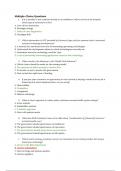
NYU Meyers College of Nursing AE3 Exam 1
QUESTIONS WITH COMPLETE SOLUTIONS
Course
AE 3
Q1. Neuro – Stroke
A 72-year-old patient presents with sudden right-sided weakness and slurred speech. The nurse’s
priority action is:
A. Obtain a 12-lead ECG
B. Prepare patient for CT scan
C. Assess vital signs and glucose level
D. Begin range-of-motion exercises
Answer: C
Rationale: Hypoglycemia can mimic stroke. Blood glucose and vitals are checked immediately.
CT follows to rule out hemorrhagic vs ischemic stroke.
Q2. Respiratory – COPD
A patient with COPD is on 2 L/min oxygen via nasal cannula. The nurse notes drowsiness and
shallow respirations. What’s the most appropriate action?
A. Increase O₂ to 6 L/min
B. Assess ABGs
C. Encourage incentive spirometry
D. Administer bronchodilator
Answer: B
Rationale: CO₂ narcosis is suspected. Confirm with ABGs before adjusting O₂ or other
interventions.
Q3. Cardiac – Heart Failure
A patient with heart failure is prescribed furosemide. Which lab value is most concerning?
A. Sodium 135
B. Potassium 2.9
, C. Creatinine 1.1
D. Hemoglobin 13.5
Answer: B
Rationale: Hypokalemia (<3.5) increases risk for arrhythmias, especially with diuretic therapy.
Q4. Neuro – Seizure Precautions
A patient with new-onset seizures is admitted. Which nursing intervention is priority?
A. Keep suction equipment at bedside
B. Apply soft wrist restraints
C. Insert oral airway at all times
D. Place patient in semi-Fowler’s position
Answer: A
Rationale: Seizure safety includes suction, oxygen, padded rails. Restraints and oral airways are
unsafe unless during seizure.
Q5. Oncology – Chemotherapy
A patient on chemotherapy develops mouth sores with white patches. What is the best nursing
action?
A. Encourage lemon juice rinses
B. Provide antifungal medication
C. Offer spicy foods to stimulate appetite
D. Restrict oral fluids
Answer: B
Rationale: Oral candidiasis (thrush) should be treated with antifungals like nystatin.
Q6. Endocrine – Thyroidectomy
A patient 4 hours post-thyroidectomy reports tingling around lips and fingers. What is the nurse’s
priority?
A. Document as normal finding
, B. Reassure patient
C. Assess for Trousseau’s sign
D. Notify provider immediately
Answer: D
Rationale: Tingling = hypocalcemia from parathyroid injury, which can cause airway
obstruction.
Q7. Cardiac – Digoxin
A patient on digoxin reports nausea and blurred vision. The apical pulse is 48. What should the
nurse do?
A. Administer digoxin
B. Hold digoxin and notify provider
C. Give antiemetic and recheck pulse
D. Encourage food with medication
Answer: B
Rationale: Bradycardia + GI/vision symptoms indicate digoxin toxicity. Hold drug and notify.
Q8. Respiratory – Chest Tube
A patient with chest tube drainage has continuous bubbling in the water seal chamber. What
should the nurse do?
A. Document as expected
B. Check for air leak in system
C. Add more water to chamber
D. Clamp the chest tube
Answer: B
Rationale: Continuous bubbling = air leak. Tidaling is expected, not bubbling.
Q9. Medications – Heparin
The nurse evaluates a patient on IV heparin. Which lab result shows therapeutic anticoagulation?
, A. aPTT 20 seconds
B. aPTT 65 seconds
C. INR 1.0
D. Platelets 90,000
Answer: B
Rationale: Therapeutic aPTT is 1.5–2.5 × baseline (~60–80 seconds).
Q10. Neuro – Multiple Sclerosis
A patient with MS reports worsening fatigue in the afternoon. Which nursing intervention is
best?
A. Encourage caffeine
B. Promote morning activity scheduling
C. Suggest long daytime naps
D. Recommend vigorous daily exercise
Answer: B
Rationale: Energy conservation is key. Morning activity prevents excessive fatigue.
Q11. Respiratory – Pneumonia
An 80-year-old with pneumonia becomes acutely confused and restless. Which intervention is
priority?
A. Place on fall precautions
B. Administer oxygen
C. Assess hydration status
D. Administer acetaminophen
Answer: B
Rationale: In elderly patients, confusion often signals hypoxemia. Oxygenation is priority
before other interventions.
Q12. GI – Peptic Ulcer Disease
QUESTIONS WITH COMPLETE SOLUTIONS
Course
AE 3
Q1. Neuro – Stroke
A 72-year-old patient presents with sudden right-sided weakness and slurred speech. The nurse’s
priority action is:
A. Obtain a 12-lead ECG
B. Prepare patient for CT scan
C. Assess vital signs and glucose level
D. Begin range-of-motion exercises
Answer: C
Rationale: Hypoglycemia can mimic stroke. Blood glucose and vitals are checked immediately.
CT follows to rule out hemorrhagic vs ischemic stroke.
Q2. Respiratory – COPD
A patient with COPD is on 2 L/min oxygen via nasal cannula. The nurse notes drowsiness and
shallow respirations. What’s the most appropriate action?
A. Increase O₂ to 6 L/min
B. Assess ABGs
C. Encourage incentive spirometry
D. Administer bronchodilator
Answer: B
Rationale: CO₂ narcosis is suspected. Confirm with ABGs before adjusting O₂ or other
interventions.
Q3. Cardiac – Heart Failure
A patient with heart failure is prescribed furosemide. Which lab value is most concerning?
A. Sodium 135
B. Potassium 2.9
, C. Creatinine 1.1
D. Hemoglobin 13.5
Answer: B
Rationale: Hypokalemia (<3.5) increases risk for arrhythmias, especially with diuretic therapy.
Q4. Neuro – Seizure Precautions
A patient with new-onset seizures is admitted. Which nursing intervention is priority?
A. Keep suction equipment at bedside
B. Apply soft wrist restraints
C. Insert oral airway at all times
D. Place patient in semi-Fowler’s position
Answer: A
Rationale: Seizure safety includes suction, oxygen, padded rails. Restraints and oral airways are
unsafe unless during seizure.
Q5. Oncology – Chemotherapy
A patient on chemotherapy develops mouth sores with white patches. What is the best nursing
action?
A. Encourage lemon juice rinses
B. Provide antifungal medication
C. Offer spicy foods to stimulate appetite
D. Restrict oral fluids
Answer: B
Rationale: Oral candidiasis (thrush) should be treated with antifungals like nystatin.
Q6. Endocrine – Thyroidectomy
A patient 4 hours post-thyroidectomy reports tingling around lips and fingers. What is the nurse’s
priority?
A. Document as normal finding
, B. Reassure patient
C. Assess for Trousseau’s sign
D. Notify provider immediately
Answer: D
Rationale: Tingling = hypocalcemia from parathyroid injury, which can cause airway
obstruction.
Q7. Cardiac – Digoxin
A patient on digoxin reports nausea and blurred vision. The apical pulse is 48. What should the
nurse do?
A. Administer digoxin
B. Hold digoxin and notify provider
C. Give antiemetic and recheck pulse
D. Encourage food with medication
Answer: B
Rationale: Bradycardia + GI/vision symptoms indicate digoxin toxicity. Hold drug and notify.
Q8. Respiratory – Chest Tube
A patient with chest tube drainage has continuous bubbling in the water seal chamber. What
should the nurse do?
A. Document as expected
B. Check for air leak in system
C. Add more water to chamber
D. Clamp the chest tube
Answer: B
Rationale: Continuous bubbling = air leak. Tidaling is expected, not bubbling.
Q9. Medications – Heparin
The nurse evaluates a patient on IV heparin. Which lab result shows therapeutic anticoagulation?
, A. aPTT 20 seconds
B. aPTT 65 seconds
C. INR 1.0
D. Platelets 90,000
Answer: B
Rationale: Therapeutic aPTT is 1.5–2.5 × baseline (~60–80 seconds).
Q10. Neuro – Multiple Sclerosis
A patient with MS reports worsening fatigue in the afternoon. Which nursing intervention is
best?
A. Encourage caffeine
B. Promote morning activity scheduling
C. Suggest long daytime naps
D. Recommend vigorous daily exercise
Answer: B
Rationale: Energy conservation is key. Morning activity prevents excessive fatigue.
Q11. Respiratory – Pneumonia
An 80-year-old with pneumonia becomes acutely confused and restless. Which intervention is
priority?
A. Place on fall precautions
B. Administer oxygen
C. Assess hydration status
D. Administer acetaminophen
Answer: B
Rationale: In elderly patients, confusion often signals hypoxemia. Oxygenation is priority
before other interventions.
Q12. GI – Peptic Ulcer Disease